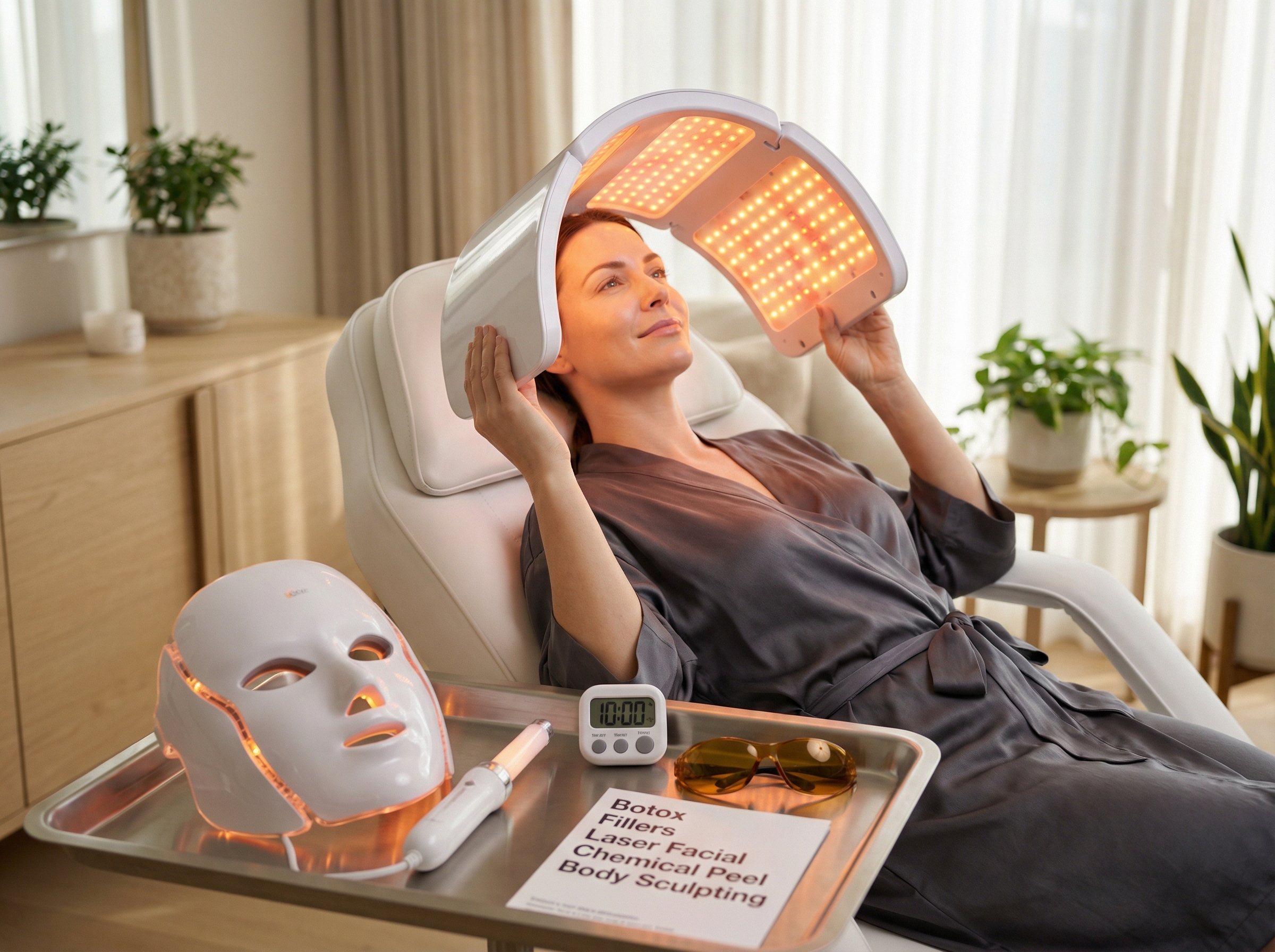
Home LED light therapy promises faster recovery after non-invasive cosmetic treatments, but how effective and safe is it? This article examines the science of photobiomodulation, reviews evidence for use after Botox, fillers, lasers, peels, and body sculpting, and gives practical, safety-focused aftercare recommendations so you can decide whether an at-home LED device fits your recovery plan.
How LED Light Therapy Works and Key Technical Details
To understand why we use these masks and panels after a cosmetic treatment, we must look at cellular function. It is not just about shining a red light on your face and hoping for the best. There is a specific biological process called photobiomodulation (PBM), where light energy triggers chemical changes within your body tissues.
The Cellular Engine: Mitochondria and ATP
The primary target of this light therapy is the mitochondria, the power plants of the cell. Inside the mitochondria, an enzyme called cytochrome c oxidase is sensitive to light. When it absorbs specific wavelengths of red or near-infrared light, it is stimulated, kicking off a chain reaction that leads to increased production of adenosine triphosphate (ATP). ATP is cellular energy. When your cells have more energy, they can repair tissue, regenerate, and function more efficiently. This is critical when your skin is healing from the controlled trauma of a laser facial or a microneedling session.
Beyond Energy: Inflammation and Circulation
The process extends beyond energy production. The absorption of light triggers the release of nitric oxide, a signaling molecule that helps dilate blood vessels. Improved blood flow ensures more oxygen and nutrients reach the treated area, which is essential for recovery. Simultaneously, this process helps modulate inflammation by reducing the oxidative stress that typically follows a procedure. There is also a significant effect on the lymphatic system; the stimulation helps drain excess fluid, which is particularly helpful for reducing the swelling or “social downtime” associated with fillers or peels. Finally, these mechanisms signal fibroblasts to ramp up collagen synthesis, supporting skin tightening effects.
Wavelengths Matter: Red vs. Near-Infrared
Not all light penetrates the skin the same way. The wavelength dictates the depth of absorption and the biological target.
- Red Light (Approx. 630–660 nm)
This visible wavelength gives devices their characteristic glow. It is absorbed largely by the superficial layers of the skin (epidermis and upper dermis). This is the optimal range for addressing skin texture, fine lines, and surface wound healing. If you are recovering from a chemical peel or dealing with surface redness, this wavelength performs the heavy lifting. - Near-Infrared Light (NIR, Approx. 800–850 nm)
Invisible to the human eye, NIR penetrates deeper than red light, reaching into the dermis and down to muscle and bone. This depth makes it superior for reducing deep inflammation, treating muscle soreness, and assisting with deeper tissue repair. High-quality home devices often combine both red and NIR LEDs to address multiple layers of tissue simultaneously.
LED Arrays vs. Lasers
It is important to distinguish between home LED devices and clinical low-level lasers. They are distinct tools.
Coherence and Safety
Lasers produce coherent light, meaning the waves are synchronized and travel in a focused beam. This allows for deep penetration and high intensity but carries a risk of thermal injury or eye damage if mishandled. LEDs (Light Emitting Diodes) produce non-coherent light; the waves are not synchronized and scatter more. This makes LEDs inherently safer for unsupervised home use, as you are unlikely to burn yourself with a standard mask. While lasers deliver energy deeper and faster, LED arrays cover a much larger surface area, making them practical for treating the entire face or body at once.
Understanding the Metrics: Power and Dose
Effectiveness depends on the dose of light your cells receive. Ignore marketing buzzwords and focus on the specifications.
Irradiance (mW/cm²)
This measures the power output of the device. Professional panels often have an irradiance above 50 or even 100 mW/cm². At-Home LED Light Therapy Devices typically range from 5 to 50 mW/cm². A mask sitting directly on the skin can be effective with lower irradiance because there is no distance for the light to travel. A panel sitting on a table requires higher power to deliver the same energy to your skin.
Fluence and Calculating Dose
Fluence is the total energy delivered to an area, measured in Joules per square centimeter (J/cm²). It is calculated by multiplying the irradiance by the time.
Fluence (J/cm²) = [Irradiance (mW/cm²) × Time (seconds)] / 1000
For recovery and skin health, studies suggest a session dose between 1 and 10 J/cm². If you have a device with low irradiance, you must use it for a longer duration to achieve this therapeutic dose. Conversely, a powerful device may only require a 5-minute session. Exceeding the optimal dose can be counterproductive, a phenomenon known as the biphasic dose response.
Limitations of At-Home Devices
Home devices offer convenience but generally possess lower power output compared to clinical machines. Consistency is key; you may need to use a home mask three to five times a week to achieve results that a professional panel might deliver in fewer sessions.
Build Quality and Consistency
The market contains many lower-end devices with unstable wavelengths. If a device claims to emit 660 nm red light but drifts to 600 nm or 700 nm, the biological effect on cytochrome c oxidase is diminished. Manufacturer documentation and third-party testing are essential to verify performance.
A Note on Regulation
In the United States, most over-the-counter LED devices are “FDA Cleared,” not “FDA Approved.” Clearance indicates the device is substantially equivalent to an existing legally marketed device and is safe for use, typically for general wellness indications like treating wrinkles or acne. It does not guarantee specific efficacy for post-surgical healing. Always review the specific label claims authorized by the FDA.
Evidence for LED Use After Common Non-Invasive Cosmetic Treatments
While the cellular mechanisms regarding mitochondrial stimulation and inflammation reduction are established, we must examine how this translates to clinical recovery for specific procedures.
Botox and Neuromodulators
Patients often worry that light therapy might degrade the toxin or cause migration. Clinical consensus is reassuring, though specific efficacy data is limited.
Reported Benefits
The primary goal is reducing injection-site trauma. Red light therapy can accelerate the resolution of needle marks and minor bruising. There is no evidence that LED light prolongs the duration of Botox or Dysport, nor does it shorten the effect.
Strength of Evidence
Data regarding direct interactions between neuromodulators and LED light is sparse. Safety is extrapolated from the fact that LEDs are non-thermal. While heat can increase blood flow and potentially cause product migration, standard home LED masks do not generate significant heat. LED is strictly a recovery tool for the skin surface, not a booster for the neurotoxin itself.
Optimal Timing
You should wait at least 24 hours before using a home device. This prevents physical pressure from a mask pushing the product into unintended muscles and allows the toxin to bind effectively.
Dermal Fillers (Hyaluronic Acid and Biostimulators)
The stakes are higher with fillers due to the increased likelihood of bruising and swelling.
Reported Benefits
Red light (633nm) and near-infrared (830nm) are effective at clearing bruising. They stimulate the lymphatic system to drain edema and help macrophages break down hemosiderin, the component responsible for the purple color of a bruise. This can significantly reduce social downtime.
Strength of Evidence
Anti-inflammatory effects are well-documented in wound healing literature. Studies on blepharoplasty (eyelid surgery) show that red light can cut healing time for incision scars by up to 50%. We apply this logic to filler entry points. However, there is no robust data supporting claims that LED helps the filler “integrate” structurally into the tissue.
Safety Signals
Avoid heavy masks that rest directly on the treated area for the first 3 days. Fillers are malleable, and pressure can deform the result. Use a panel that sits off the face or wait until the product settles.
Laser Resurfacing and Chemical Peels
This area holds the strongest evidence for LED aftercare. Whether for non-ablative Fraxel, CO2 lasers, or medium-depth TCA peels, the skin has sustained controlled injury.
Reported Benefits
Clinical trials consistently show a reduction in erythema (redness) and edema (swelling) when LED is used post-procedure. Red light therapy has robust evidence for supporting skin regeneration, speeding up re-epithelialization (the formation of new skin), and reducing the infection risk window.
Strength of Evidence
Multiple split-face studies demonstrate faster resolution of redness on the LED-treated side. Data supports using a combination of red (630–660 nm) for surface healing and near-infrared (800–850 nm) for deep inflammation. Pain reduction is less consistent; some patients report relief, while others notice no difference.
Optimal Timing
For non-ablative treatments, immediate use is often safe. For ablative lasers or peeling skin, you must wait until the skin is dry and re-epithelialized. Using a non-sterile home device on open, oozing wounds poses an infection risk.
Non-Surgical Body Sculpting
Procedures like cryolipolysis (fat freezing), radiofrequency, or HIFU rely on the body’s ability to clear damaged fat cells.
Reported Benefits
Lymphatic stimulation from PBM is the key mechanism. Near-infrared light supports the clearance of metabolic waste after fat cell destruction. It may also help manage nerve pain associated with recovery from freezing treatments.
Strength of Evidence
Evidence is emerging. While massive randomized trials specifically for “LED after CoolSculpting” are lacking, the mechanism regarding lymphatic drainage is sound. Patients frequently notice improvements in skin tone and comfort.
Summary of Clinical Expectations
| Outcome | Evidence Level | Notes |
| Reduced Redness (Erythema) | High | Consistent results in laser and peel studies. |
| Faster Bruise Resolution | Moderate-High | Accelerates clearance via lymphatic support. |
| Pain Reduction | Mixed | Works well for some, negligible for others. |
| Better Filler Integration | Low/Speculative | No data supports structural improvement of filler. |
| Botox Longevity | None | LED does not make Botox last longer. |
Practical Takeaways for the Clinician and Patient
Honesty builds trust regarding aftercare. Clinicians should clarify that LED accelerates surface healing but does not alter the structural result of an injection or lift.
For the Patient
Do not expect instant aesthetic changes to the filler itself. Expect bruises to fade faster. While LED may lower the risk of post-inflammatory hyperpigmentation (PIH) by reducing inflammation, it is preventative, not curative.
For the Clinician
Advise patients to verify their device power. A weak battery-operated mask with 2 mW/cm² irradiance will not penetrate swelling effectively. Effective anti-inflammatory action in the acute recovery phase requires closer to 20–50 mW/cm². Without a sufficiently powerful device, standard icing and elevation are preferable.
Practical Safe Use Guidelines for Home LED After Treatments
Using light therapy too soon or too aggressively can interfere with clinical results. This guide details how to integrate home LED safely based on current standards.
Pre-Session Safety Checklist
Before using your device, verify these four points to prevent complications related to timing and hygiene.
- Clear it with your provider: Techniques vary. If your clinician used specific product layering or novel injection techniques, they may require a waiting period longer than standard guidelines.
- Inspect device specifications: Check your manual for irradiance levels. Most home devices range between 5 and 50 mW/cm². You need this number to calculate treatment time. At-Home LED Light Therapy Devices Market data indicates significant variance in power output.
- Check skin condition: Do not use LED over active bleeding, open wounds that have not clotted, or skin that feels extremely hot to the touch unless advised by a doctor.
- Clean the surface: Wipe the device surface with 70% alcohol and let it dry completely to prevent bacterial transfer to fresh injection sites.
Timeline: When to Start After Procedures
Starting too early can increase blood flow when vessel constriction is desired, or disturb a settling product.
Botox and Neuromodulators
Wait at least 24 hours. While light does not deactivate the toxin, the pressure of a heavy mask or rubbing the face can displace the product. Allow the protein to bind to the muscle first.
Dermal Fillers
Wait 24 to 72 hours. This window allows the filler to integrate and gives you time to spot abnormal bruising or vascular occlusion signs without the confusion of LED-induced flushing. If significant bruising persists after day three, red light can assist clearance.
Non-Ablative Laser Facials and IPL
You can often use LED immediately or the same evening. Since the skin surface remains intact, red light helps reduce stinging and redness.
Ablative Lasers and Medium-Depth Peels
Wait until re-epithelialization occurs (usually 3 to 7 days). These procedures remove the outer skin barrier. Placing a non-sterile device on raw skin increases infection risk. Wait for clinical confirmation that the skin barrier is closed.
Non-Surgical Body Sculpting
You can typically start within 24 hours. For treatments like cryolipolysis or radiofrequency, LED supports the lymphatic system in clearing metabolic waste.
Recommended Protocol and Settings
Home devices require more time than clinical panels to deliver the same energy dose. The target is roughly 2 to 8 Joules per square centimeter (J/cm²) per area.
Calculate Your Time
If your device irradiance is 30 mW/cm², you need about 2 to 3 minutes to hit a therapeutic dose. If it is weaker (e.g., 10 mW/cm²), you need closer to 10 minutes. A safe default for most reputable masks is 10 to 20 minutes.
Frequency for Recovery
Treat the area daily or every other day for the first 3 to 5 days post-procedure (the acute inflammation phase). Afterward, reduce to a maintenance schedule of 2 to 3 times per week.
Critical Safety Cautions
LED is generally safe, but specific post-procedure risks exist.
- Protect your eyes: Always use blackout goggles. Bright light can cause headaches or ocular strain, especially during longer sessions.
- Watch for photosensitizing medications: Check prescriptions. Antibiotics like tetracyclines and herbal supplements like St. John’s Wort make skin reactive to light, potentially causing burns or hyperpigmentation.
- Avoid unstable areas: Do not use LED over known cancerous lesions, active herpetic sores (cold sores), or unstable implant sites. Heat from some devices may trigger cold sore flare-ups without antiviral prophylaxis.
- Isotretinoin (Accutane): If you have taken isotretinoin in the last 6 months, your skin healing response is altered. Consult your dermatologist before adding light therapy.
Hygiene and Documentation
Keep a log. Take photos before and after sessions to track if redness is fading or if a reaction is developing. If you notice increased pain, blistering, or unexpected dark spots, stop immediately.
Perform a patch test on your inner arm before applying the device to your face, especially if using new topical serums. Apply the product, shine the light for 5 minutes, and wait 24 hours to ensure no allergic reaction occurs.
Clean your device after every use. Oil, makeup residue, and dead skin cells can block light wavelengths and harbor bacteria.
Frequently Asked Questions
Is LED safe after Botox and does it affect how long it lasts?
Yes, it is generally safe, and light therapy does not “melt” Botox or make it wear off faster. Neuromodulators work by binding to nerve receptors; LED light targets mitochondrial energy production. These mechanisms do not interfere with each other. The recommendation to wait 24 hours is due to physical pressure, not the light itself. We want to avoid pressing a heavy device against the face while the product is settling.
Evidence Strength: Moderate (based on safety profiles and mechanism of action).
Can LED make dermal fillers move?
Light cannot physically push or migrate filler. The concern regarding migration is usually linked to heat or pressure. High-quality home LED masks emit very little heat, so thermal migration is not a significant risk. However, the weight of a mask resting on fresh filler in the cheeks or lips can deform the result. This is why we advise waiting at least 3 days or using a panel that does not touch the skin.
Evidence Strength: Limited (direct studies are rare, but physics supports safety).
Are consumer LED masks effective compared with in-office devices?
In-office panels are significantly more powerful, often delivering the necessary energy dose in 5 to 10 minutes, whereas a home mask might take 20 minutes to achieve a similar dose. However, consistency is the advantage of home devices. You can use your mask daily during recovery, which is often more practical than daily clinic visits. For reducing redness and healing time, a high-quality home device is effective.
Evidence Strength: Moderate (clinical devices are superior, but home devices show measurable skin improvements).
Any risks or side effects to watch for?
The main risks are unexpected heat, blistering, or increased redness lasting more than a few minutes. If you feel a “hot spot” or see hyperpigmentation darkening, stop immediately. These could indicate a device malfunction or a rare skin reaction.
Evidence Strength: Strong (safety profile is excellent; adverse events are rare).
Can I use LED with topical serums or sunscreen?
Use LED on clean, dry skin. Sunscreen blocks light waves, rendering the treatment useless. Thick ointments (like Aquaphor) can reflect light or create a heat barrier. Unless your doctor prescribed a specific “light-activated” serum, perform your light session first on a clean face, then apply recovery skincare products afterwards.
Evidence Strength: Strong (physics of light penetration).
Does LED hurt and is eye protection really required?
Treatment should be painless. If you feel burning, stop immediately. Regarding eyes: yes, wear the goggles. Modern LEDs are very bright, and staring directly at them can cause temporary vision spots or eye strain. Blocking the light is safer and allows for a more relaxing session.
Evidence Strength: Strong (standard safety guidelines).
Should I avoid LED if I am taking photosensitizing medications?
Yes. Medications such as doxycycline, diuretics, and isotretinoin (Accutane) make skin extremely sensitive to light. Using LED while on these can cause burns or severe reactions. Always check labels or consult your pharmacist regarding photosensitivity before use.
Evidence Strength: Strong (well-established drug-light interactions).
Conclusions and Practical Takeaways
We have reviewed the science, device specifications, and protocols for various procedures. By late 2025, the at-home LED market has matured, with projections hitting USD 2.5 Billion by 2033. This reflects a shift where patients actively participate in their healing process.
Buying a device is simple; using it correctly to support tissue repair without compromising cosmetic results requires adherence to the rules discussed.
The Core Scientific Rationale
LED therapy relies on cellular energy, not heat.
Mitochondrial Support
The goal is stimulating cytochrome c oxidase to increase ATP production, providing the fuel cells need to repair. Red light (630–660 nm) bridges the energy deficit in skin cells following laser or peel treatments, supporting collagen synthesis.
Inflammation Management
Near-infrared light (800–850 nm) penetrates deeper to modulate inflammation, resulting in accelerated wound healing and reduced erythema. It aids in flushing fluid buildup that causes swelling after injections.
Realistic Benefits vs. Hype
LED is an adjunct therapy—it helps the primary treatment heal faster but does not replace it.
What to Expect
Expect a reduction in “social downtime.” Consistent LED use might reduce redness duration by days. For bruising, light helps clear hemosiderin pigment faster.
What Not to Expect
It will not correct a poor injection or lift sagging skin overnight. Cheap devices with insufficient irradiance (below 5–10 mW/cm²) are unlikely to yield significant results.
Safety and Timing Rules
Timing is critical to avoid complications.
- Botox and Dysport: Wait at least 24 hours to allow the neurotoxin to bind without displacement from device pressure.
- Dermal Fillers: Wait 24 to 72 hours to allow the product to settle and initial swelling to stabilize.
- Heat-Based Lasers: Wait until the skin has cooled (24 hours for non-ablative) or re-epithelialized (3-7 days for ablative) to avoid infection.
Clinician-Facing Checklist
Providers can use this checklist to ensure patients integrate home devices safely.
Pre-Discharge Verification
Check that the patient’s home device is FDA-cleared and operates within safe wavelengths (633nm/830nm).
Contraindication Check
Confirm the patient is not on photosensitizing medications and has no history of light-induced seizures.
Settings Instruction
Specify the mode. Continuous wave is usually preferred for recovery over pulsed light unless a specific pain management protocol is used.
Hygiene Protocol
Instruct the patient to sanitize their device with alcohol wipes and let it dry completely before skin contact.
Patient Aftercare Plan Template
Home LED Recovery Plan
Procedure: [Name of Treatment]
Start Date: [Date/Time, e.g., 24 hours post-op]
Frequency: Once daily for the first 5 days, then 3 times per week.
Duration: 10 to 20 minutes per session (do not exceed 20 minutes).
Red Flags: Stop immediately if you feel intense heat, see blistering, or experience a headache correlating with use.
Final Balanced Guidance
LED light therapy is a powerful tool for lowering inflammation and speeding tissue repair. However, it does not replace standard aftercare. Avoid sun exposure, keep the area clean, and stay hydrated. If you notice excessive pain, heat, or signs of infection, stop use and contact your provider immediately. Treat the light as a helper, respect the wavelengths, and give your body time to heal.
Sources
- U.S. Red Light Therapy Beds Market | Industry Report, 2033 — The U.S. red light therapy beds market size was $69.0 million in 2024, is expected to reach $ 198.4 million in 2033, at a CAGR of 11.2% from 2025 to 2033.
- At-Home LED Light Therapy Devices Market Size And Forecast — At-Home LED Light Therapy Devices Market size was valued at USD 1.2 Billion in 2024 and is projected to reach USD 2.5 Billion by 2033, exhibiting a CAGR of 8.9% …
- Effects of Near-Infrared Light on Well-Being and Health in Human … — The results showed PBM treatment only at 6.5 J·cm−2 to have consistent positive benefits on well-being and health, specifically improving mood, reducing …
- 176: Is Red Light Therapy Just a Fad? | University of Utah Health — Dr. John Smith did the research, and explores whether red light therapy really holds the transformative potential it's touted to have.
- Is red light therapy right for your skin? — More than 90% of patients said they noticed some improvement, including softer and smoother skin, less redness, and lightening of dark spots.
- Red light therapy: What the science says – Stanford Medicine — While hair regeneration and wrinkle reduction have fairly robust evidence to support the use of red light therapy, other applications, such as …
- 5 health benefits of red light therapy – UCLA Health — The benefits of red light therapy go beyond skin care, and may improve hair regrowth, cognition and chronic pain.
- Can Red Light Therapy Improve Sleep, Skin, and Recovery? — These combined effects are believed to accelerate wound healing, reduce inflammation, enhance collagen production, and support muscle recovery, …
Legal Disclaimers & Brand Notices
The content provided in this article is for informational purposes only and does not constitute professional medical advice, diagnosis, or treatment. Always seek the advice of a qualified physician or other licensed healthcare provider with any questions you may have regarding a medical condition, procedure, or recovery plan. Never disregard professional medical advice or delay seeking it because of information contained in this article.
All product names, logos, and brands are the property of their respective owners. All company, product, and service names used in this website are for identification purposes only. Use of these names, trademarks, and brands does not imply endorsement. This article mentions several trademarked products, including but not limited to:
- Botox® and CoolSculpting® are registered trademarks of Allergan Aesthetics (an AbbVie company).
- Dysport® is a registered trademark of Galderma.
The use of these trademarked terms is for informational and descriptive purposes regarding common aesthetic treatments and does not signify an affiliation with or endorsement by the trademark holders.