Kybella injections commonly cause significant submental swelling—sometimes called the “bullfrog” phase—after treatment. This article explains why that pronounced swelling happens, outlines a detailed recovery timeline, and gives practical, evidence-informed aftercare steps so patients and clinicians can manage swelling effectively and protect final contour results.
How Kybella Works and Why Swelling Happens
To understand the dramatic swelling that follows a Kybella treatment, often called the “bullfrog” phase, we first need to look at how the injection works on a cellular level. The process is intense by design. Kybella’s active ingredient is a synthetic version of deoxycholic acid, a substance your body naturally produces to help absorb fats. In this concentrated form, it becomes a powerful cytolytic agent, meaning it destroys cells. When injected into the fat beneath the chin, it immediately begins to disrupt and rupture the membranes of fat cells, a process known as adipocytolysis. The cell walls are permanently destroyed, causing them to release their fatty contents.
This targeted destruction triggers a predictable and necessary local tissue reaction. Your body recognizes the ruptured fat cells and their released contents as debris that needs to be cleared away. This initiates an acute inflammatory cascade, which is the direct cause of the swelling. Think of it as your body’s cleanup crew rushing to the site. Blood vessels in the area become more permeable, allowing fluid and immune cells to flood the tissue, resulting in edema, or swelling. Macrophages, a type of white blood cell, arrive to digest the cellular debris and lipids. This inflammatory response is not a side effect; it is the fundamental mechanism through which the treatment works and a sign that fat cells are being effectively eliminated.
It is crucial, however, to distinguish this normal post-injection inflammation from potential complications such as infection, hematoma, or allergic reaction. The expected swelling is typically soft, diffuse, and most prominent in the treated area, feeling tender and firm to the touch. In contrast, an infection would likely be accompanied by increasing pain, spreading redness, warmth, and possibly fever. If cellulitis is suspected (indicated by erythema, warmth, and tenderness beyond the expected range), oral antibiotics covering skin flora are typically required.
A hematoma, or a collection of blood, appears as a distinct, firm, and often darker bruised lump, differing from the scattered bruising seen in typical recovery. A large or expanding hematoma may require ultrasound diagnosis and drainage to prevent skin necrosis. Furthermore, a true allergic reaction—though rare—manifests differently than standard swelling; it appears quickly with widespread hives, intense itching, or respiratory symptoms like wheezing. Finally, motor nerve injury would manifest as a change in your smile or facial movement (marginal mandibular nerve paresis), not merely as swelling. Prescribing information from randomized trials highlights that while significant swelling is common, these other events are not and require immediate medical attention.
The unique anatomy of the submental region plays a significant role in the swelling pattern. The primary target is the pre-platysmal fat, a pocket of fat located just beneath the skin and above the thin platysma muscle. This muscle acts like a sheet, and injections above it confine much of the initial inflammatory response to this superficial layer, contributing to the visible fullness. The area’s lymphatic drainage system is responsible for clearing the inflammatory fluid and cellular debris. If this system is less efficient, swelling can persist longer. The location of the marginal mandibular nerve, which controls the corner of the mouth, is also a critical anatomical consideration. A skilled injector places the product carefully to avoid this nerve, minimizing the risk of temporary muscle weakness.
Certain factors related to both injection technique and the patient can influence the severity of the swelling. An injector’s technique matters immensely. Using high-volume boluses (large deposits of Kybella in one spot) or creating a very dense grid of injections can increase the inflammatory load in a concentrated area, leading to more pronounced swelling. Deeper injections or treating larger volumes of submental fat will naturally produce a more robust response because more tissue is being affected.
Patient-specific factors also contribute significantly to the recovery experience. Individuals with a larger baseline volume of fat may experience more swelling simply because more cells are being destroyed. Skin laxity can affect how the swelling appears, sometimes making it look more pronounced. The use of anticoagulants or blood-thinning supplements can increase the risk of bruising alongside the swelling. Furthermore, a patient’s individual lymphatic function and history of prior surgeries in the neck, which could alter lymphatic pathways, can impact how quickly the fluid is cleared.
Understanding this mechanism of action is clinically important for several reasons. It allows providers to set realistic expectations with patients, explaining that significant swelling is a normal and even positive sign that the treatment is working as intended. This knowledge also informs treatment planning. Professional society recommendations, based on pivotal trial data, suggest spacing treatments at least four to six weeks apart. This interval gives the body adequate time for the inflammatory response to resolve and for the provider to accurately assess the results before proceeding with another session. Finally, this understanding helps guide preventive strategies and aftercare, which are designed to manage the inflammatory process and support the body’s natural healing, ultimately maximizing the final contouring results.
The Bullfrog Swelling Timeline Day by Day and Week by Week
Understanding the day-by-day and week-by-week recovery process is key to navigating your Kybella journey with confidence. The swelling, while temporary, is a significant part of the experience. Knowing what to expect can make the process feel much more manageable.
Immediate Aftermath (0 to 24 Hours)
Directly after your appointment, you will notice immediate fullness in the treatment area. This is a combination of the injected solution and the body’s initial inflammatory response. Expect mild to moderate swelling that feels tender and firm to the touch. You may see tiny red dots at the injection sites, and some pinpoint bleeding or early bruising can occur. The area will feel sensitive, but the discomfort is typically manageable. During this first day, the swelling is just beginning its ramp-up. Patient compliance with head elevation and cold therapy during this window is crucial for mitigating the peak inflammatory phase.
The “Bullfrog” Peak (24 to 72 Hours)
This is the period most people are curious and anxious about. Between one and three days after your treatment, the swelling will reach its peak. This is famously known as the “bullfrog” or “wattle” phase. The submental area can appear significantly larger than it did before the treatment, often feeling tight, heavy, and firm. The swelling can sometimes extend slightly beyond the immediate treatment zone. This dramatic fullness is a sign that the deoxycholic acid is actively working, triggering a robust inflammatory response to break down and clear away the fat cells. While it can be visually jarring, this is a normal and expected part of the process. Some people experience a feeling of tightness that can make looking down uncomfortable. In rare cases, the external pressure from the swelling might create a sensation of difficulty swallowing, but this is typically mild and transient. True difficulty breathing is a medical emergency and requires immediate attention.
Gradual Improvement (Days 4 to 14)
After hitting its peak around day three, the swelling begins a slow but steady decline. During this subacute period, you will notice a daily reduction in the overall bulkiness. The intense firmness will start to soften, though the area will not feel normal yet. It is common to feel small, firm nodules or lumps under the skin. These are collections of treated fat cells and inflammatory tissue that your body is gradually breaking down. They are a normal part of the healing process and will resolve over time. Any bruising that appeared will typically begin to fade, changing from a dark purple or blue to a lighter green and yellow before disappearing completely, usually by the end of the second week. By day 14, a significant portion of the swelling, often 60 to 80 percent, has resolved. Clinical data from FDA trials indicates the median duration of swelling for the first treatment is approximately 11 days.
Continued Remodeling (Weeks 3 to 6)
During this phase, most of the visible swelling subsides. You will likely feel comfortable with your appearance in public without feeling self-conscious about puffiness. However, the underlying tissue is still actively remodeling. You may still feel some residual firmness, and it is very common to experience numbness or altered sensation in the treated area. This occurs because the inflammation can temporarily affect the small sensory nerves in the skin. Sensation almost always returns to normal, but it can take several weeks to months. It is during this time that you might start to see the very first hints of a more defined contour as the last of the edema resolves and the fat reduction becomes more apparent. If significant edema persists beyond 4-6 weeks, clinicians should re-evaluate for other causes, though this is rare.
The Final Contour and Future Sessions (Months 2 to 3 and Beyond)
The full and final results of a Kybella session are typically visible around 12 weeks after the treatment. This is because the body needs time to not only clear away the destroyed fat cells but also to remodel collagen in the area, which can lead to some skin tightening. This is the point at which you and your provider will assess the outcome and decide if another treatment is needed to achieve your goals. Most patients require between two and four sessions, spaced at least four to six weeks apart, to allow for complete healing and to see the results from the previous session. An encouraging note is that many patients report that the swelling with subsequent treatments is less intense than the first, primarily because there is less fat for the deoxycholic acid to target.
Important Ranges and Clinical Red Flags
It is crucial to remember that everyone heals differently. While the “bullfrog” swelling typically lasts 3 to 10 days for most, it can persist for two weeks or longer in some individuals. Residual firmness and numbness can last for several weeks or even months without being a cause for concern. However, you should contact your provider immediately if you experience any clinical red flags. These include signs of infection like spreading redness, significant warmth, fever, or pus-like drainage. Other reasons for an urgent call are severe or escalating pain not controlled by over-the-counter medication, any asymmetry in your smile or difficulty moving your facial muscles, or any significant difficulty swallowing or breathing. These complications are very rare, but it is vital to know when to seek a professional re-evaluation.
Practical Aftercare to Reduce Discomfort and Maximize Results
Navigating the recovery period after Kybella is just as important as the treatment itself. While the “bullfrog” swelling is a sign the treatment is working, proactive aftercare can significantly reduce discomfort, shorten the social downtime, and help you achieve the best possible results. The following steps provide a comprehensive guide for both patients and clinicians on managing the post-treatment phase effectively.
Immediate Self-Care in the First 48 Hours
The first two days are critical for managing the initial inflammatory response. Your primary goals are to reduce swelling and minimize discomfort.
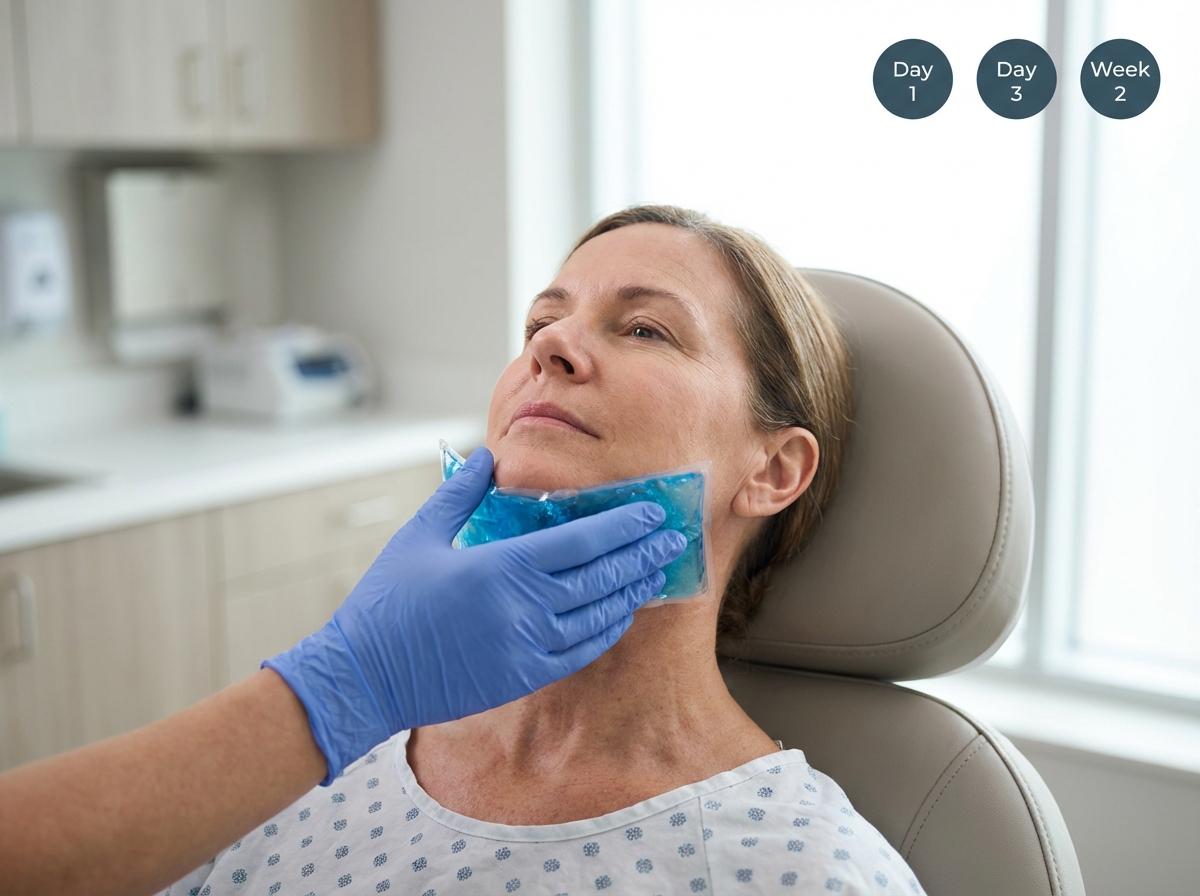
- Cold Compress Protocol: Applying cold packs or ice wrapped in a thin cloth is your most effective tool against swelling. Apply the compress to the treated area for 15 to 20 minutes at a time. It’s crucial to take a break of at least 20 minutes between applications to prevent ice burn or damage to the skin. Repeat this cycle as frequently as you can throughout the first 24 to 48 hours.
- Head Elevation: Gravity is your friend. When resting or sleeping, use an extra pillow or two to keep your head elevated above your heart. This position helps drain fluid away from the submental area, preventing it from pooling and worsening the swelling overnight.
- Gentle Activity Limits: Avoid strenuous exercise, heavy lifting, or any activity that significantly raises your heart rate and blood pressure for the first 48 to 72 hours. Activities that invert the head, such as yoga, should also be avoided. An increased blood flow to the face can intensify swelling. Light walking is generally fine, but listen to your body.
- Avoid Heat: Heat causes blood vessels to dilate, which can increase swelling and discomfort. For the first 48 hours, avoid hot showers, saunas, steam rooms, and hot tubs. Use lukewarm water when washing your face and hair.
Pain and Inflammation Management
Managing pain is key to a comfortable recovery. It’s important to choose the right medication and follow your injector’s guidance.
- Safe Analgesic Choices: Acetaminophen (Tylenol) is the recommended first-line choice for pain relief after Kybella. It effectively manages discomfort without increasing the risk of bleeding or bruising.
- Guidance on NSAIDs and Aspirin: Non-steroidal anti-inflammatory drugs (NSAIDs) like ibuprofen (Advil, Motrin) and naproxen (Aleve), as well as aspirin, are excellent at reducing inflammation. However, they also have blood-thinning properties that can worsen bruising at the injection sites. Many injectors will advise you to avoid them for several days before and after treatment. Always follow the specific instructions provided by your clinician, especially if you take these medications or supplements like fish oil, vitamin E, or ginkgo biloba for other health reasons. Clinicians should conduct a thorough medication reconciliation pre-treatment; for patients on prescribed anticoagulants, coordination with their prescribing physician regarding any temporary cessation is necessary.
Use of Massage and Lymphatic Drainage
Once the initial peak swelling and tenderness begin to subside, gentle massage can help move fluid and resolve firmness.
- When to Start: Do not massage the area during the first 24 to 72 hours when it is most tender and swollen. Your provider will give you the green light, but this is typically after the third day.
- Techniques: The goal is to encourage lymphatic drainage, not to perform a deep tissue massage. Use light, gentle pressure with your fingertips, making sweeping motions from the center of your chin outward toward your ears and then down the sides of your neck. This follows the natural path of the lymphatic system. Perform this for 5 to 10 minutes, a few times a day. Avoid aggressive rubbing or pressing on firm nodules.
Topical Therapies and Devices
While not essential, some topical treatments and aids can offer comfort and potentially speed up the resolution of side effects.
- Warm Compresses: After the first 48 hours of cold therapy, you can switch to warm compresses. The warmth can improve circulation, which may help the body clear away cellular debris and resolve bruising more quickly. Apply for 10 to 15 minutes a few times a day.
- Topical Arnica: Arnica montana is a popular homeopathic remedy available in topical gels, creams, and oral forms. While clinical evidence is mixed, many patients feel it helps reduce the duration and intensity of bruising. If you choose to use it, get approval from your clinician first.
- Compression Chin Straps: The evidence supporting compression straps to reduce swelling is limited. However, some patients find that wearing a light, comfortable chin strap provides a sense of support and security, especially while sleeping. If you use one, ensure it is not too tight, as excessive pressure can impair circulation.
Medical Interventions for Severe Swelling
In rare cases, swelling may be severe enough to warrant medical intervention. It is vital to know when to contact your provider.
- Clinician-Prescribed Options: For unusually significant or prolonged swelling, a clinician may consider prescribing a short course of oral steroids, like prednisone, to quickly reduce the inflammatory response. Stronger prescription analgesics may be offered for severe pain.
- When to Seek Urgent Assessment: Contact your provider immediately or seek emergency care if you experience any of the following red flags:
- Difficulty breathing or a feeling of airway compromise. Airway compromise is a rare but critical potential adverse event. Any patient reporting dysphagia (difficulty swallowing), dysphonia (hoarseness), or dyspnea (shortness of breath) requires immediate evaluation in an emergency setting.
- Rapidly spreading redness, heat, or pus, which could indicate an infection.
- Fever (a temperature over 100.4°F or 38°C).
- Severe, unmanageable pain.
- Progressive difficulty swallowing (dysphagia).
Planning for Work and Social Life
Strategically planning your treatment can make the recovery process much smoother.
- Recommended Downtime: Most patients plan for 3 to 5 days of social downtime, scheduling their treatment on a Thursday or Friday to use the weekend for recovery. While you can often return to work within 2 to 3 days, visible swelling will still be present. Clinicians may provide a work excuse note for 3-5 days to help patients manage professional obligations.
- Camouflage Tips: Turtlenecks, collared shirts, and artfully draped scarves are excellent for concealing swelling. Once bruising appears, a high-quality, full-coverage concealer with a yellow or peach undertone can neutralize the discoloration.
- Travel and Flying: It is generally safe to fly after Kybella, but cabin pressure changes can sometimes temporarily exacerbate swelling. If possible, wait a few days (48-72 hours) until the peak swelling has passed before taking a flight.
Preventive Measures for Future Sessions
Your experience with the first session can inform a more comfortable approach for subsequent treatments.
- Staging Doses: If your initial swelling was significant, speak with your injector about using a more conservative dose in the next session. While this may require more treatments overall, it can make the recovery for each one much more manageable.
- Longer Intervals: Spacing treatments further apart (e.g., 6 to 8 weeks instead of 4) gives your body more time to fully resolve inflammation and heal.
- Injector Technique: An experienced injector can make subtle adjustments to their technique to minimize trauma and swelling.
Finally, remember that every patient’s recovery is unique. The most important rule is to follow the specific aftercare instructions provided by your injector. They have tailored the plan to your treatment and medical history. Avoid trying non-evidence-based remedies without their approval to ensure a safe and successful outcome.
Conclusions and Key Takeaways for Patients and Clinicians
Navigating your Kybella recovery is a journey of patience, and understanding the process is the best way to ensure you feel confident and in control. The treatment works by using deoxycholic acid to permanently destroy fat cells in the submental area. This process of adipocytolysis intentionally triggers a robust inflammatory response. This response is not a side effect; it is the core mechanism of action. Your body sends fluid and immune cells to the area to break down and clear away the targeted fat cells. This biological cleanup is what causes the signature swelling, firmness, redness, and tenderness. The most intense part of this phase, often called “bullfrog swelling,” typically peaks around 48 to 72 hours post-treatment. From there, the swelling gradually subsides over one to two weeks, though residual firmness and numbness can linger for several weeks more as your body remodels the tissue and reveals a more defined contour.
To make your recovery as smooth and predictable as possible, it helps to focus on a few key actions before and after your appointment. Think of these as your roadmap through the healing process. Expect the peak swelling to occur between 48 and 72 hours after injections; knowing this allows you to schedule your treatment ahead of a weekend or a few days of social downtime. For the first 48 hours, consistently applying a cold compress or ice pack wrapped in a cloth to the area for 15-20 minutes at a time can make a big difference by constricting blood vessels and limiting the initial rush of fluid. Once the peak swelling phase has passed, usually after day three, you can begin very gentle massage of the treated area to encourage lymphatic drainage and soften firm nodules, provided you have your clinician’s approval.
Your safety is the absolute priority, and it’s vital to distinguish between normal recovery symptoms and true medical red flags. While significant swelling is normal, signs such as fever, spreading redness indicating cellulitis, severe escalating pain, or any difficulty breathing or swallowing are not. These require immediate medical attention. Similarly, the sudden onset of facial asymmetry, such as a lopsided smile, may indicate an injury to the marginal mandibular nerve and needs prompt evaluation.
Ultimately, a successful Kybella outcome is built on a foundation of shared decision-making between you and your clinician. The skill of your injector is paramount; choosing a provider with extensive experience and a deep understanding of facial anatomy is the single most important step you can take to minimize risks and achieve an optimal aesthetic result. A great provider will not just administer the treatment but will also work with you to set realistic expectations about the recovery timeline, the number of sessions you might need, and the kind of results your specific anatomy will allow. Your aftercare plan should feel like a collaborative effort, tailored to your treatment intensity and lifestyle.
Sources
- Kybella Recovery Timeline: What to Expect After Double Chin … — Most patients find they can return to work and normal activities within 2 to 3 days, though visible swelling may persist. Why Swelling Occurs …
- Kybella Swelling Timeline: What to Expect Day-by-Day After Double … — By days five through seven, most patients notice the beginning of meaningful improvement. The intense firmness starts to soften, and the swelling boundary …
- How Long Does Kybella Take to Work? What to Expect — You should see visible changes within 4-6 weeks after each treatment. The most important changes appear after 12 weeks or at least two sessions.
- How Long Does Kybella Take to Work? Expert Timeline and Results … — Noticeable improvement often begins around 4 to 6 weeks after your first Kybella session. By this stage, the jawline may start to appear more …
- Kybella Swelling & Side Effects – Dr. Michele Green M.D. — The peak swelling after Kybella injections typically occurs one to two days after receiving the injections and resolves within a few days. Any side effects, …
- Kybella – Skinlogic Med Spa — The good news is that the swelling is temporary. The overall recovery timeline is about one month according to Allergan, the company that makes Kybella.
- Are the Results from Kybella Permanent? — However, there are clinical studies suggesting optimal results are typically experienced after 2-4 treatments. With nearly 60 percent of Kybella® patients …
- How Long Does Kybella Swelling Last? | SYRA Aesthetics Med Spa — Typically, patients experience swelling for about 2 to 4 weeks after their treatment. This initial swelling may be more noticeable in the first few days …
- How Long Does Kybella Last? – Treatment Timeline & Cost — You'll begin to see Kybella results in 3 to 4 weeks, with full improvement after 2 to 3 sessions. The Kybella results timeline depends on your body's speed in …
Legal Disclaimers & Brand Notices
The content provided in this article is for informational purposes only and is not intended as a substitute for professional medical advice, diagnosis, or treatment. Always seek the advice of a qualified healthcare provider with any questions you may have regarding a medical condition or treatment. Reliance on any information provided in this article is solely at your own risk.
Kybella® is a registered trademark of Allergan, an AbbVie company. All product names, logos, and brands are property of their respective owners. All company, product, and service names used in this article are for identification purposes only. Use of these names, logos, and brands does not imply endorsement.