Lip fillers can boost volume and confidence, but injections near the mouth can sometimes trigger herpes simplex (cold sore) outbreaks. This article explains why HSV reactivates after cosmetic procedures and provides a comprehensive prevention strategy: pre‑screening, evidence‑based antiviral options, injection best practices, and protocols for managing complications.
How cold sores reactivate after lip filler procedures
Understanding why a cold sore appears after a lip filler appointment requires looking at the biological and mechanical processes beneath the skin surface. It involves a complex interaction between the dormant virus, the nervous system, and the physical trauma caused by the injection.
The Latent Viral Reservoir
Herpes Simplex Virus type 1 (HSV-1) behaves differently than many other viruses. After the initial infection, which often occurs in childhood, the virus does not leave the body. It travels up the nerve fibers from the skin to a cluster of nerve cells called the sensory ganglia. For facial infections, this is usually the trigeminal ganglion. This structure sits near the ear and acts as a command center for sensation in the face.
The virus enters a state of latency here, stopping replication and essentially going to sleep. While the immune system keeps it in check, it cannot eliminate the viral DNA hiding within the nerve cells. The virus remains dormant until a specific trigger disrupts the balance. Lip injections provide a potent combination of triggers—trauma, inflammation, and stress—that can wake the virus.
Trauma and Inflammation
The primary driver for reactivation during a cosmetic procedure is direct physical trauma. When a needle or cannula penetrates the lip tissue, it creates a microscopic injury. The body responds immediately by sending inflammatory cells to the site to repair the damage. This inflammation alters the local chemical environment around the nerve endings in the lips.
This local disturbance sends signals back up the nerve fibers to the ganglion where the virus is hiding. The virus interprets these stress signals as a threat or an opportunity, reactivates, and begins to replicate. Once replication starts, the viral particles travel back down the nerve axon to the skin surface via anterograde axonal transport. When the virus reaches the lip cells, it infects them and causes the characteristic blister.
The Role of Swelling and Filler Pressure
The presence of the filler product itself adds another layer of stress to the tissue. Hyaluronic acid fillers take up space within the lip, expanding the tissue and putting pressure on the network of fine nerve endings. Significant swelling often occurs in the first 24 to 48 hours after the procedure. This distension can irritate the nerves enough to trigger the viral wake-up call even if the needle trauma was minimal.
Technique plays a significant role. Multiple puncture sites increase the total trauma load. Aggressive manipulation or massaging of the lips to mold the filler can also exacerbate inflammation. The more trauma the tissue sustains, the louder the signal sent to the latent virus.
Anesthetics and Vasoconstriction
Most modern dermal fillers contain lidocaine to reduce pain, and injectors frequently use topical numbing creams or dental blocks. Many of these anesthetic preparations include epinephrine, a vasoconstrictor that shrinks blood vessels to reduce bleeding and bruising. While helpful for the aesthetic result, it creates a temporary state of ischemia where the tissue receives less oxygen.
When the epinephrine wears off, blood rushes back into the tissue in a process known as reperfusion. The shift from low oxygen to high oxygen creates oxidative stress in the cells. Research suggests that these rapid changes in the cellular environment can facilitate viral reactivation, as the nerve creates stress proteins that the virus can use to initiate its replication cycle.
Timeline of Reactivation
The timing of an outbreak following lip filler is predictable. It rarely happens immediately in the chair because the virus needs time to replicate and travel down the nerve. Patients are at the greatest risk of developing a cold sore from a lip enhancement procedure one to two days after injection.
The prodromal stage usually begins within 24 to 48 hours. Patients often report a specific tingling, burning, or itching sensation at the site where the lesion will appear. This indicates the virus is reaching the skin. If untreated, visible blisters form shortly after. The lesion typically follows the standard lifecycle: blistering, bursting, weeping, and crusting over. Full healing generally takes 7 to 14 days. The presence of the filler can complicate healing if swelling is severe or if the skin integrity is compromised.
Risk Factors Beyond the Needle
While the needle is the spark, the patient’s systemic health determines if the fire catches. A personal history of recurrent herpes labialis is the dominant risk factor. Patients who get cold sores naturally are exponentially more likely to have an outbreak after fillers because the neural pathways are already established.
However, it is possible for patients with no known history to experience an outbreak. Many adults are asymptomatic carriers who harbor the virus but have never displayed symptoms. The trauma of the filler can trigger their first primary outbreak. Herpes virus outbreak after dermal filler injection is a rare but troublesome complication for this group.
Other factors lower the threshold for reactivation:
- Immunosuppression: Patients on medications that suppress the immune system or those with autoimmune conditions have less control over the latent virus.
- Hormonal Changes: Fluctuations during the menstrual cycle or menopause can make the body more susceptible to viral flares.
- Recent Procedures: Dental work or other facial treatments performed close to the filler appointment add cumulative trauma to the trigeminal nerve distribution.
- Ultraviolet Exposure: Intense sun exposure or tanning beds before or after the appointment suppresses local skin immunity.
- Stress and Fever: High cortisol levels from stress or an elevated body temperature from illness weaken the immune surveillance that keeps the virus dormant.
Incidence in Clinical Practice
The exact rate of reactivation varies in medical literature. In general aesthetic practice, reactivation in patients with no history of cold sores is rare. A case series of 138 patients in six centers in the United States found that two patients (1.45%) developed herpes-like infections within two weeks of dermal filler.
However, for patients with a known history who do not use antiviral prophylaxis, the risk is significantly higher—some estimates suggest upwards of 50 percent. Understanding the connection between cold sores and lip fillers allows providers to categorize patients effectively. Treating a patient with a history of cold sores as a high-risk case is the standard of care.
Practical prevention: Before, during, and after treatment
Preventing a cold sore outbreak requires a strategy that spans the days before your appointment, the injection process itself, and the critical recovery period. We break this down into distinct phases to ensure you minimize trauma and keep the virus dormant.
Phase 1. Pre-Procedure Screening and Preparation
The work begins during the consultation. Identifying risk factors early allows for proper medication timing. Honesty is vital; you must discuss your history of cold sores even if you have not had one in years.
Screening Questions
- Do you have a history of oral herpes or cold sores?
- How frequently do outbreaks occur?
- When was your last active lesion?
- Do you have any conditions that weaken your immune system?
When to Defer Treatment
There are times when injecting is unsafe. If you have an active lesion, the procedure must be rescheduled. Injecting through or near an active sore can spread the virus to the rest of the face (eczema herpeticum) or cause a severe bacterial superinfection. You should also wait if you feel prodromal symptoms like tingling, burning, or itching on the lip.
Additionally, if you are currently sick with a cold or flu, delay the treatment. Your immune system is already occupied, and adding the trauma of fillers overloads your body’s defenses. Most clinicians recommend waiting until a lesion has fully crusted and the skin has returned to normal—typically 1 to 2 weeks after complete healing.
A Note on Serology
Routine blood testing for HSV antibodies is not typically required for lip fillers. Most adults carry the virus even without symptoms. Testing is usually reserved for confusing cases where the diagnosis is unclear. Clinical history is the primary tool for decision making.
Antiviral Prophylaxis Strategies
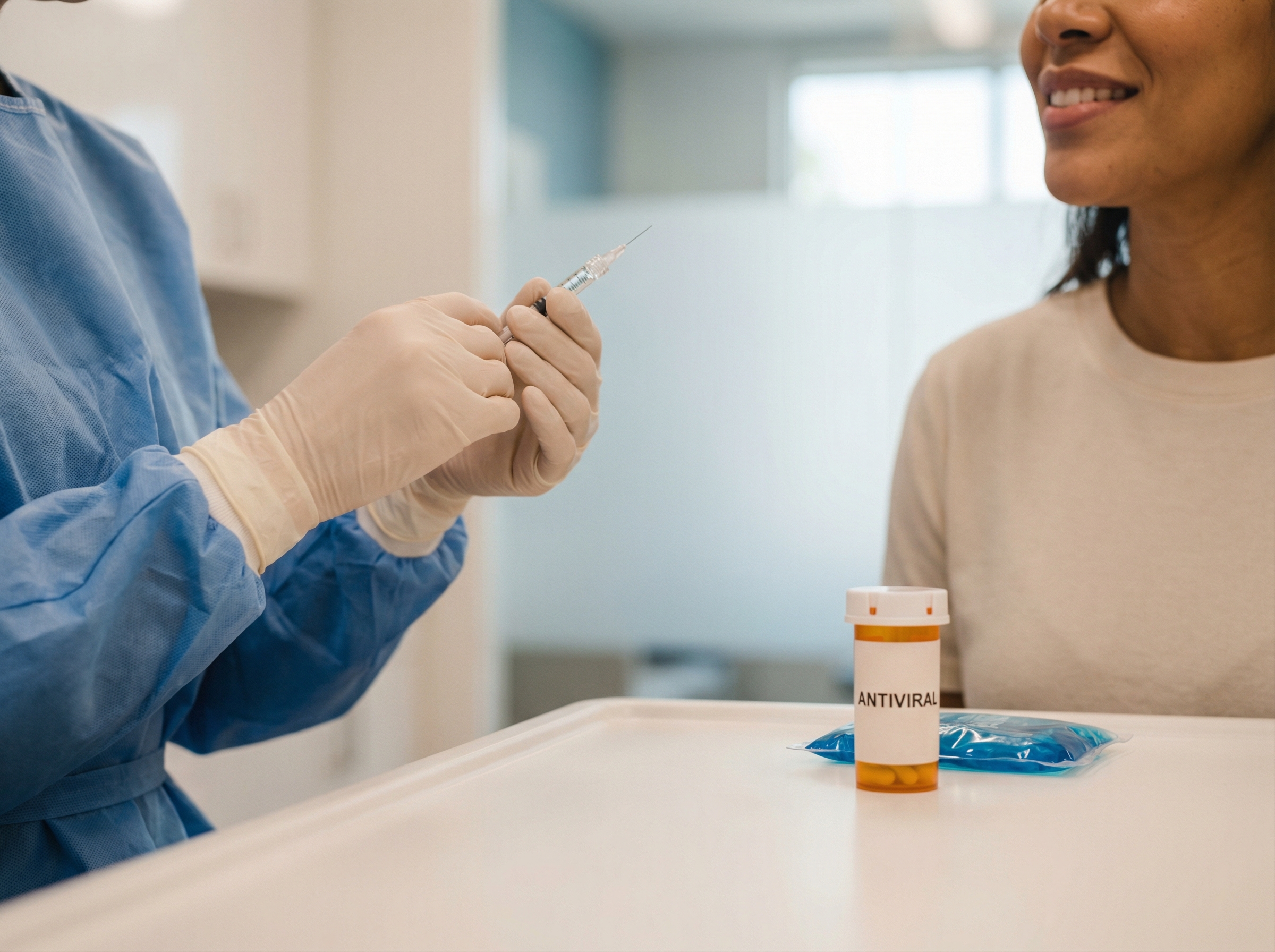
Medication is the most effective way to prevent reactivation in patients with a history of cold sores. Prophylactic antiviral therapy suppresses the virus during the high-stress window of the procedure.
Common Regimens
Doctors prescribe different regimens based on specific medical history and kidney function. These require a prescription. Examples of standard protocols used in aesthetic practice include:
- Valacyclovir (Valtrex): A common approach is 500 mg taken twice daily. You start 1 day before the procedure and continue for 3 to 5 days total.
- Acyclovir (Zovirax): This requires more frequent dosing due to a shorter half-life. A typical regimen is 400 mg taken three times daily. You start 1 day before the procedure and continue for 5 to 7 days.
Some providers may use a short-course high-dose strategy (e.g., Valacyclovir 2 grams twice in one day) if an outbreak starts right before the appointment. However, standard lower-dose prevention is preferred for planned procedures.
Phase 2. Intra-Procedure Techniques
The way the filler is injected matters. Physical trauma and tissue manipulation directly correlate with viral reactivation. Your injector should use techniques that minimize stress on the lip tissue.
Reducing Trauma
Experienced injectors use specific methods to keep tissue disruption low. Using fine needles or blunt-tipped cannulas can reduce the number of entry points. Fewer punctures mean less direct injury to the nerve endings that harbor the virus.
Injection Speed and Manipulation
Rapid injection expands the tissue too quickly and causes unnecessary damage. Slow, controlled injection is better. The injector should also limit the number of passes through the tissue. Aseptic technique is non-negotiable; the skin must be thoroughly cleaned with an antiseptic solution before starting.
Anesthesia and Heat
Topical numbing creams are standard and generally safe. However, the injector should avoid aggressive massage immediately after placing the filler. Vigorous rubbing creates heat and friction, which can wake up the virus. Since you’re at the greatest risk of developing a cold sore one to two days after injection, minimizing immediate tissue stress is key.
Phase 3. Post-Procedure Aftercare
Once you leave the clinic, the responsibility shifts to you. The first 48 hours are critical for keeping inflammation down. Your goal is to keep the lips cool, clean, and calm.
Immediate Steps
Apply ice packs intermittently to the lips to reduce swelling and keep local temperature down. Do not apply ice directly to the skin; wrap it in a clean cloth. Cooling helps prevent the inflammatory spike that often triggers HSV.
Activity Restrictions
Avoid anything that raises your body temperature or blood pressure for 24 to 48 hours. This includes intense exercise, steam rooms, saunas, and hot yoga. Heat is a major viral trigger. You want to keep your systemic inflammation low.
Hygiene and Contact
Keep your lips clean. Do not touch them with unwashed hands. Avoid wearing makeup or lip gloss for at least 24 hours to keep the injection sites sterile. You must also avoid kissing or oral contact until the filler settles and the injection points heal. This reduces the risk of introducing new bacteria or irritating the area.
Sun Protection
Ultraviolet light is a potent trigger for cold sores. If you are going outside, wear a hat. Once the injection sites are closed, usually after 24 hours, use a lip balm with SPF. Protecting the lips from UV radiation is one of the best ways to prevent late-onset reactivation.
Managing an Active Outbreak Post-Procedure
Despite best efforts, outbreaks can occur. If you notice blisters forming, prompt action is necessary to save your results and speed up healing.
- Contact your injector immediately. They need to update your chart and potentially call in a prescription if you are not already on medication.
- Start antiviral medication. If you have pills, take them. If not, get a prescription. Topical creams like acyclovir or docosanol (Abreva) can help but are generally less effective than oral medication for procedure-triggered outbreaks.
- Do not touch or massage. Touching the lesions can spread the virus. Massaging the lips must stop if a cold sore is present.
- Keep the area clean. Use a gentle cleanser. Avoid makeup on the sores until they crust over.
Preventative measures and treatment options are most effective when applied early. The goal is to dry out the lesion quickly to prevent the filler product from shifting due to the swelling associated with the sore.
Special Scenarios and Considerations
Some patients require extra precautions. If you have a complex medical history or are planning multiple treatments, the standard protocols might need adjustment.
Immunocompromised Patients
Patients with suppressed immune systems (e.g., those on immunosuppressive drugs or with autoimmune conditions) are at higher risk for severe or prolonged outbreaks. In these cases, the provider should consider a stronger prophylaxis regimen. Consultation with the physician managing the underlying condition is often necessary to determine the safest dosage.
Combining Procedures
Combining lip fillers with other treatments like chemical peels, laser resurfacing, or dental work around the mouth increases the trauma load. New HSV lesions can appear following treatments that disrupt the epidermal barrier. The cumulative stress on the skin significantly raises the risk of reactivation.
If you plan to do both, it is often safer to space the appointments apart—ideally by at least two weeks. If they must be done together, universal antiviral prophylaxis is strongly recommended even for patients with a distant history of cold sores.
Summary and key takeaways for safe lip augmentation
Safety in aesthetic medicine is rarely about a single decision; it is the result of a consistent process. Managing the risk of a herpes simplex virus outbreak requires a strategy that begins days before the appointment and continues until the lips are fully healed. The goal is not just to prevent a blister, but to protect the integrity of the filler. An outbreak can distort the placement of the product and cause inflammation that breaks down hyaluronic acid faster than usual.
The Shared Responsibility Model
Successful prevention relies on communication. Many patients feel embarrassed to disclose a history of cold sores, but this stigma is dangerous in a clinical setting. Approximately 50 to 80 percent of American adults carry HSV-1. Your injector does not judge you; they simply need the data to calculate your risk profile. If you hide your history, you are opting out of the only effective preventative measures available.
Clinicians must also take the lead. Standard intake forms often get skimmed, so a verbal confirmation during the consultation is necessary. Asking “Do you ever get cold sores?” is often more effective than asking “Do you have a history of HSV?”
Clinician Action Checklist
- Screen every patient verbally. Ask about the frequency of outbreaks and the date of the last lesion.
- Establish a prophylaxis protocol. High-risk patients need antiviral medication starting one or two days prior to treatment.
- Choose the right tool. Cannulas often cause less tissue trauma than needles. Fewer puncture points mean less inflammation.
- Cleanse thoroughly. Use a surgical-grade antiseptic to prevent secondary bacterial infection.
- Educate on aftercare. Provide written instructions, as patients may not remember verbal advice given while numb.
For a deeper look at clinical protocols, refer to the Guideline for the Management Herpes Simplex 1 and Cosmetic procedures.
Patient Action Checklist
- Time your appointment. Do not book lip fillers right before a major event. Give yourself a two-week buffer.
- Pre-load your defense. If prescribed valacyclovir or acyclovir, take the first dose exactly as directed to stop viral replication before it starts.
- Avoid other triggers. Avoid tanning beds and direct sun exposure for the week leading up to your appointment.
- Skip the gym. Keep your heart rate down for 24 to 48 hours to minimize blood flow and swelling.
- Keep the area clean. Do not apply old lip gloss or lipstick that might harbor bacteria.
Distinguishing Complications: A Quick Guide
Panic is common after lip fillers because swelling and bruising look alarming. However, you need to distinguish between a normal cold sore outbreak and more serious complications like vascular occlusion (where filler blocks a blood vessel). A cold sore is uncomfortable; vascular occlusion is a medical emergency requiring immediate reversal with hyaluronidase.
| Symptom | Cold Sore (HSV) | Vascular Occlusion |
| Pain Type | Burning, itching, stinging. | Severe, deep ache or sharp pain (though some are painless). |
| Appearance | Cluster of small fluid-filled blisters. | Skin turns white (blanching) or mottled purple/blue/lace-like pattern. |
| Timing | Usually appears 24-48 hours later. | Often immediate or within hours. |
| Action | Start antivirals. Keep clean. | Call injector immediately. Go to ER. |
If you suspect a cold sore is forming, contact your injector. Early treatment can stop the blister from fully forming. Herpes virus outbreak after dermal filler injection is a rare but troublesome complication, but it is manageable with speed. Prioritize safety, be honest about your history, and take the medication. These steps ensure the swelling goes down to reveal a smooth, plump shape rather than a lesion.
Sources
- Can a Lip Filler Trigger a Cold Sore? – Health Cleveland Clinic — You're at the greatest risk of developing a cold sore from a lip enhancement procedure one to two days after injection.
- Cold Sores After Lip Filler – Ethos Spa — This article will delve into the world of cold sores, their connection to lip fillers, preventative measures, and treatment options.
- Guideline for the Management Herpes Simplex 1 and Cosmetic … — A case series of 138 patients in six centers in the United States found that two patients (1.45%) developed herpes-like infections within two weeks of dermal …
- Herpes Virus Outbreaks After Dermal Hyaluronic Acid Filler Injections — Herpes virus outbreak after dermal filler injection is a rare but troublesome complication, caused by virus reactivation.
- Herpes Zoster Occurring After Injection of Botulinum Toxin and … — This case report describes a 32-year-old female patient who developed herpes zoster after receiving injections of semaglutide, botulinum toxin, and hyaluronic …
- Decreased Labial Herpes Simplex Virus Outbreaks Following … — No adverse effects were observed at the time of injection or one week following. However, a new HSV lesion appeared in the upper right perinasal region, 4 weeks …
- The Demographics of Patients With Dermal Filler Complications — This study analyzed the demographic characteristics of patients who presented with dermal filler complications at Razi Dermatological Hospital, Tehran …
Legal Disclaimers & Brand Notices
The content provided in this article is for informational purposes only and does not constitute professional medical advice, diagnosis, or treatment. Always seek the advice of a qualified physician or other licensed healthcare provider with any questions you may have regarding a medical condition or aesthetic procedure. Never disregard professional medical advice or delay in seeking it because of something you have read in this article.
All product names, logos, and brands mentioned in this text are the property of their respective owners. All company, product, and service names used in this article are for identification purposes only. Use of these names, logos, and brands does not imply endorsement or affiliation.