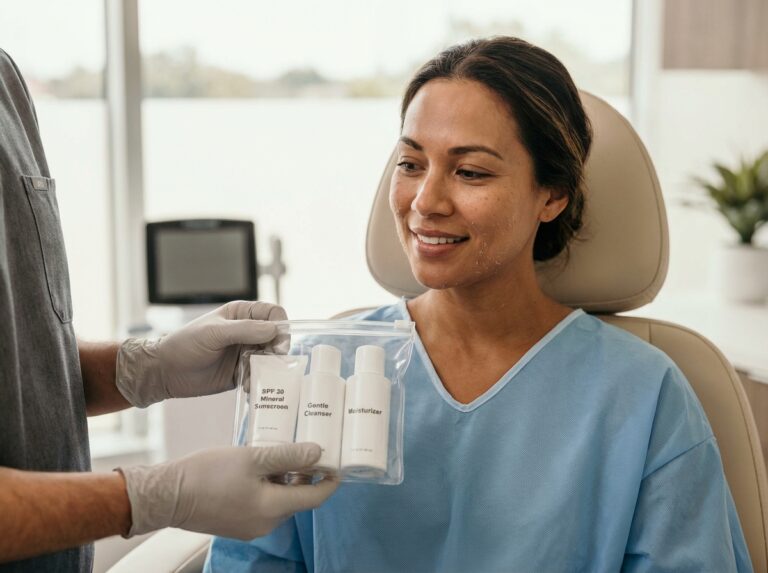
Proper washing after a chemical peel is one of the single most important steps to protect healing skin, prevent infection, and preserve treatment results. This article explains when and how to cleanse for different peel depths, what products and techniques help (and which to avoid), and clear timelines so you can recover safely and confidently.
The Critical First 48 Hours: Immediate Aftercare
The first 48 hours after a chemical peel represent the most critical window for your skin recovery. During this time, the inflammatory response is at its peak, and the skin barrier is either partially or fully compromised. Your face may feel tight, warm, or look like a significant sunburn. Your skin is working hard to begin the process of re-epithelialization. How you handle your face during these two days determines whether you achieve a smooth glow or end up dealing with unnecessary complications like infection or scarring.
Timing Your First Wash
The timing of your first wash depends entirely on the depth of the treatment you received. For light superficial peels, such as those using low strength glycolic acid or home AHA kits, you can typically wash your face the same evening, usually 6 to 12 hours post-treatment. These treatments only impact the very top layers of the stratum corneum. If you had an in-office superficial peel, your provider might suggest waiting until the next morning. This allows the neutralizing agents or any leave-on acids to finish their work without interference.
Medium depth peels, like a 35 percent TCA treatment, require more patience. You should generally wait a full 24 hours before introducing water to the area. The skin often feels tight and may look like a shiny mask. Washing too early can disrupt the controlled wound environment, neutralize the acid before it has achieved the desired effect, or increase irritation. For deep peels, such as those involving phenol, the rules change entirely. These are medical procedures that often involve surgical dressings. You must not wash your face until your physician gives the explicit signal. In many cases, the doctor will perform the first cleansing in the office during a follow-up visit.
Choosing the Right Cleansing Agent
The choice of cleanser is not just about being gentle; it is about chemistry. You need a syndet bar or a very gentle non-foaming liquid cleanser. Traditional soaps have a high pH (often alkaline) that can strip the already compromised acid mantle. A syndet, or synthetic detergent, is formulated to match the skin’s natural slightly acidic pH, usually around 5.5. This helps maintain the integrity of the remaining skin cells. Avoid any product with surfactants like sodium lauryl sulfate, exfoliating beads, or active acids like salicylic or lactic acid. These are too aggressive for raw skin and can cause intense stinging. Look for ingredients like ceramides or glycerin that support moisture. If your skin is particularly raw after a medium peel, some dermatologists recommend a simple saline rinse instead of a traditional cleanser for the first day.
The Proper Washing Technique
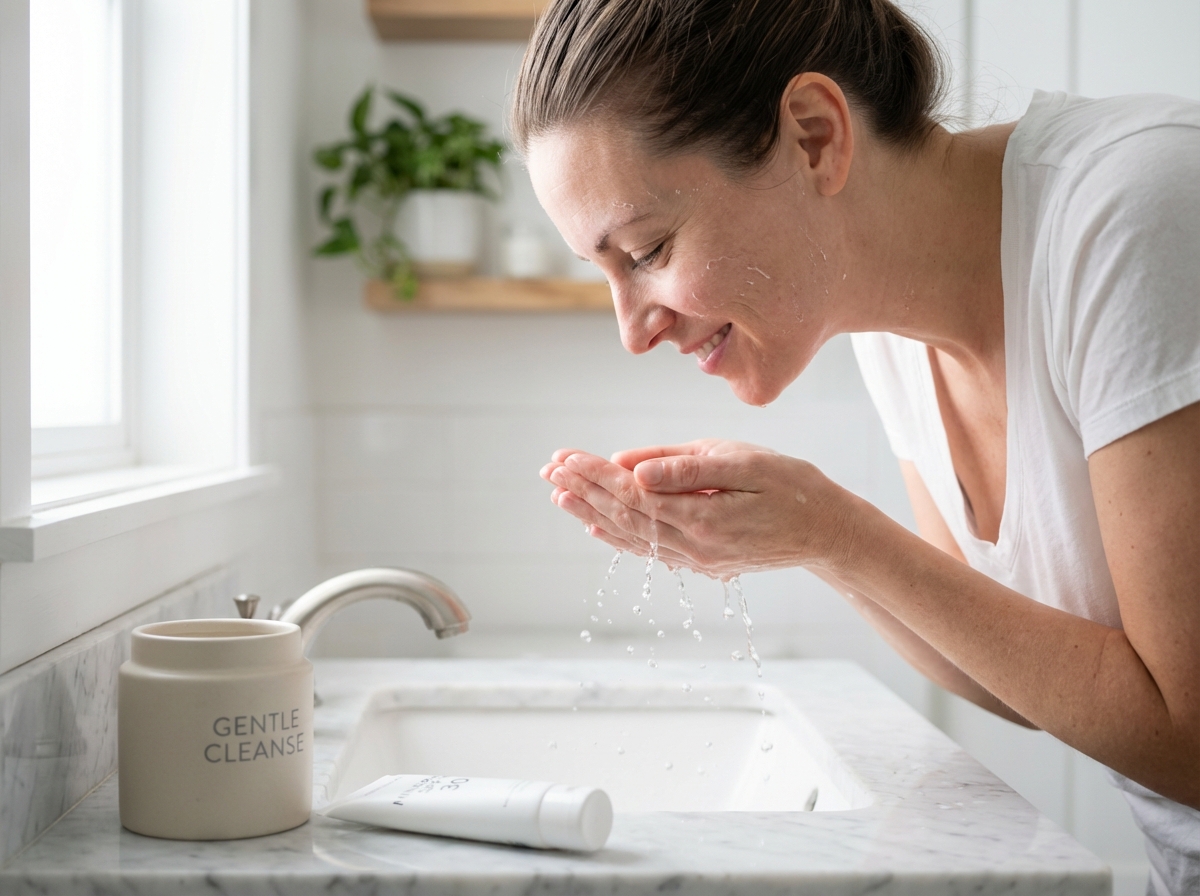
Technique is just as important as the product. Use lukewarm water only. Hot water increases blood flow to the face, which can worsen swelling and discomfort. Cold water may not effectively remove debris or ointment. Use your clean hands only. This is the time to put away your washcloths, facial brushes, or silicone scrubbers. Even a soft cloth can cause micro-tears in the vulnerable epidermis. Gently splash the water on your face. Massage the cleanser using very light, circular motions with your fingertips. Do not scrub.
You can take a shower, but you must be careful with water pressure. Do not let the showerhead spray directly onto your face; the force can tear delicate skin. When washing your hair, tilt your head back so the shampoo and conditioner run down your back rather than over your face, as these products often contain fragrances that will sting. Frequency should be limited to twice daily. Over-washing can lead to excessive dryness and delayed healing.
When you are finished, do not rub your face with a towel. Friction is the enemy of healing skin. Instead, take a clean, soft towel and gently pat the skin dry. You want to leave the skin slightly damp before moving to the next step in your routine.
Immediate Moisturizing and Occlusives
Once the skin is clean, you must seal in moisture. For the first 48 hours, petrolatum is the gold standard. It is non-comedogenic and provides a superior barrier against transmembrane water loss. A dry wound heals much slower than a moist one. Apply a thin layer of plain white petrolatum or a fragrance-free emollient multiple times a day. This keeps the peeling skin soft and prevents hard scabs from forming. If the skin dries out and cracks, you increase the risk of infection and scarring. You want the skin to look shiny but not feel suffocated. For those with a deep peel, your provider may prescribe specific antibiotic creams, specialized dressings, or soaks using a 0.25 percent acetic acid solution to keep the skin sterile and reduce redness.
Sun Protection and Environmental Warnings
Your skin has no natural defense against UV rays right now. During the first 48 hours, the best sun protection is total avoidance. Stay indoors and away from windows. If you must step outside, wear a wide-brimmed hat. Avoid chemical sunscreens on open or raw areas, as the ingredients can penetrate deeply and cause intense stinging or contact dermatitis. Once the skin has started to re-epithelialize, you can use a mineral sunscreen containing zinc oxide. Zinc is generally soothing and sits on top of the skin rather than absorbing into it.
Environmental factors are also a concern. Avoid steam from hot showers or saunas. Steam can cause the skin to swell excessively and may lead to premature peeling. Stay away from swimming pools and hot tubs. Chlorine is a harsh irritant that can cause chemical burns on treated skin, and public water contains bacteria that can cause infection. You should also avoid heavy exercise for at least 48 to 72 hours. Sweat contains salts that can sting and irritate the raw tissue.
Combined Procedures (Botox and Fillers)
Botox and fillers are frequently performed during the same appointment as a chemical peel. If you have had injectables, you must be extremely gentle when washing your face. Do not massage or press down on the areas where the needles were used. This prevents the product from migrating to other muscles. If you are combining treatments, your washing routine must remain focused on hydration and protection without friction.
When to Seek Urgent Care
While redness and swelling are normal, you should watch for warning signs. If you experience intense pain that does not respond to over-the-counter medication, contact your clinic. Look for signs of infection such as yellow crusting, oozing, or a fever. If you have a history of cold sores, be vigilant for any tingling or blisters. Most providers will start you on an antiviral medication before a medium or deep peel to prevent an outbreak. According to the American Academy of Dermatology, following these early steps is vital for preventing permanent pigment changes or scarring.
| Peel Depth | First Wash Timing | Recommended Product | Moisturizer Type |
|---|---|---|---|
| Superficial | 6 to 12 hours | Gentle syndet cleanser | Fragrance-free cream or light lotion |
| Medium (TCA) | 24 hours | Non-foaming cleanser or saline | Thick petrolatum or ointment layers |
| Deep (Phenol) | Clinician directed | Prescription or sterile rinse | Prescription ointments and occlusives |
Managing Peeling: Days 3 to 14
By the third day after a chemical peel, the initial redness usually transitions into the active peeling phase. This period requires a shift in how you handle your skin because the protective barrier is now physically lifting away. For superficial peels, you might see light flaking that looks like dry skin. This process typically wraps up by day seven. Medium depth peels involve more significant shedding. The skin often turns brown or develops a crust before it begins to peel in larger sheets. This phase can last up to fourteen days. During this time, the goal is to support the new skin underneath without forcing the old skin to leave before it is ready.
Safe Washing and Product Selection
Washing your face remains a delicate task during this window. You should continue using lukewarm water and your fingertips only. Avoid washcloths or facial brushes because the friction can tear the skin. A gentle, fragrance-free cleanser is essential. Look for syndet bars or non-foaming lotions that do not strip moisture. You want to avoid any product that leaves the skin feeling tight or “squeaky clean.” After washing, pat the skin dry with a fresh towel. Do not rub the surface.
Your ingredient list should be very short. Focus on hydrating humectants like hyaluronic acid and glycerin. These ingredients pull water into the skin. Follow this with a moisturizer rich in ceramides. Ceramides help rebuild the lipid barrier that the peel temporarily removed. If you had a medium peel, your provider likely recommended an occlusive like petrolatum. Applying a thin layer of petrolatum several times a day prevents the skin from cracking. This is especially important for the five to ten days while the skin is actively shedding. You can find more details on these recovery stages in the Chemical Peels for Skin Resurfacing – StatPearls – NCBI Bookshelf.
Ingredients to Avoid
You must stop using all active skincare until the skin has fully healed. This means no alpha hydroxy acids (AHAs) or beta hydroxy acids (BHAs). Do not use retinoids or vitamin C serums. These ingredients are too aggressive for the raw skin underneath the peel. Avoid alcohol-based toners because they cause stinging and excessive dryness. Physical scrubs are also forbidden. Even if the peeling looks messy, using a scrub can cause permanent scarring or dark spots. You should wait until the skin is no longer peeling and the redness has faded before slowly reintroducing these products. Start with a patch test on a small area near your jawline before applying actives to your entire face.
Managing Flakes and Discomfort
The most difficult part of days three through fourteen is the urge to pick at loose skin. You must leave the sloughing flaps in place. If a piece of skin is hanging, you can carefully trim it with small sterilized scissors. Do not pull it. Pulling skin that is still attached can lead to post-inflammatory hyperpigmentation. Use gentle emollients to keep the flakes soft and less noticeable. If the skin feels itchy or tight, apply a cool compress for a few minutes. This provides relief without irritation.
Sun Protection and Lifestyle
New skin is incredibly vulnerable to UV damage. You should use a mineral sunscreen with an SPF between 30 and 50 every single day. Look for formulas containing zinc oxide or titanium dioxide. These sit on top of the skin and reflect light rather than being absorbed. Physical barriers provide the best protection. Wear a wide-brimmed hat when you go outside. For medium peels, you should practice strict sun avoidance for three to six months. This prevents the new skin from developing dark patches. You should also avoid heavy exercise or saunas until the peeling is finished. Excessive sweating can cause the peeling skin to blister or irritate the raw areas.
Makeup and Social Downtime
It is best to avoid makeup until the peeling process is completely finished. Applying concealer over flaking skin often makes the peeling look more obvious and can trap bacteria against the raw tissue, increasing the risk of breakouts. For light peels, you might be able to apply mineral makeup after 24 to 48 hours, provided the skin is not weeping. For medium peels, you should wait at least fourteen days. Once the skin has fully re-epithelialized—meaning the surface is smooth and no longer peeling—you can resume your cosmetic routine.
Recovery Timeline Table
| Day Range | Skin Appearance | Primary Action |
|---|---|---|
| Days 3 to 5 | Peeling begins around the mouth and nose. Skin feels tight. | Apply ceramide moisturizer or petrolatum frequently. |
| Days 6 to 10 | Peeling peaks for medium peels. Superficial peels may finish. | Do not pick or pull loose skin. Use mineral SPF. |
| Days 11 to 14 | New pink skin is visible. Residual flaking at the edges. | Focus on barrier repair. Avoid all exfoliating acids. |
| Day 15 and beyond | Skin surface is intact. Redness begins to fade. | Slowly reintroduce actives after a successful patch test. |
Final Recovery Checklist
The success of a chemical peel depends on what happens after you leave the clinic. While the acid does the initial work of breaking down old skin cells, the actual transformation occurs during the recovery phase. This period requires a shift in how you view your skincare routine. You are no longer trying to scrub or treat your skin; you are protecting a healing wound. The most important rule to remember is that your skin must shed at its own pace. Forcing the process by picking or using abrasive cloths can lead to permanent scarring or post-inflammatory hyperpigmentation. This is especially true for medium and deep peels where the epidermal barrier is significantly compromised. According to clinical guidelines on chemical peels, proper post-peel care is the only way to ensure the new epithelium forms correctly without complications.
- Wash Gently: Use only your fingertips and lukewarm water. Avoid washcloths, sponges, or facial brushes.
- Moisturize Frequently: Apply a bland emollient like petroleum jelly multiple times a day to prevent cracking and maintain a moist wound environment.
- No Picking: Never pick, peel, or scrub the flaking skin. If a piece of skin is hanging, trim it carefully with sterilized scissors.
- Sun Protection: Wear a wide-brimmed hat and stay indoors as much as possible during the first week. Use a physical sunscreen with at least SPF 30 once the skin has re-epithelialized.
- Avoid Heat: Skip saunas, hot showers, and strenuous exercise for at least 48 to 72 hours to prevent swelling and irritation.
- Makeup Restrictions: Skip all makeup until the skin is no longer raw, open, or actively flaking.
- Medication Adherence: Follow the specific antiviral or antibiotic schedule if your doctor prescribed one.
- Reintroduction of Actives: Wait until the skin is fully healed (7-10 days for superficial, 3-4 weeks for medium) before using retinoids or acids, and always patch test first.
The path to glowing skin requires patience and strict adherence to these steps. Your provider knows your skin and the specific depth of the peel they performed, so their instructions should always take priority. If you have any doubts about how your skin is healing, reach out to your licensed dermatologist or aesthetic clinician for a quick check-in.
Sources
- Chemical Peels for Skin Resurfacing – StatPearls – NCBI Bookshelf — After undergoing a chemical peeling procedure, patients are advised to follow the following post-peel instructions to ensure proper healing of …
- Chemical Peels — As part of the treatment process, superficial peels generally cause mild erythema and desquamation, and healing time ranges from 1 to 4 days, depending on the …
- A Practical Approach to Chemical Peels: A Review of Fundamentals … — Exfoliation after treatment typically occurs over several days, and reepithelialization is complete within 5 to 10 days.32. Over-the-counter superficial peels.
- Chemical peels: FAQs – American Academy of Dermatology — After a medium or deep peel, you will have downtime. A deep chemical peel requires recuperation at home for 2 to 3 weeks.
- How Long is the Recovery from a Chemical Peel Treatment? — The ingredients in the chemical peel will cause peeling and flaking of the upper layer of the skin, removing dead skin cells and rejuvenating the skin's …
- How much downtime can I expect from chemical peels of different … — A TCA peel will have the longest downtime, usually 7-10 days. The lightest Skin Medica peel will have no downtime. Link.
- Deep Chemical Peel | American Society of Plastic Surgeons — Deep chemical peel recovery. Patients typically can return to work and some of your normal activities two weeks after treatment. Deep chemical facial peels …
- Chemical peel – Mayo Clinic — Redness, scabbing and swelling. Normal healing from a chemical peel involves redness of the treated skin. · Scarring. Rarely, a chemical peel can …
- Do Chemical Peels Hurt? 5 Myths and Facts You Need to Know — The recovery time is a week or longer. A medium peel treats wrinkles, acne scarring, and uneven skin tone. The procedure can get repeated three to nine months …
- Is it necessary to take time off from work? – The Naderi Center — After a medium to deep chemical peel such as a high percentage TCA or a Phenol based peel, the downtime can be quite significant and require at least 10 days …