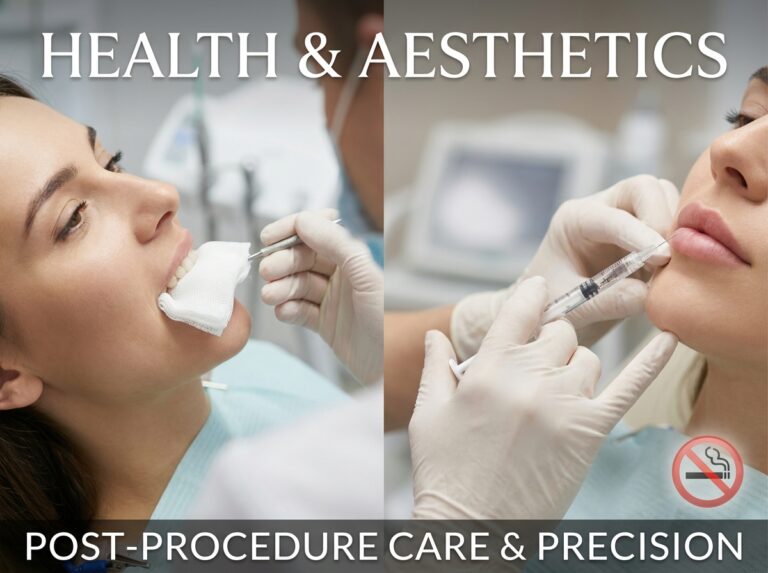
Scheduling dental procedures close to dermal filler injections can increase the risk of swelling, infection, and filler displacement. This article explains the clinical reasons behind the common two‑week waiting period, reviews evidence and expert guidance, and gives practical, safety‑focused aftercare steps for patients and providers in the United States.
How Fillers Integrate and Why Timing Matters
Understanding how dermal fillers settle into facial tissue is critical to understanding the risks of dental work. When you introduce dental instruments, pressure, and oral bacteria into the equation during the initial healing phase, the risks go beyond compromising the aesthetic result. There are biological interactions between the oral cavity and the filler that can lead to serious medical complications if the timing is off.
The Biological Connection: Biofilms and Bacteria
The mouth is full of bacteria. While usually harmless in the oral cavity, dental procedures can push these bacteria into the bloodstream, a process known as transient bacteremia. When a foreign body—like a fresh dermal filler—is present in the face, these bacteria can travel through the blood and latch onto the filler material.
Biofilm Formation
Once bacteria reach the filler, they can create a biofilm. This is a protective, sticky coating that makes the bacteria resistant to antibiotics and the body’s immune system. A biofilm infection might not manifest immediately; it can remain dormant and flare up weeks or even months later as a hard, painful nodule or an abscess. This is why dental procedures done in the vicinity of dermal fillers may result in complications like infections that mimic dental issues but are actually located in the filler gel.
Physical Displacement and Migration
Fresh filler is malleable, similar to a thick gel that hasn’t fully set. Dental appointments often require keeping the mouth open wide for 30 to 60 minutes, stretching the skin and muscles of the mid-face and perioral area. Dentists also use retractors to pull the cheeks and lips back. This pressure can physically squash or move the filler before it has integrated with the tissue. If filler was placed in the nasolabial folds, marionette lines, or lips, this manipulation can push the product into unwanted areas, leading to asymmetry, lumps, or migration that requires dissolving to fix.
Inflammation Stacking
The face is already in a state of controlled inflammation after injections as part of the healing process. Dental work causes its own inflammation. When these two inflammatory events are stacked, there is a risk of prolonged edema (swelling) that takes much longer to resolve. The trauma from a dental drill or injection can reactivate the inflammatory response around the filler, leading to excessive puffiness and discomfort.
Categorizing Dental Procedures by Risk Level
Not all dental visits carry the same weight. The level of risk depends on how invasive the procedure is, the duration of the appointment, and how much bacteria is released into the bloodstream.
| Procedure Type | Risk Level | Why It Is Risky |
|---|---|---|
| Visual Exam | Low | Involves looking only. Minimal manipulation of tissue and no bleeding. |
| Routine Cleaning | Moderate | Ultrasonic scalers create aerosols and vibration; scraping plaque releases bacteria into the bloodstream. |
| Fillings & Crowns | High | Requires anesthetic injections (often near filler sites), drilling vibration, and prolonged mouth opening. |
| Root Canals | Very High | Significant bacterial release, heavy vibration, and long duration. |
| Extractions & Implants | Highest | Open wounds in the mouth create a direct pathway for bacteria to enter the blood; direct access to bone. |
High-Risk Procedures
Procedures like a dental extraction after cosmetic injection are particularly dangerous. The open socket allows a large amount of bacteria to enter the circulation. If you have recently had cheek or jawline filler, the bacteria can track through the porous maxillary bone or lymphatic channels directly to the filler site. Periodontal surgery and dental implants fall into this same high-risk category.
Lower-Risk Visits
A simple visual check-up where the dentist just looks at your teeth is generally safe. However, even routine cleanings can be deceptive. If gums bleed during flossing or scaling, the barrier is broken, and bacteria can enter. That is why most experts recommend you wait at least 14 days before a dental appointment even for a cleaning.
Patient Factors That Increase Complication Risks
Your personal health history plays a massive role in how strict you need to be with the two-week rule. Some bodies handle bacteria and inflammation better than others.
Immunosuppression
If you have an autoimmune condition or take medication that suppresses your immune system, your body cannot fight off the bacteria released during dental work as effectively. This makes the risk of biofilm formation on the filler much higher.
Poorly Controlled Diabetes
High blood sugar levels impair healing and increase the risk of infection. Diabetic patients are already more prone to gum disease, which means there is a higher bacterial load in the mouth to begin with.
History of Cold Sores (HSV)
Both filler injections and dental work can trigger a herpes simplex outbreak. The stress on the tissue wakes up the virus. Having both procedures done close together creates a “double trigger” effect, which can lead to a severe outbreak that spreads to the filler injection sites.
Thin or Scarred Tissue
If you have very thin skin or scar tissue from previous surgeries, the filler is already sitting in a tighter, more precarious spot. The manipulation from dental tools is more likely to displace the product in these tissue types compared to someone with thicker dermis.
Anticoagulant Use
If you take blood thinners, you will bruise more easily. Dental injections and filler injections both cause trauma. Doing them close together can lead to massive hematomas (large bruises) that increase the risk of infection and distort the filler result.
Strategic Scheduling for Safety
The goal is to separate these treatments enough that the body can handle them safely.
The Ideal Timeline
The safest approach is to schedule dental work after fillers with a two-week buffer. This gives the filler time to integrate and the injection points time to seal. If major dental work is required, do it first. Complete all necessary dental treatments and wait until the mouth is fully healed (usually 2 to 4 weeks for extractions or implants) before getting fillers. This ensures there is no lingering bacteria in the bloodstream when the filler is placed.
Handling Unavoidable Dental Work
Dental emergencies, such as a chipped tooth or severe toothache, cannot wait two weeks.
Steps to Minimize Risk in Emergencies
If a dental visit within the two-week window is unavoidable, communication is key. Tell the dentist immediately about the fresh filler. They can alter their technique by using a pediatric mouth prop to reduce stretching, being gentler with cheek retraction, or applying chlorhexidine mouthwash before starting to lower the bacterial count.
Prophylactic Antibiotics
For high-risk patients or invasive emergency procedures, the doctor might prescribe a short course of antibiotics. This acts as a shield, killing the bacteria in the bloodstream before they can attach to the filler. This is not standard for everyone but is worth discussing if you are in a high-risk category.
Actionable Scripts for Patients
Communicating this to medical providers can feel awkward, but it is necessary. Here are simple ways to ensure everyone is on the same page.
Talking to Your Injector (Before Booking)
“I have a dental cleaning scheduled for next week. Should I reschedule it to ensure it doesn’t interfere with my filler results?”
Talking to Your Dentist
“I had dermal fillers injected in my [lips/cheeks] on [Date]. My injector advised me to avoid pressure on the area. Is it safe to proceed with today’s treatment, or should we postpone if it’s not an emergency?”
For Emergency Appointments
“I have a dental emergency, but I had fillers injected 4 days ago. Please be careful with the retractors and pressure on my face. Do I need antibiotics to prevent infection in the filler?”
When to Seek Urgent Care
You need to know the difference between normal post-dental soreness and a filler complication. If you had dental work recently after fillers and notice these signs, call your injector immediately.
- Signs of Infection: Look for redness that spreads, skin that feels hot to the touch, or a fever over 100.4°F. If the area becomes painful or throbbing days after the procedure, that is not normal healing.
- Increasing Asymmetry: Some swelling is normal. However, if one side of the face suddenly balloons up or looks significantly different from the other after a dental visit, the filler may have been displaced or an abscess may be forming.
- Mottling or Discoloration: If the skin looks pale, dusky, or blotchy, this could indicate vascular compromise. This is a medical emergency.
By respecting the two-week window, you protect your health and your aesthetic results. It is better to delay a routine cleaning than to risk a complex infection that requires dissolving your filler.
Frequently Asked Questions
You have the science down, and you understand the risks. But when you are staring at your calendar trying to fit in a root canal, a cleaning, and your lip top-up before a vacation, things get messy. Practical questions pop up that aren’t always answered in the consent forms.
Here is a breakdown of the most frequent questions patients ask when trying to juggle dental health and cosmetic injectables. These answers focus on logistics, timing, and safety protocols.
Why is the wait time exactly two weeks and not one week?
The two-week rule isn’t a random number. It is based on the physiological timeline of how dermal fillers integrate into the tissue. In the first few days, the filler is malleable and hasn’t fully “settled” or locked into the surrounding tissue.
The settling process
During the first 7 to 10 days, the hyaluronic acid is attracting water and the gel is stabilizing. If you go to the dentist at day seven, you might feel fine, but the pressure from keeping your mouth open or the dentist’s hands pressing on your face can physically displace the product. By day 14, the filler is generally stable enough to withstand manipulation, and any initial swelling or bruising that could mask an infection has subsided.
Does a routine dental cleaning count as “dental work”?
Yes, absolutely. Many patients assume a cleaning is safe because there are no needles or drilling involved. However, cleanings are actually a significant source of bacteremia (bacteria entering the bloodstream).
Ultrasonic scalers and bacteria
When the hygienist uses ultrasonic tools, they vibrate plaque and bacteria off the teeth and gums, often causing minor bleeding. This creates a direct entry point for oral bacteria to enter circulation. If you have fresh filler (less than two weeks old), that bacteria can travel to the implant site and colonize the foreign material, leading to a biofilm infection. Even for a cleaning, you need to wait the full 14 days.
Can I get a filling after filler if it’s just a small cavity?
You should wait. While a small filling seems minor, the vibration from the drill and the need to inject local anesthetic (lidocaine) near the treatment area poses risks.
Anesthetic displacement
If the dentist needs to numb the gums, that fluid injection can distort the tissue near the lips or nasolabial folds. If the filler is fresh, the volume of the dental anesthetic can push the filler out of its ideal placement. Plus, the vibration from the drill can disrupt the integration of the product. Search terms like can I get a filling after filler often lead to forums with mixed advice, but the clinical consensus remains: wait two weeks unless it is an emergency.
What if I have a dental emergency within the two-week window?
Medical necessity always trumps cosmetic preservation. If you have a severe toothache, an abscess, or a broken tooth, you cannot wait. An untreated dental infection is far more dangerous than a potential filler complication.
Emergency protocols
If you must go to the dentist within two weeks of getting filler:
- Notify your dentist immediately: Tell them exactly where you had filler and on what date.
- Request minimized pressure: Ask the dentist to use a bite block to help you keep your mouth open without straining, and request that they be mindful of pressing on the treated areas.
- Discuss antibiotics: Your dentist might prescribe a short course of antibiotics to prevent bacteria from seeding the filler material.
Should I delay my dentist appointment after filler, or delay filler after dental work?
The order matters. The safest sequence is to complete all dental work first.
Dental first, then filler
If you have dental work done first, you only need to wait until the dental procedure is fully healed and you have no active infection. For a cleaning, this might be just a few days. For an extraction, it might be two weeks. Once the mouth is healthy, you can get filler with very low risk.
Filler first, then dental
If you get filler first, you are locked into that two-week “no-touch” zone. If a tooth starts hurting three days later, you are in a difficult position. Always schedule the dentist first if you have the choice.
Why are extractions and implants considered higher risk?
Procedures like tooth extractions, root canals, and dental implants involve deep tissue manipulation and significant bleeding.
High bacterial load
These procedures release a higher volume of bacteria into the bloodstream compared to a simple filling. Waiting at least 7–14 days before a dental appointment ensures that your filler settles properly, but for major oral surgery, many providers recommend extending that buffer to 3 or 4 weeks to be safe. The body needs to focus its immune response on healing the extraction site, not fighting potential invaders around the filler.
Do these rules apply to Botox or a “Lip Flip”?
Neuromodulators like Botox or Dysport work differently than fillers, but caution is still required.
Botox timing
You don’t have the same risk of bacterial colonization with Botox because it’s not a physical implant like a filler. However, you still need to avoid lying flat or putting pressure on the face for at least 4 hours to prevent the toxin from migrating to unwanted muscles. Most clinicians advise waiting at least 24 hours before dental work. A “lip flip” involves Botox in the orbicularis oris muscle; dental work immediately after could theoretically affect the diffusion of the product, leading to a crooked smile.
Are there special considerations for lip fillers vs. cheek or jaw fillers?
Yes. The location of the filler changes the risk profile significantly during dental appointments.
Lip Fillers
These are at the highest risk for mechanical displacement. The dentist has to stretch the lips to access the teeth. If the filler is fresh, this stretching can mold the product into an uneven shape.
Cheek and Jaw Fillers
These areas are less likely to be squished by the dentist’s hands, but they are susceptible to sinus issues. The roots of the upper teeth are very close to the maxillary sinuses. If there is infection, that should be treated first, especially since bacteria from an upper tooth infection can travel through the porous bone and affect cheek filler.
Can I take antibiotics before my dental appointment to reduce risk?
You should not take antibiotics just “in case” without a doctor’s order. Overuse of antibiotics leads to resistance.
When antibiotics are appropriate
However, if you are immunocompromised, have a heart condition, or have a history of frequent infections, your provider might suggest antibiotic prophylaxis. This is a decision to be made between your dentist and your injector. Do not use leftover antibiotics from a previous illness.
Can the filler be dissolved if an infection happens after dental work?
Yes. One of the major safety features of hyaluronic acid (HA) fillers is that they are reversible.
Hyaluronidase treatment
If you develop a biofilm or abscess around your filler after a dental visit, antibiotics alone might not work because the bacteria create a protective shell on the filler gel. In this case, your injector will use an enzyme called hyaluronidase to dissolve the filler immediately. Removing the foreign body (the filler) is often necessary to clear the infection completely.
How do I coordinate between my dentist and injector?
Communication is your responsibility. Do not assume they know about each other’s work.
Documentation is key
Keep a note on your phone with the exact dates of your treatments. When you sit in the dentist’s chair, say: “I had dermal fillers injected in my [lips/cheeks] on [Date]. Is it safe to proceed?” Conversely, tell your injector: “I have a dental cleaning scheduled for [Date]. Should I reschedule?”
| Procedure | Recommended Wait After Filler | Risk Level |
|---|---|---|
| Routine Cleaning | 2 Weeks | Moderate (Bacteremia) |
| Whitening Trays | 2 Weeks | Low (Pressure on lips) |
| Fillings/Crowns | 2 Weeks | Moderate (Vibration/Anesthetic) |
| Root Canal/Extraction | 2-4 Weeks | High (Bacteria + Trauma) |
| Orthodontic Adjustments | 2 Weeks | Moderate (Movement/Pressure) |
Are there exceptions for immunocompromised patients?
If you have diabetes, an autoimmune condition, or are taking immunosuppressive medication, your body is less able to fight off the transient bacteria introduced during dental work.
Stricter timelines
For these patients, the two-week rule is a bare minimum. Many experts suggest extending the wait to 4 weeks to ensure the tissue is completely healed and the filler is fully integrated before exposing the system to oral bacteria. Always disclose your medical history to your injector; they may refuse to treat you until your dental health is 100% stable.
What about emergency dental care filler scenarios?
If you wake up with a swollen face three days after a dental appointment and you have fillers, do not ignore it.
Signs of trouble
If the swelling is hot to the touch, red, throbbing, or if you have a fever, this is not normal post-op swelling. It could be a delayed infection triggered by the dental work. Contact your injector immediately. They need to know you had dental work recently so they can treat it as a biofilm reaction rather than a simple bruise.
By understanding these nuances, you can navigate your calendar without compromising your health or your aesthetic investment. The two-week buffer isn’t just a suggestion; it is a safety barrier.
Takeaways and Practical Next Steps
We have moved past the common questions and the theoretical “what-ifs.” Now, we need to look at the concrete plan. You understand that mixing dental work and dermal fillers is a scheduling puzzle, but knowing the rules is different from actually managing your calendar. The goal here is simple: protect your investment in your face and keep bacteria where they belong.
The consensus among aesthetic providers and dental professionals in 2025 remains firm. You need a buffer zone. This isn’t just about avoiding a crooked lip or a dent in your cheek. It is about preventing bacteria from your mouth—which is full of them—from hitching a ride into the deep tissues of your face where the filler sits.
Filler Aftercare Checklist for Patients
You need a strategy to navigate this safely. This checklist helps you manage the timing between your cosmetic enhancements and your oral health needs.
Before Your Filler Appointment
Check your dental calendar first. If you have a cleaning, a filling, or a root canal scheduled within the next two weeks, you must reschedule one of the appointments. It is generally safer to get your dental work done first. However, if that dental work involves invasive procedures like extractions or treating an infection, you need to wait at least four weeks after the dental clearance before getting filler. This ensures all bacteria are gone.
During the Two-Week Recovery Window
Treat your face like it is healing, because it is. Avoid scheduling even minor dental check-ups. If you wake up with a toothache, that is an emergency, and emergencies trump cosmetic rules. But for anything elective, the answer is “not yet.”
Communication is Non-Negotiable
Do not hide your filler from your dentist. When you sit in that chair, tell them exactly where you had filler placed and when. If it was less than two weeks ago and you are there for an emergency, they need to know so they can minimize pressure on that area and potentially prescribe prophylactic antibiotics.
Monitor for Warning Signs
Swelling and bruising are normal for the first few days. However, you need to watch for specific red flags that indicate an infection or a vascular issue. If you have a fever over 100.4°F, severe pain that is not relieved by Tylenol (pain level above 7/10), or increasing redness and heat spreading from the injection site, you need to call your injector immediately.
Protocol for Providers: Coordinating Care
For the clinicians reading this—whether you are the injector or the dentist—standardizing your approach reduces liability and improves patient outcomes. We cannot rely on patients to remember every guideline. You need a system.
The following table outlines a practical protocol for coordinating dental scheduling after cosmetic filler to ensure safety and clarity.
| Phase of Care | Action Item | Details & Rationale |
|---|---|---|
| Pre-Screening | Dental History Intake | Ask every patient: “Have you had dental work in the last 4 weeks?” and “Do you have dental appointments in the next 2 weeks?” If they have an active dental infection, delay filler for 4-6 weeks. |
| Scheduling | The 2-Week Block | Hard-code a 14-day lockout in your scheduling software if possible, or verbally confirm this buffer during booking. For high-risk procedures (implants, root canals), extend the buffer to 3-4 weeks. |
| Documentation | Chart Notes | Document that the patient was advised of the dental restriction. Note the specific dates they must avoid elective dental work. If they are immunocompromised, document a longer recommended wait time. |
| Emergency Plan | Urgent Dental Needs | If a patient requires emergency dental work within the window, advise them to inform the dentist of the filler location. Consider a short course of prophylactic antibiotics if the dental risk is high. |
The Safety Net: Hyaluronidase Availability
We talk a lot about prevention, but we also need to talk about the solution if things go wrong. One of the biggest advantages of using Hyaluronic Acid (HA) fillers is that they are reversible.
If a patient develops an infection from dental bacteria seeding the filler, or if the filler is displaced significantly during a dental procedure, we have a tool called hyaluronidase. This is an enzyme that dissolves HA filler.
When to Use It
If there is a confirmed infection involving the filler, antibiotics alone are often not enough because of the biofilm we discussed earlier. The standard of care is often to dissolve the filler to remove the breeding ground for the bacteria. Knowing this option exists should give you some peace of mind, but it is a situation we want to avoid. Dissolving filler means losing the aesthetic result you paid for and starting over after the tissue heals.
Summary of Recommendations and Next Steps
The takeaway here is not that you have to choose between nice teeth and a refreshed face. You just cannot choose them on the same day or even in the same week. The anatomy of the face is interconnected. The blood supply, the lymphatics, and the tissue planes do not care about the distinction between “cosmetic” and “medical.”
Your Action Plan Today
Open your calendar right now. Look at your appointments for the next month. If you see a filler appointment and a dentist appointment within 14 days of each other, call and move one of them. It does not matter which one you move, as long as you create that two-week buffer.
Confirm with Your Team
Send a quick message to your injector if you are unsure. A simple text like, “I have a dental cleaning on the 15th, is it safe to keep my filler appointment on the 20th?” can save you from complications. Most reputable injectors will tell you to reschedule.
Listen to Your Body
After your treatment, if something feels wrong—if the swelling is getting worse instead of better after day three, or if you feel a throbbing pain—do not wait for your two-week follow-up. Call your provider. Early intervention prevents minor issues from becoming major infections.
By respecting the biology of tissue integration and the risks of bacterial spread, you ensure that your results look natural and your health stays uncompromised. Wait the two weeks. It is the smartest beauty decision you will make.
Sources
- How Long Should You Wait for Dental Work After Fillers? — The general recommendation is to wait for at least two weeks after your lip filler injections or any other filler treatment before scheduling a dental …
- Why Can't You Go to the Dentist After Lip Filler? – Get Refreshed — Waiting at least 7–14 days before a dental appointment ensures that your filler settles properly, minimizing complications. If an emergency dental visit is …
- How long after filler is it safe to have a dental cleaning done? — It's generally advisable to wait at least 1-2 weeks after receiving dermal fillers before undergoing any dental procedures, including cleanings.
- Volumising treatment and Dental Care: Risks and Best Practices — It is generally recommended to wait at least two weeks before or after any dental procedure to have any volumising consultation.
- Why Injectors Must Take Aesthetics Patients' Dental History — “If there is infection, that should be treated first. I personally wait at least 4-6 weeks before considering filler treatment after the …
- Considering Dermal Fillers? Your Questions Answered… — You will likely have some initial bruising/swelling after treatment which will settle over 1-2 weeks after treatment. … Dental for their excellent care and …
- Here's What NOT to Do After Botox or Filler Injections — Do go to the dentist, just not within 24 hours after dermal fillers. Fillers in the lips, around the mouth and the nasolabial folds are at risk …
- Dental Procedures: Is it a Risk Factor for Injectable Dermal Fillers? — Dental procedures done in the vicinity of dermal fillers may result in complications of the dermal fillers such as infections which may mimic a dental infection …
Legal Disclaimers & Brand Notices
The content provided in this article is for informational purposes only and does not constitute professional medical advice, diagnosis, or treatment. Always seek the advice of a physician or other qualified health provider with any questions you may have regarding a medical condition, procedure, or clinical guidance. Never disregard professional medical advice or delay in seeking it because of something you have read in this article.
All product names, logos, and brands mentioned in this text, including Botox and Dysport, are the property of their respective owners. All company, product, and service names used in this article are for identification purposes only. Use of these names, trademarks, and brands does not imply endorsement, affiliation, or certification by the trademark owners.