Injectables Aftercare (Botox & Neurotoxins)

Wearing Makeup After Botox: How Long Should You Wait?
Woman in a dermatology clinic gently applying lightweight foundation near her forehead with a disposable sponge, blurred syringe tray in background.

Making the right choices about makeup after Botox helps protect results and reduce risks like infection, bruising, or product migration. This article explains commonly recommended wait times, why they matter, safe product and application choices, what to do for bruising,…
Sculptra Aftercare: The 5-5-5 Massage Rule Explained

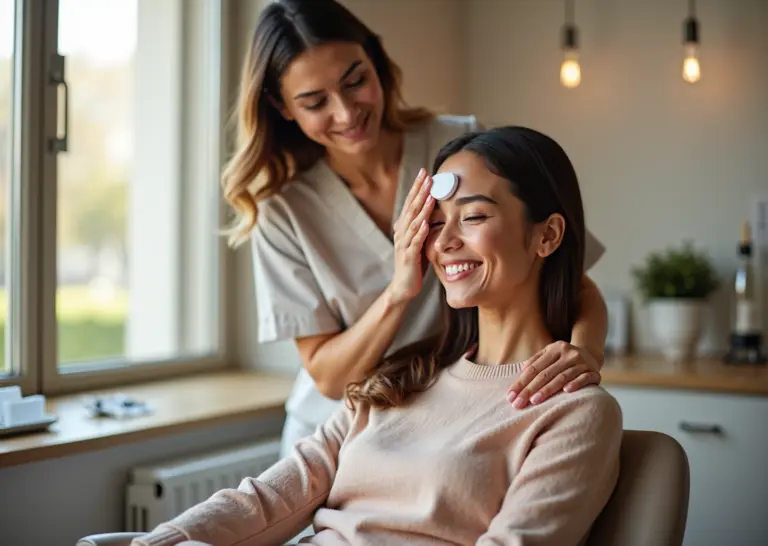
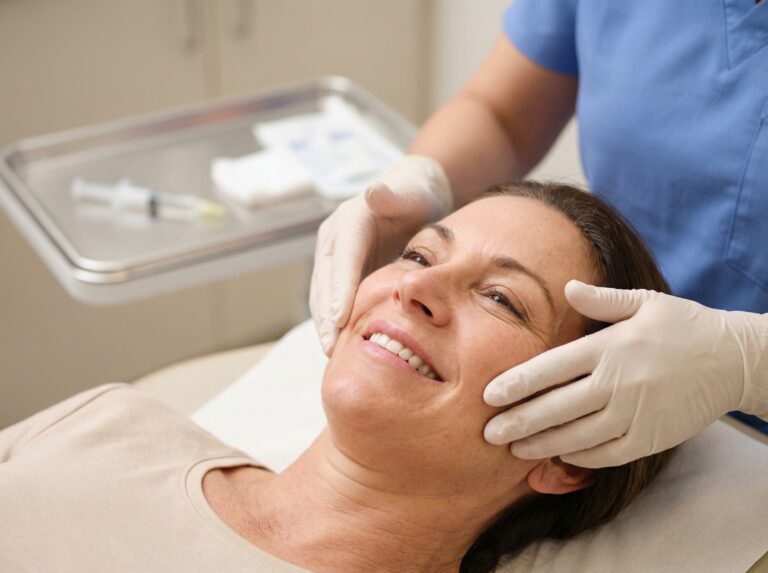
Clinician demonstrating gentle facial massage on a patient after Sculptra injection in a bright clinical setting

Sculptra (PLLA) stimulates collagen over months, so proper early aftercare directly affects safety and outcomes. The widely used 5-5-5 massage rule is a simple protocol patients follow to distribute product and reduce nodules. This article explains why the rule matters,…

Botox Bruising: How to Minimize Marks and Cover Them Up

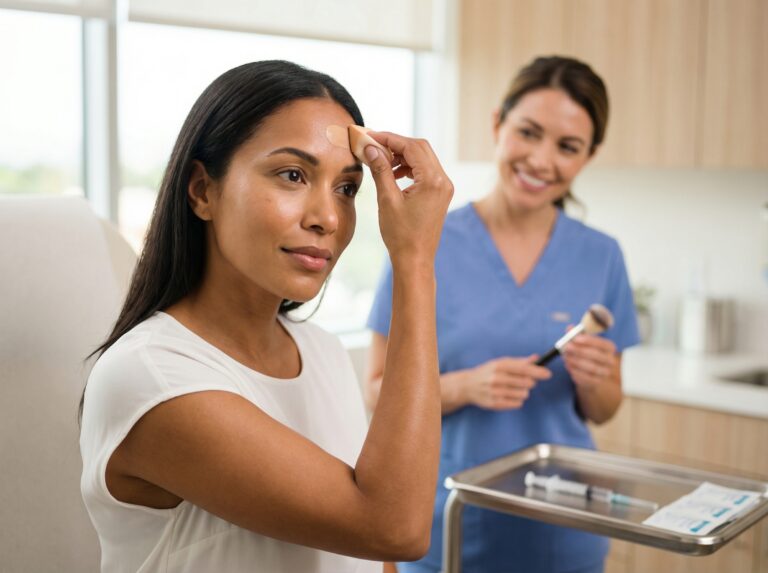
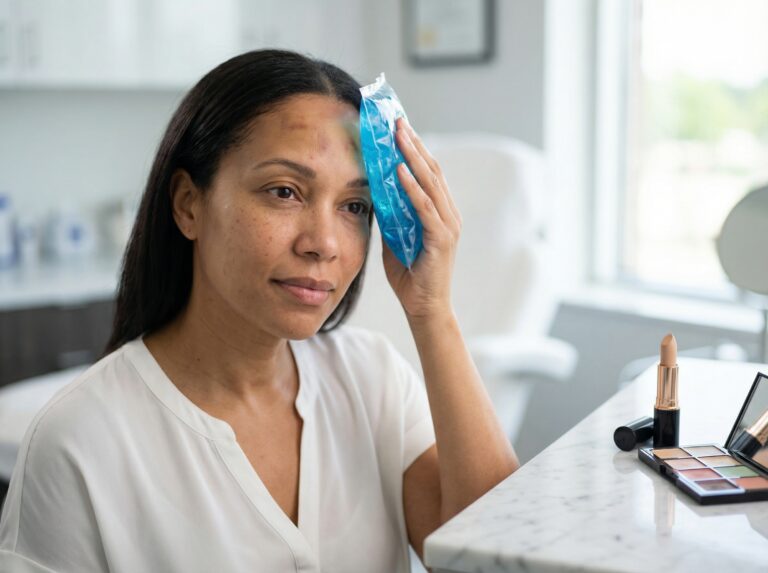
Close-up of a woman gently holding an ice pack to a small bruise near her forehead after Botox with concealer and makeup brushes nearby in a clean clinic setting

Why bruises appear after Botox and how to prevent them Minor bruising after Botox injections is common but usually short-lived. Even with the most skilled injector and perfect preparation, a needle breaking the skin always carries a risk of hitting…

Alcohol After Botox: Why Avoiding Wine Might Save Your Results

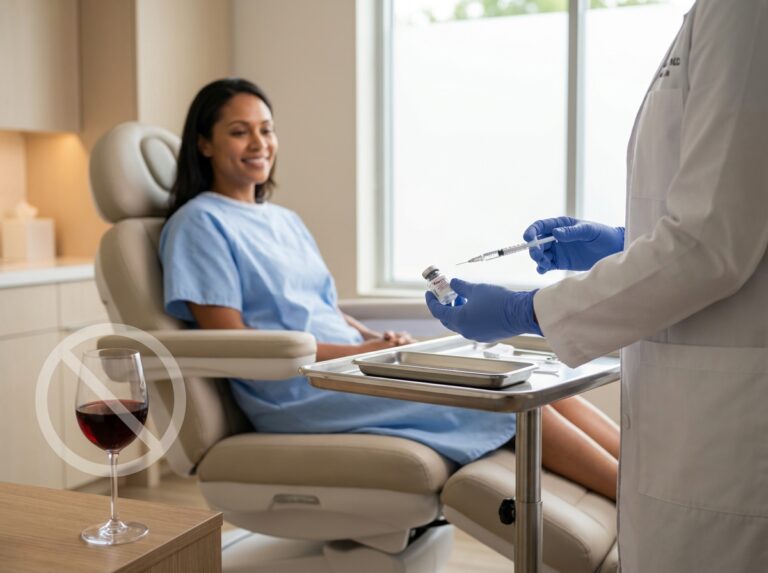
Patient in medical aesthetic clinic with injector nearby and a wine glass on a table marked with a subtle no symbol representing avoiding alcohol after Botox

Alcohol—especially wine—can increase bleeding, swelling, and bruising after Botox injections. This article explains the physiological reasons to avoid drinking, summarizes current clinical guidance and timelines for safe drinking after treatment, and offers practical aftercare steps so you can protect your…

Why You Can’t Lay Down After Botox: Understanding the 4-Hour Rule

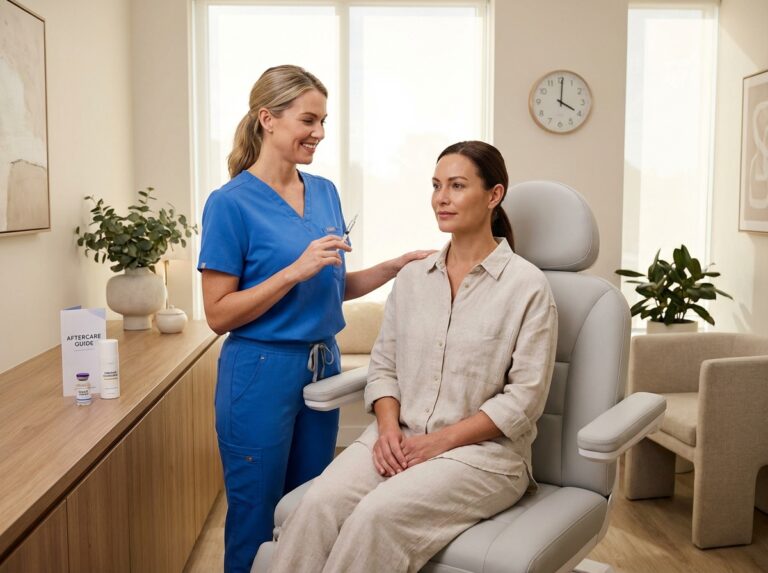
Patient sitting upright after receiving Botox in a modern clinic with clinician holding syringe and a clock highlighting the four hour rule

After receiving Botox, many clinics advise staying upright for at least four hours. This article explains the 4-hour rule, why lying down can increase the risk of toxin migration and eyelid ptosis, and how Botox aftercare fits into broader recovery…

Can I Exercise After Botox? A Safe Return to the Gym Timeline

Person gently stretching in a gym with a small adhesive bandage on the forehead indicating recent Botox treatment, water bottle and towel nearby

After receiving Botox, many patients wonder when it’s safe to resume exercise. This article examines how Botox works, why vigorous activity can affect outcomes, and provides a practical, safety‑first gym timeline for returning to cardio, resistance training, and hot workouts.…

Botox Aftercare 101: The First 24 Hours Do’s and Don’ts

Patient holding cold compress on forehead after Botox in a modern U.S. aesthetic clinic with clinician nearby

The first 24 hours after Botox injections are crucial to protect results and reduce complications. This article guides you through evidence-based do’s and don’ts, a clear hour-by-hour aftercare timeline, warning signs to watch for, and how Botox aftercare compares to…