Why bruises appear after Botox and how to prevent them
Minor bruising after Botox injections is common but usually short-lived. Even with the most skilled injector and perfect preparation, a needle breaking the skin always carries a risk of hitting a tiny vessel. Once that mark appears, the focus shifts immediately from prevention to damage control. This article explains why marks form, what to do immediately after treatment to reduce their size and duration, safe topical and oral options, and step-by-step makeup techniques to conceal bruises while protecting healing skin. Follow these evidence-informed tips to minimize downtime and get predictable results.
You have just left the clinic and the needle pricks are fresh. The way you handle the next few hours often determines if you wake up with clear skin or a telltale purple mark. While the injector’s technique plays a massive role, your behavior immediately post-procedure is the other half of the equation. We need to focus on vasoconstriction first to stop any minor bleeding under the skin and then switch gears to healing.
Immediate Action: The First 24 Hours
The priority right now is stopping the spread of blood from the tiny capillaries that may have been nicked during injection. If a capillary is nicked, blood leaks into the surrounding tissue until clotting stops it. Cold therapy is the standard for this. It causes blood vessels to constrict, slows down blood flow to the area, and limits the size of a potential bruise.
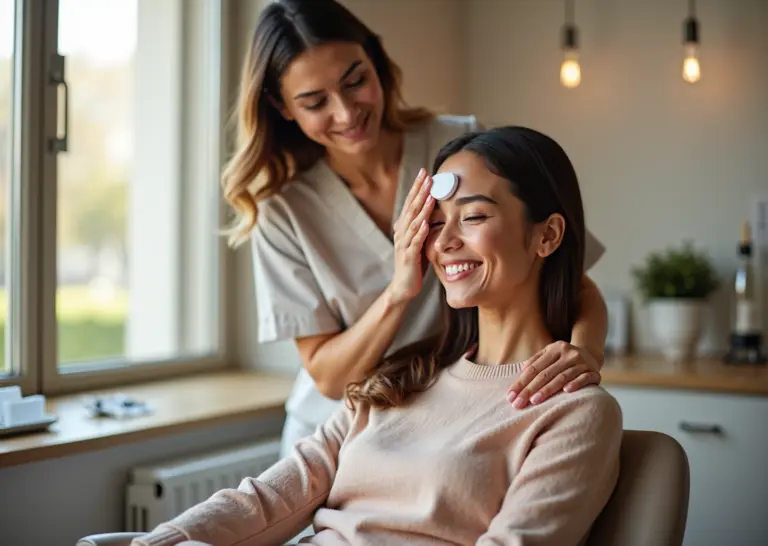
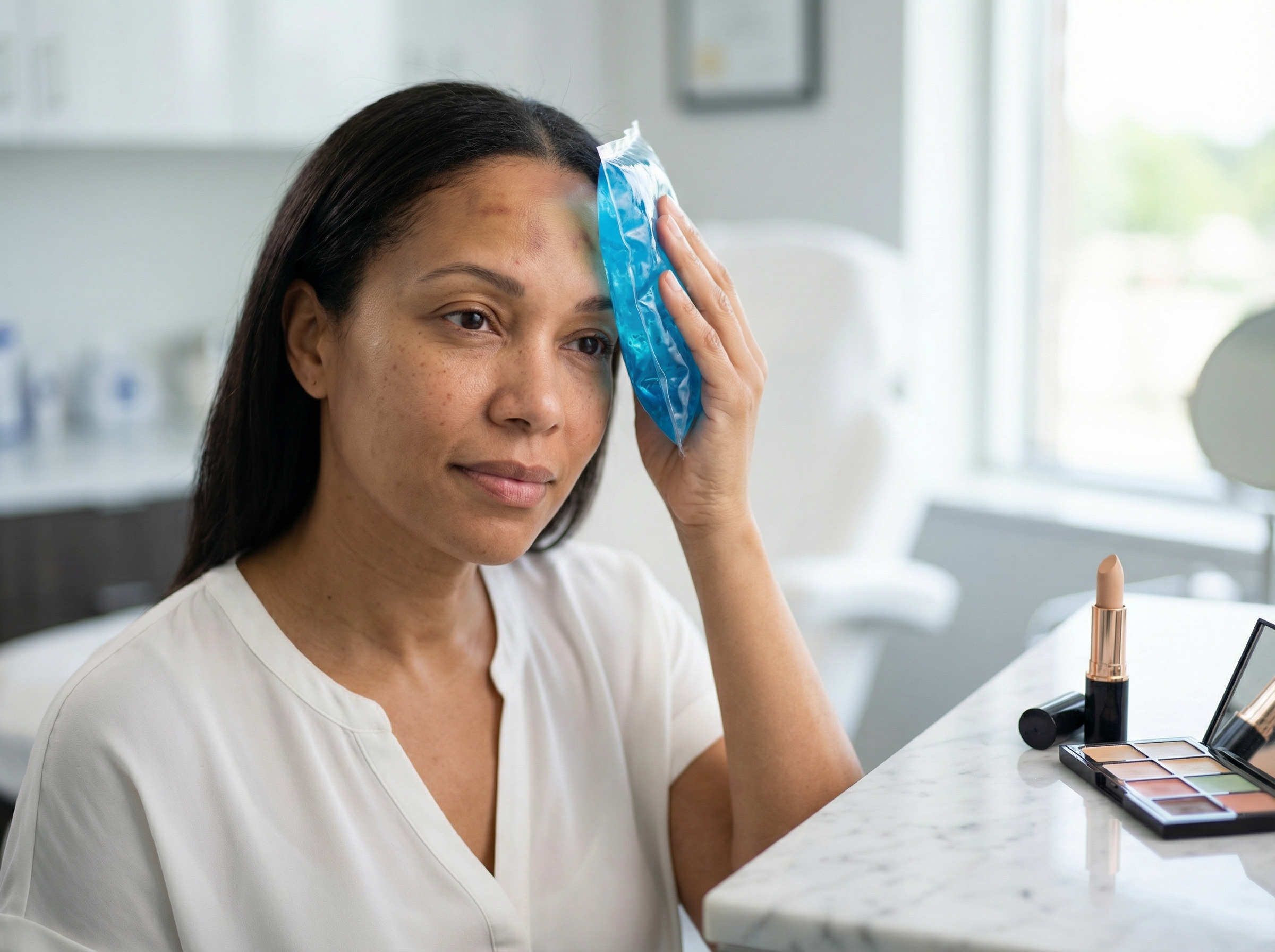
You should apply a cold compress to the injection sites, but the technique matters. Do not leave ice on your skin for an hour straight. This can cause thermal injury or frostbite, which is worse than a bruise. The correct protocol is intermittent application. Hold the cold pack against the area for 10 to 15 minutes. Then remove it for at least 45 minutes to an hour. Repeat this cycle for the first 6 to 12 hours while you are awake.
Hygiene is critical here. Wrap your ice pack or bag of frozen peas in a clean, thin cloth or paper towel. Never place raw ice directly on the injection points. The skin barrier has been compromised by the needle, and we want to avoid introducing bacteria.
Additionally, keep your head elevated for at least four hours after the appointment. Lying flat can increase blood pressure in the face and might encourage the toxin to migrate to unwanted muscles. Sleep on your back this first night if you can, using an extra pillow to keep your head above your heart. This simple gravity trick helps drain fluid away from the face and reduces the puffiness you might see the next morning.
Behaviors to Avoid
What you do not do is just as important as what you do. For the first day, you need to keep your blood pressure stable and avoid increasing blood flow to the face. This means skipping the gym. Heavy exercise increases your heart rate and dilates blood vessels. This can cause a tiny, stable clot to dislodge and restart bleeding under the skin. Wait at least 24 to 48 hours before resuming intense workouts.
Heat is also an enemy during this initial phase. Avoid saunas, steam rooms, hot yoga, and very hot showers. Heat causes vasodilation, which is the opposite of what we want right now. Keep your face cool.
Do not massage or rub the treated areas. Some patients instinctively want to rub the spot that hurts. This is dangerous with Botox because it can cause the toxin to migrate to unintended muscles, potentially leading to complications like drooping eyelids. It also spreads the bruise. If you are applying skincare or sunscreen, use a very light touch. Avoid facials, exfoliation, and topical retinoids for at least 24 hours to allow the puncture wounds to seal without irritation.
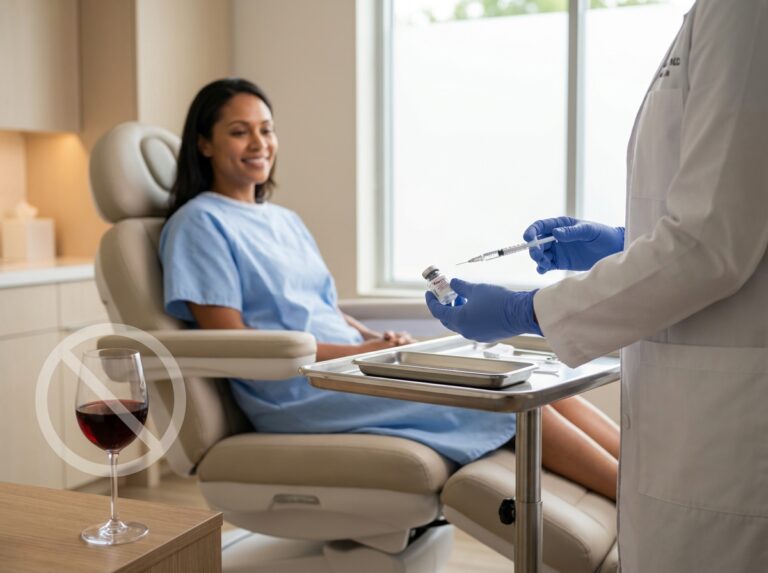
Alcohol acts as a blood thinner and a vasodilator. Having a glass of wine the night of your treatment can increase bruising severity. It is best to abstain for at least 24 hours post-injection.
Phase Two: 48 to 72 Hours Later
Once you pass the 48-hour mark, the strategy changes. The risk of active bleeding has passed. The bruise is now a trapped pool of blood cells that your body needs to break down and reabsorb. Now the goal is to help the body clear the pooled blood that creates the dark mark. We switch from cold to warm.
Apply a warm compress to the bruised area several times a day. The warmth dilates the capillaries and increases circulation to the area. This fresh blood flow brings macrophages, the cells responsible for cleaning up cellular debris. They help the lymphatic system flush out the metabolic waste and old blood cells. You can use a warm washcloth or a reusable gel pack. Ensure it is warm, not scalding hot, and apply for 10 minutes a few times a day.
Topical and Oral Helpers
Many patients use supplements and creams to speed up the post-Botox timeline for healing. The evidence varies, but clinical experience often supports their use.
Arnica Montana: This is the most common remedy, derived from a flower in the sunflower family. It comes in gel, cream, or oral pellet form. Arnica is believed to reduce inflammation and discoloration. You can start applying arnica gel gently to the area after the injection sites have closed, usually a few hours after treatment. Oral arnica pellets are often taken for a few days before and after the procedure. Be aware that arnica can cause allergic reactions in people sensitive to ragweed or marigolds.
Bromelain: This is an enzyme found in pineapples. It has anti-inflammatory properties that may help reduce swelling and bruising. Some patients take bromelain supplements on an empty stomach. If you have a pineapple allergy, you must avoid this.
Vitamin K Oxide: Creams containing Vitamin K are specifically designed to help the body break down the blood that forms a bruise. They are often used after surgical procedures to treat purpura and can be effective for injection bruises. Apply this twice daily once the initial 24-hour period has passed.
Heparinoid Creams: These are available over the counter in some regions and help dissolve small blood clots and improve local circulation. They can be very effective for established bruises. Always check the ingredients list; if you have sensitive skin or allergies, test a small amount of any topical product on your arm before putting it on your face.
Professional Laser Treatments
Sometimes a bruise is stubborn, particularly large, or happens right before a major event. If you cannot wait for natural healing, you might consider a professional intervention. Vascular lasers like the Pulsed Dye Laser (PDL) or Intense Pulsed Light (IPL) can break down the pigment in the bruise.
These treatments target the hemoglobin in the blood. The energy shatters the pigment so the body can absorb it faster. This is not done immediately after injection; you typically wait at least 24 to 48 hours to ensure the Botox has settled and the bleeding has stopped. This is an extra cost and requires a visit to the clinic, but it can cut healing time significantly.
Skincare and Hygiene During Healing
You do not need to abandon your skincare routine, but you should modify it. Your skin barrier is technically compromised after injections. Keeping the area clean prevents infection. For the first evening, wash your face with a gentle, non-foaming cleanser and lukewarm or cool water. Do not use a sonic cleansing brush, abrasive scrubs, or washcloths. Use your clean hands and pat the skin dry with a clean towel instead of rubbing.
Avoid active ingredients like retinoids, glycolic acid, or strong exfoliants near the injection sites for 24 hours. These can irritate the skin which is already sensitive from the needle pokes. Stick to a simple moisturizer.
Red Flags and Medical Review
Most bruising is cosmetic and harmless. However, you should know when to call your provider. Normal bruising is flat and purple or blue. It may turn yellow or green as it fades.
If you notice a hematoma, which is a collection of blood that feels like a firm lump under the skin, contact your injector. If you experience increasing pain, severe swelling that distorts your features, or signs of infection like heat, redness spreading from the site, or pus, seek medical attention immediately. While rare, these issues require professional management.
Watch for skin changes beyond simple bruising. If the skin turns pale, white, or dusky and mottled, this is an emergency. It could indicate vascular occlusion, where a vessel is blocked. While extremely rare with Botox compared to fillers, any unusual skin blanching warrants an immediate call to your provider.
Visual disturbances or drooping eyelids are not related to bruising but are serious adverse events. According to the Botox Adverse Events Report, these complications are uncommon but require assessment by your clinician. Furthermore, reports of fake Botox causing harmful reactions highlight the need to watch for systemic symptoms. If you experience difficulty swallowing, speaking, or breathing, seek emergency care immediately.
Resuming Medications
Patients often ask when they can restart blood thinners, aspirin, or NSAIDs like ibuprofen. If you stopped these specifically for the procedure under a doctor’s guidance, the general rule is often to wait 24 to 48 hours post-injection. This allows the primary injection sites to seal and the clot to stabilize.
However, if you are on prescription anticoagulants for a heart condition or stroke risk, you should never stop or restart them without explicit instruction from your prescribing physician. This is not a cosmetic decision; it is a medical one. When discussing this with your doctor, simply ask: “I had a superficial soft tissue injection. Is it safe to resume my regular dosage now?”
Frequently Asked Questions
How long does Botox bruising last and is it normal?
Bruising is the most common side effect of any injectable treatment, but it does not happen to everyone. Statistics suggest that bruising occurs in roughly 6 to 25 percent of patients, particularly around the delicate eye area. If you do bruise, the timeline is generally predictable. You might not see much immediately after the needle is withdrawn. The discoloration often begins to surface within the first 24 to 48 hours as blood from a nicked capillary spreads under the skin.
The mark will likely reach its peak color and size around day two or three. This is when it looks the most dramatic, usually turning a deep blue or purple. Most minor bruises resolve completely within 7 to 14 days. However, larger hematomas can persist for up to three weeks. If you are still seeing significant discoloration after two weeks, it is wise to check in with your provider, but patience is usually the only prescription.
For more context on what is considered typical, bruising in the area around the eyes is the most common issue reported, but it is temporary and cosmetic, not a sign that the treatment failed.
When is it safe to apply makeup and what techniques minimize trauma?
You should wait until the injection puncture sites have fully closed before applying any cosmetics. For most people, this takes about 4 to 6 hours, but waiting until the next morning is the safest bet to avoid introducing bacteria into the skin. When you do apply makeup, hygiene and technique are paramount. Use freshly cleaned brushes or sponges. Dirty tools are a fast track to infection.
Application technique matters just as much as cleanliness. Do not drag or rub the skin. Rubbing can disrupt the settling neurotoxin in the first 24 hours or aggravate the bruised tissue. Instead, use a stippling or patting motion. Gently press the product into the skin. This provides better coverage for discoloration and keeps the treated area undisturbed.
Should I stop aspirin or other blood thinners before treatment?
Blood thinners are the biggest controllable risk factor for bruising. Medications like aspirin, ibuprofen (Advil, Motrin), and naproxen (Aleve) inhibit platelet function, meaning your blood takes longer to clot. Even a tiny needle prick can bleed more than usual, leading to a larger bruise. Supplements like fish oil, gingko biloba, vitamin E, and garlic pills have a similar effect.
Ideally, you should avoid these for one week prior to your appointment if your medical condition allows. However, you must never stop prescribed blood thinners (like warfarin or prescription-strength aspirin for heart conditions) without explicit permission from your prescribing physician. The risk of a cardiovascular event outweighs the cosmetic inconvenience of a bruise. If you have a headache or pain before your appointment, Tylenol (acetaminophen) is generally safe to take as it does not thin the blood.
Can injections cause permanent marks or hyperpigmentation?
Permanent marks from Botox are extremely rare. The needle used is incredibly fine, often leaving no visible trace after a few hours. However, there is a small risk of post-inflammatory hyperpigmentation (PIH). This happens when the inflammation from the needle entry or the bruise itself triggers the skin to produce excess melanin. This results in a brown or dark spot that lingers long after the bruise has healed.
This is more common in darker skin tones (Fitzpatrick skin types IV-VI). To prevent this, strict sun protection is vital. UV exposure makes PIH worse. If a brown mark persists for months, it is likely pigment, not a bruise, and may require treatment with lightening creams or chemical peels. Another rare issue is hemosiderin staining, where iron from the leaked blood settles in the skin, leaving a yellowish-brown stain. This also eventually fades but can take months.
Are there differences in bruising risk by injection site and skin type?
Anatomy plays a huge role here. The area around the eyes (crow’s feet) is the most prone to bruising. The skin there is incredibly thin, and it is packed with a complex network of tiny superficial veins. Even the most skilled injector can nick a vessel they cannot see. The forehead is generally more forgiving as the skin is thicker and the vessels are fewer. The glabella (frown lines between the eyebrows) carries a moderate risk.
Skin type also dictates visibility. Fair skin with cool undertones is translucent, making even minor capillary leaks show up as bright blue or purple marks. Thicker, darker skin hides minor bruising better, but as mentioned, carries a higher risk for reactive pigmentation issues. Age is another factor; as we get older, our skin thins and our blood vessels become more fragile, increasing the likelihood of marks.
How do I camouflage a blue or purple bruise for fair and deeper skin tones?
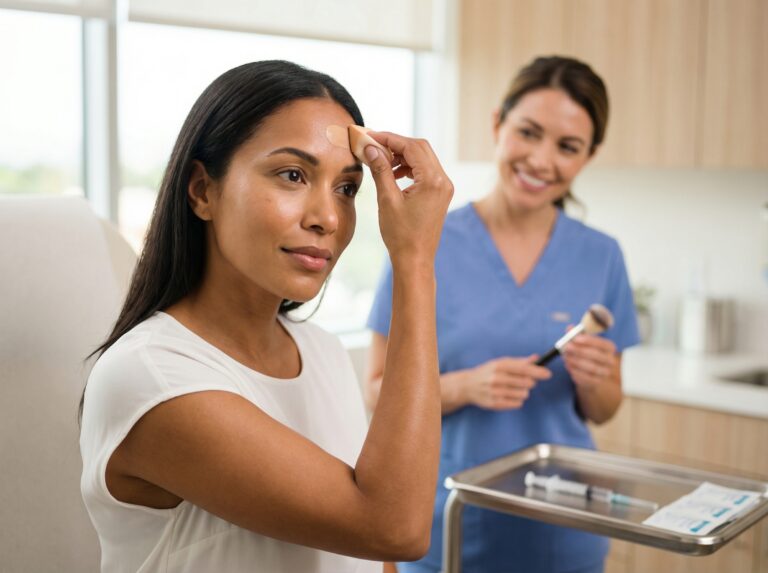
Concealer alone often looks gray or muddy over a bruise. You need color correction based on color theory. For a fresh blue or purple bruise on fair to medium skin, use a yellow or peach color corrector first. The yellow neutralizes the purple tones. Pat it on lightly, let it set, and then apply a concealer that matches your skin tone on top.
For deeper skin tones, a dark purple or black bruise needs a deep orange or reddish-orange corrector to cancel out the dark tones without looking ashy. Once the bruise starts fading to yellow or green later in the week, you might need to switch your corrector. A lavender or pink corrector helps neutralize yellow/green stains. Always use a high-pigment, creamy formula and set it with a translucent powder to prevent it from sliding off the bruised area.
What are the long-term effects of repeated treatments?
Patients often ask if their skin will look worse if they stop or if bruising causes long-term damage. Generally, the skin recovers fully from the minor trauma of injections. If you stop getting Botox injections, their effects will fade with time and your muscles will regain their function, returning your wrinkles to their pre-treatment state. There is no evidence that routine injections cause permanent skin sagging or scarring if performed correctly. In fact, consistent treatment often weakens the targeted muscles enough that you may need less product or less frequent visits over time.
However, repeated bruising in the exact same spot is not ideal due to the risk of iron staining mentioned earlier. If you find you are bruising every single time, discuss your medication list and pre-care routine with your provider, or ask them to map your veins with a vein finder light to avoid hitting the same vessels repeatedly.
Final takeaways and recovery timeline
You have the answers to the most common questions now. You understand the risks. You know that bruising is a possibility even with the best injectors. Now we need to look at the practical reality of living with those marks for a week or two. The recovery process is rarely a straight line. It involves specific steps you must take to ensure the product settles correctly and any marks fade quickly. This timeline helps you manage expectations and keep your results safe.
The Immediate Phase: 0 to 24 Hours
The first day is about damage control. Your goal is to keep the product exactly where the injector placed it. You also want to limit any bleeding under the skin that causes bruising. Small capillaries may have been nicked during the procedure. They need time to seal.
- Positioning: Keep your head elevated for at least four hours after the appointment. Lying flat can increase blood pressure in the face. It might encourage the toxin to migrate to unwanted muscles. Sleep on your back this first night if you can. Use an extra pillow to keep your head above your heart.
- Cold Therapy: Apply cold compresses if you feel tenderness or see immediate redness. Use a gel pack wrapped in a thin cloth. Do not put ice directly on the skin. Hold it there for 10 minutes. Take it off for 10 minutes. Repeat this cycle a few times. The cold constricts blood vessels. This limits the size of a developing bruise. Do not apply heavy pressure.
- Activity Restrictions: Skip the gym today. Intense exercise increases your heart rate and blood flow. This can force a small bruise to become a large one. It can also increase the risk of the Botox moving to other areas. Avoid alcohol for the same reason. Alcohol thins the blood and dilates vessels. Wait at least 24 hours before having a glass of wine.
- Hygiene: Avoid touching your face. Do not rub the area. Do not get a facial massage. You need the protein to bind to the nerve receptors without interference. Even washing your face should be done with a very light touch this evening. Use a gentle cleanser and lukewarm water. Pat dry. Do not rub.
The Development Phase: 24 to 72 Hours
You might wake up the next day looking fine. You might also wake up with a bruise that has darkened. This is normal. Bruises often look worse before they look better. The hemoglobin in the blood changes as it breaks down. It shifts from red to purple or blue. This peak usually happens around day two or three.
Stop using ice after 24 hours. Ice is for stopping active bleeding. Once the bruise has formed, you need to clear the trapped blood. Switch to warm compresses after 48 hours. The warmth increases circulation to the area. This helps your body reabsorb the pooled blood cells faster. Use a warm washcloth. Apply it gently for 10 to 15 minutes a couple of times a day.
You can resume light exercise now. Listen to your body. If you feel throbbing in the injection site during a workout, stop. It means the area is not quite ready for high blood pressure. Continue to avoid blood-thinning painkillers like aspirin or ibuprofen if your doctor says it is safe. These can prolong the time it takes for a bruise to heal. Tylenol is generally the preferred option for pain relief during this window.
The Healing Phase: 3 to 7 Days
The bruise will likely change color again. It often turns green or yellow. This is a good sign. It means your body is metabolizing the fluids. You can start active management of the bruise now. Topical treatments can help speed this up.
Arnica montana gel is a popular choice. Apply it to the bruised area three times a day. Some patients find relief with topical vitamin K creams. These creams help strengthen the capillary walls. Bromelain supplements might also help reduce inflammation. Always check with your provider before adding supplements to your routine.
You can wear makeup to cover the marks. Be careful with application. Use clean brushes or sponges to avoid introducing bacteria to the healing skin. The key is to be gentle. Do not drag the skin while applying foundation.
The Botox itself will start to take effect during this week. You will notice limited movement in the treated muscles. The skin will start to look smoother. Do not panic if the results look uneven at day five. One side often takes effect faster than the other. This usually balances out by the end of the second week.
The Resolution Phase: 7 to 14 Days
Most bruises fade completely by day 14. The yellow tones disappear. The skin returns to its normal color. The full effect of the neurotoxin is visible now. The muscles should be relaxed. The wrinkles should be softened.
Evaluate your results at the two-week mark. If you still have a dark, painful lump, you need to call your provider. This could be a hematoma that requires attention. If the bruising is gone but the results are not what you expected, this is the time for a follow-up. Many providers offer a touch-up appointment at two weeks to correct any asymmetry.
You can return to your full skincare routine. Retinols, exfoliants, and stronger active ingredients are safe to use again. You can also book facials or other skin treatments after the two-week mark.
Strategic Prevention for Future Appointments
You cannot change the past. You can prepare better for the next time. Prevention starts weeks before the needle touches your skin. Review your medications and supplements with your doctor. Fish oil, vitamin E, and gingko biloba are known to thin the blood. Stopping these a week before treatment can significantly reduce bruising.
Choose your injector wisely. Technique matters. An experienced provider knows the anatomy of the facial veins. They can avoid hitting them in many cases. Fake Botox sickens people and causes severe reactions, so verifying the product and the provider is a safety necessity. Do not shop for the lowest price. Shop for the best safety record.
Schedule your appointment at the right time. Do not book Botox two days before a wedding or a major presentation. Give yourself a two-week buffer. This removes the stress of trying to hide a bruise. Stress itself can impact healing. Plan ahead to ensure a smooth recovery timeline.
Camouflage Techniques That Actually Work
Makeup is your best friend while you wait for a bruise to fade. The goal is to correct the color, not just pile on beige foundation. You need to understand color theory. Look at the color of the bruise. Pick the opposite color on the color wheel to neutralize it.
- For red or fresh bruises: Use a green color corrector. The green cancels out the redness. Apply a thin layer. Pat it in. Do not rub.
- For blue or purple bruises: Use a peach or orange corrector. Peach works well for fair skin. Orange or red works better for deeper skin tones. This neutralizes the dark shadows.
- For yellow or fading bruises: A lavender or purple corrector can help balance the yellow tones.
Apply your regular concealer over the corrector. Use a tapping motion. This presses the pigment into the skin for better coverage. It also prevents you from wiping away the corrector underneath. Set the makeup with a translucent powder. This keeps it in place all day. Avoid heavy, matte formulas if the skin is dry or textured. A creamy formula often looks more natural over a healing area.
References
- Botox Adverse Events Report – Harley Academy — The most common botox adverse events reported were minor, known complications such as bruising and headaches. Facial paresis was seen to have a two per cent …
- Fake Botox sickens people in 9 states, including California — 15 people in nine states, including two in California, have reported harmful reactions after receiving injections of counterfeit products.
- The Truth About Botox Side Effects – NOVA Plastic Surgery — Bruising in the area around the eyes is the most common but still only occurs in 6-25% of people. If you do experience bruising, it should fade …
- What Are the Long-Term Effects of Botox? – Health Cleveland Clinic — If you stop getting Botox injections, their effects will fade with time. If you don't go back for more, their results will eventually disappear.
- America's plastic surgery heyday – Axios — From budget-friendly Botox to luxury facelifts, America is in its heyday of plastic surgery. The pursuit of youth and thinness has never …
- A local outbreak of iatrogenic botulism associated with cosmetic … — Twenty-five cases were identified with onset dates ranging from 18 May to 9 June 2025 (Figure). · Most cases were females (22/25). Ages ranged …
Legal Disclaimers & Brand Notices
The information provided in this article is for educational and informational purposes only and does not constitute professional medical advice, diagnosis, or treatment. Always seek the advice of a physician or other qualified health provider with any questions you may have regarding a medical condition or procedure. Never disregard professional medical advice or delay in seeking it because of something you have read in this content.
All product names, logos, and brands are the property of their respective owners. The following trademarks are mentioned in this article for identification purposes only:
- Botox® is a registered trademark of Allergan Aesthetics (an AbbVie company).
Use of these names, logos, and brands does not imply endorsement, affiliation, or certification by the trademark owners.