Sleeping face-down or on one side exerts repeated mechanical pressure that can affect newly placed dermal fillers, contribute to sleep lines, and alter long-term wrinkle patterns. This article explains the biological mechanisms, timelines for different treatments (Botox, HA fillers, lasers, peels, body sculpting), practical sleep strategies, and when to seek your injector’s help.
How sleeping on your face changes skin structure and injectable outcomes
Your face endures significant physical stress when pressed against a pillow for six to eight hours a night. This pressure does more than create temporary morning creases. It fundamentally alters how your skin ages and how cosmetic injectables settle into your tissue. Understanding the biomechanics of this pressure helps explain why asymmetry occurs and why certain treatments fail to last as long as expected.
The Mechanics of Sleep Lines and Shear Force
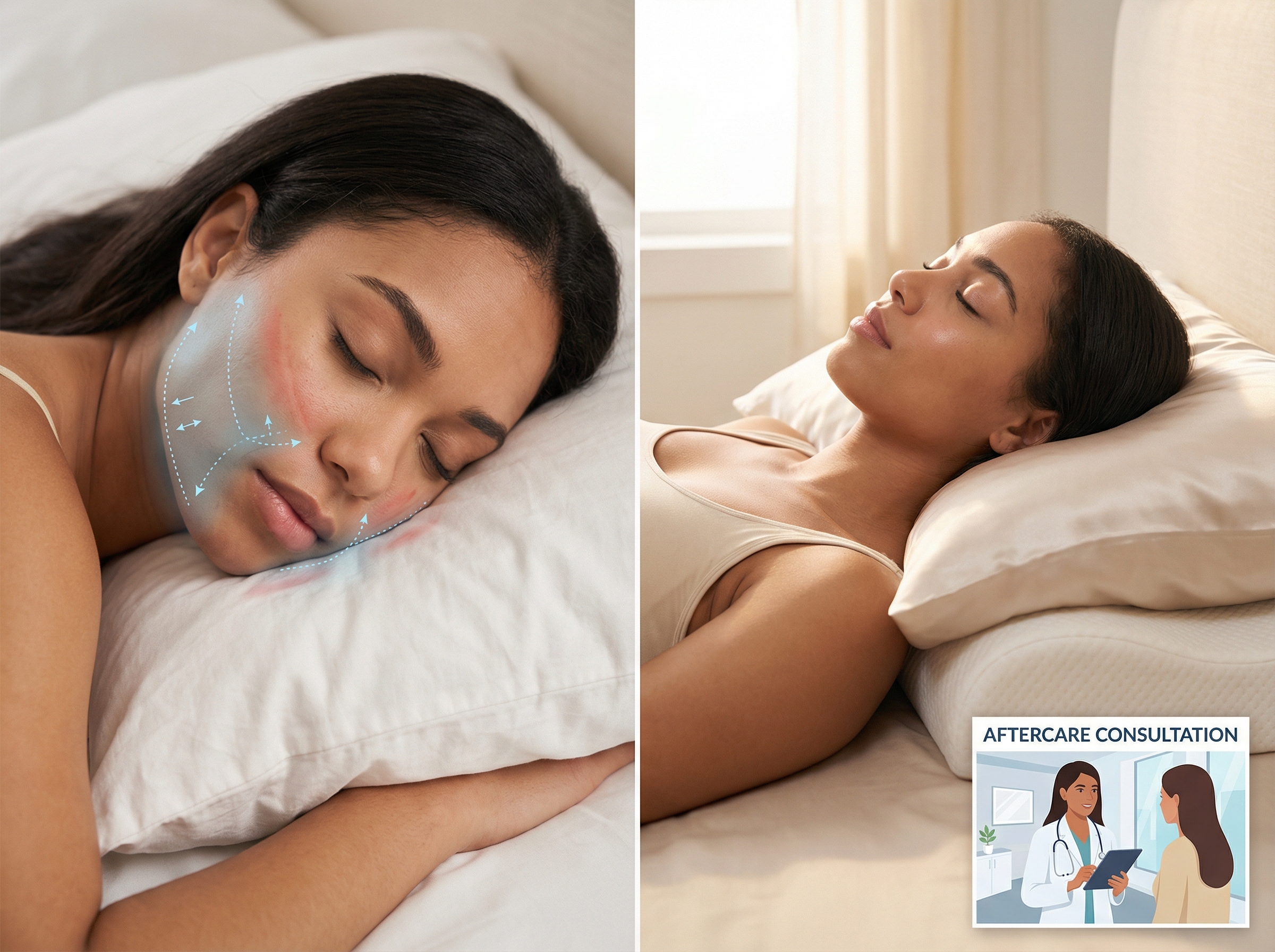
Gravity pulls your face downward when you stand. Sleep position creates a different set of forces. When you lie on your side or stomach, the weight of your head presses facial tissue against the pillow. This creates compression. It also creates shear force. Shear happens when the skin stays fixed against the fabric while the underlying bone structure shifts slightly due to gravity or movement.
This combination of compression and shear distorts the skin. It folds the tissue along vertical or diagonal lines. These lines differ from dynamic wrinkles caused by smiling or frowning. Expression lines usually run horizontally on the forehead or radially around the eyes. Sleep lines often run vertically through the forehead, eyebrows, and cheeks.
Young skin contains enough elastin to snap back into place after waking. The creases disappear within an hour. Older skin loses this elasticity. Repeated nightly compression breaks down collagen in the dermal layer. The temporary fold becomes a permanent fracture in the skin structure. A pivotal study on facial distortion during sleep highlights how these mechanical forces accelerate aging in specific vectors that mimic volume loss. Sleep Wrinkles: Facial Aging and Facial Distortion During Sleep notes that these lines are often resistant to Botox because they are not caused by muscle contraction.
Impact on Hyaluronic Acid Fillers
Dermal fillers are gel implants. They require time to integrate with your natural tissue. The first few days after injection are the most critical. The product is still malleable. It has not yet anchored into the surrounding collagen matrix. Heavy pressure during this window can physically displace the gel.
Hyaluronic acid fillers work by attracting water and creating volume. If you compress the treated area while the product is settling, you risk flattening the projection you just paid for. You might also push the product into unintended areas. This is known as migration. It is different from the product naturally spreading; this is mechanical displacement caused by external force.
Recent data suggests that volume maintenance varies by facial zone. At 12 weeks, volume retention is generally lower in high-mobility areas. Adding sleep pressure to these areas accelerates the degradation. Study reveals long-term effects of hyaluronic acid fillers indicates that volume maintenance drops to about 63% in the upper face and 79% in the midface over time. Chronic sleep pressure likely contributes to this decline by subjecting the filler to constant mechanical stress.
Risks by Injection Site
The risk of deformation depends on where the filler is placed. Different areas of the face react differently to pressure.
Lips and Perioral Area
Lip filler is soft. It is designed to move naturally with your mouth. This softness makes it highly susceptible to compression. Sleeping face-down immediately after lip augmentation can cause the product to smear. This leads to a “duck lip” appearance or noticeable asymmetry. The product may migrate above the vermilion border, creating a shadow or a mustache-like appearance.
Tear Troughs and Under Eyes
The skin under the eyes is incredibly thin. Fillers here are placed deep on the bone or just under the muscle. Sleeping on your face increases fluid retention in the periorbital area. This edema swells the tissue around the filler. The combination of swelling and pressure can push the gel superficially. This results in the Tyndall effect, where the filler looks blue or gray through the skin. It can also cause persistent malar bags.
Cheeks and Jawline
Fillers used for cheek and jawline contouring are stiffer. They have a higher G-prime, meaning they are harder to squish. However, they are often placed to create projection. Sleeping on one side consistently flattens this projection. You may notice that one cheek looks flatter than the other after several months. This is often the side you sleep on. For jawline filler, pressure can push the product downward, blunting the sharp definition you wanted to achieve.
Chin Augmentation
Chin filler creates anterior projection. Sleeping on your stomach puts direct pressure on this new structure. It can cause the chin to look flatter or deviate to one side. Clinical consensus suggests avoiding stomach sleeping for at least one week after chin filler to allow the product to firm up. Does a chin implant / chin filler affect your sleeping? confirms that avoiding direct pressure is essential for the initial healing phase.
Botulinum Toxin and Sleep Pressure
Botox, Dysport, and Daxxify work differently than fillers. They are liquid neuromodulators. They bind to nerve receptors to stop muscle movement. They do not have mass or volume like a filler gel. The risk of “moving” Botox is often misunderstood. You cannot smear it like a cream once it has absorbed. However, the first few hours are crucial.
The liquid needs time to diffuse into the target muscle and bind to the receptors. If you lie down immediately or press your face into a pillow right after injection, the liquid can spread to adjacent muscles. This causes unintended weakness. In the forehead, this leads to eyelid droop (ptosis). In the crow’s feet area, it can affect the smile muscles. Once the toxin binds, usually within 4 to 6 hours, sleep position matters less for the drug’s placement. It matters more for the formation of static sleep lines that the toxin cannot fix.
Laser Facials and Chemical Peels
Resurfacing treatments leave the skin barrier compromised. The outer layer of skin is either removed or microscopically damaged to stimulate healing. Pressing this raw skin against a pillowcase creates friction. It also traps heat. This environment breeds bacteria.
Compression during the initial inflammatory phase (24 to 72 hours) disrupts blood flow. This can lead to uneven healing. In darker skin tones, friction and heat increase the risk of post-inflammatory hyperpigmentation (PIH). The skin needs to breathe and cool down. Smothering it against a pillow prevents this. For deep peels, the skin may physically shear off if it sticks to the fabric, leading to scarring.
Non-Surgical Body Sculpting
Treatments like Cryolipolysis (CoolSculpting) or radiofrequency body contouring involve inflammation. The treated fat cells are being broken down. The area is often tender, swollen, and bruised. Sleeping directly on a treated area, such as the abdomen or flanks, does not typically ruin the result. The fat cells are already damaged. However, pressure increases discomfort. It can exacerbate swelling. In rare cases following cryolipolysis, extreme pressure immediately post-treatment might contribute to contour irregularities, though this is less documented than with fillers.
Summary of High-Risk Windows
The danger of sleep distortion changes as the product settles. Clinical experience outlines three distinct phases of risk.
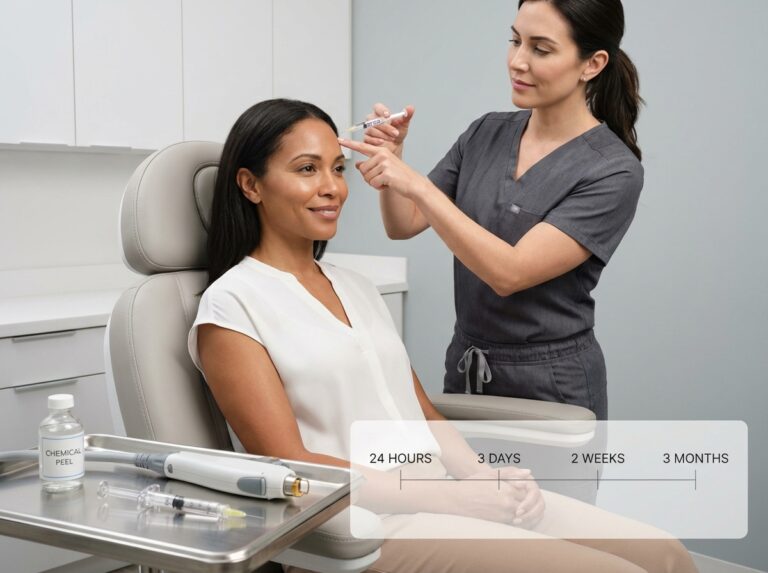
- 0 to 48 Hours (Acute Phase): This is the highest risk period for all injectables. Botox is still binding. Fillers are soft and malleable. Edema is increasing. Direct pressure can cause migration, diffusion, and significant asymmetry. Wait 3-5 Days Before Laying On Your Side After Filler Injections advises that fillers take several days to settle into place.
- 3 to 14 Days (Integration Phase): Swelling subsides. Fillers begin to integrate with the tissue. The risk of gross migration decreases. However, the product can still be deformed by sustained pressure. The shape can be flattened even if the product doesn’t move to a new location.
- Long-Term (Chronic Phase): The treatment is stable. The risk now shifts to static sleep wrinkles. Persistent compression on one side will degrade the collagen around the filler. This leads to faster apparent aging on the sleeping side, regardless of the injectable used.
Aftercare strategies and sleep adaptations to protect results
Protecting your investment in cosmetic procedures requires a strategic approach to the hours and weeks following your appointment. The mechanical pressure from sleep is one of the most overlooked factors in product migration and poor healing. We need to look at specific timelines and practical gear adjustments to keep results symmetrical and effective.
Immediate Aftercare Timelines
The first few hours and days are critical for stabilization. The product is malleable or the skin is compromised, so gravity and pressure play huge roles here.
Neuromodulators (Botox, Dysport, Daxxify)
The primary goal with neurotoxins is preventing diffusion into unintended muscle groups.
- 0–4 Hours: Remain upright. Do not lie flat. Bending over to tie shoes or look at a phone screen can shift the toxin before it binds to the nerve receptors.
- First Night: Sleep on your back with the head slightly elevated. Avoid pressing the treated area against a pillow.
- Long-term: Once the toxin binds (usually fully within 24 hours), sleep position matters less for the drug itself but still impacts static wrinkle formation.
Dermal Fillers (Hyaluronic Acid & Biostimulators)
Fillers are gel-like implants that need time to integrate with the tissue.
- 0–48 Hours: This is the highest risk window for molding the product out of shape. Avoid any pressure on the treated area. Sleep on your back.
- 3–5 Days: Continue back sleeping. Wait 3-5 days before laying on your side after filler injections to allow the gel to settle.
- 2 Weeks: The product is mostly integrated. You can return to normal habits, but chronic side sleeping will still compress the filler over months.
Laser Resurfacing and Chemical Peels
The concern here is friction and infection rather than migration.
- 0–24 Hours: Your skin is an open wound or highly sensitized. Contact with fabric can cause abrasion. Sleep on your back to prevent the raw skin from sticking to the pillowcase.
- 24–72 Hours: Swelling peaks. Use a wedge pillow to keep the head above the heart. This reduces edema and throbbing.
- Day 3 to 14: As skin peels or scabs, friction from a pillow can rip off dead skin too early. This leads to scarring or hyperpigmentation.
Non-Surgical Body Sculpting (CoolSculpting, Emsculpt)
Sleep position here is about comfort and inflammation management.
- First 72 Hours: The treated area will be tender and swollen. Avoid lying directly on the treatment site to reduce pain.
- Week 1: If nodules form (common with cryolipolysis), your provider might actually recommend massaging the area, but static pressure from sleeping is different. Follow specific massage protocols, not sleep pressure.
Do’s and Don’ts for Sleep Positioning
We can break down the rules based on clinical consensus and practical experience.
| Action | Guideline | Reasoning |
|---|---|---|
| Lying Flat | Avoid for 4 hours post-Botox. | Prevents toxin migration to the eyelid or brow muscles (ptosis risk). |
| Direct Pressure | Avoid for 5 days post-filler. | Sleeping with your cheek pressed can flatten cheek filler or displace jawline definition. |
| Stomach Sleeping | Avoid for 1 week (fillers) to 1 month (implants). | Avoid sleeping on your stomach for one week after injectable fillers to prevent severe asymmetry. |
| Massage | Do not massage unless instructed. | Patients often mistake normal swelling for lumps. Rubbing it causes inflammation or moves the product. |
Practical Sleep Interventions and Gear
Changing how you sleep is difficult. You need tools that physically prevent you from rolling over.
Pillow Selection
U-Shaped Travel Pillows:
These are excellent for the first few nights. Wear it backward or standard to stabilize the neck. It prevents the head from rolling to the side even if your body turns.
Wedge Pillows:
Elevation is the best way to clear fluid. A 30 to 45-degree incline reduces the “puffy face” look in the morning. It also makes it mechanically difficult to roll onto your stomach.
Contoured Cervical Pillows (Memory Foam):
These have a depression for the head and a raised edge for the neck. They lock the head in a neutral position. Memory foam is better than down here because it provides rigid support. Down pillows collapse and allow the face to sink in.
Specialty Anti-Wrinkle Pillows:
These pillows look odd. They have cutouts on the sides. If you must sleep on your side, your forehead and chin rest on the supports, but your cheek and eye area float over the empty space. This prevents shear force on the skin.
Fabric Choices
Friction damages the skin barrier after lasers and pulls at the skin daily. Cotton is absorbent and creates drag. Silk or high-quality satin (polyester) allows the skin to glide. This reduces sleep lines in the morning. It does not stop pressure, but it stops friction.
Behavioral Strategies for Position Training
Willpower rarely works when you are unconscious. You need physical barriers.
The Barrier Method:
Place heavy bolster pillows or firm cushions on both sides of your body. This creates a narrow channel that makes rolling over difficult. Placing a pillow under your knees also relieves lower back strain, making back sleeping more comfortable.
Positional Alarms:
Small wearable devices vibrate when you roll onto your stomach. This is effective for retraining but can disrupt sleep quality in the short term.
Nighttime Skincare Adjustments:
After a procedure, avoid thick, sticky occlusives (slugging) right before bed if you might roll over. The product sticks to the pillowcase and pulls the skin. Use lighter, absorbable moisturizers until the skin heals, unless your doctor prescribes a specific barrier balm for laser recovery.
Pets and Partners:
Keep pets out of the bed for at least 72 hours after injections or open-skin procedures. A paw to the face can displace filler. Animal dander and bacteria also pose a significant infection risk to injection sites or laser-treated skin.
Advice for Clinicians
Patient compliance improves when instructions are specific. “Sleep carefully” is too vague.
Pre-Procedure Counseling:
Ask about sleep habits during the consultation. If a patient is a chronic stomach sleeper, advise them that their filler longevity might be reduced. Suggest they start sleep training two weeks before the appointment.
Handouts and Follow-Up:
Provide a checklist that includes specific dates. “You can sleep on your side starting on [Date].” Send a text check-in 24 hours later reminding them to check for asymmetry but not to massage.
Touch-Up Criteria:
Do not schedule touch-ups for asymmetry before 14 days. Edema mimics asymmetry. Adding more filler to a swollen side results in overcorrection once the swelling subsides.
Troubleshooting: When to Act
Sometimes things go wrong despite best efforts. You need to distinguish between panic and a problem.
Displaced Filler:
If you wake up and one cheek looks flatter or the lip border looks blurred, do not massage it immediately. Wait 30 minutes for morning fluid to drain. If the asymmetry persists after 24 hours, contact your provider. Hyaluronidase can dissolve hyaluronic acid fillers if the migration is severe, but often the provider can mold it back into place if caught early.
Vascular Compromise (Red Flag):
This is rare but serious. If you wake up with severe pain, blanching (white spots), or a mottled, net-like discoloration that is getting worse, this is not a sleep line. This is a blockage. Seek immediate medical attention. Sleep pressure does not cause vascular occlusion, but patients often notice the symptoms in the morning.
Infection Signs:
Redness, heat, and tenderness that appear 3-4 days post-procedure are warning signs. Sleeping on a dirty pillowcase or with pets increases this risk. Contact the clinic immediately for antibiotics.
Frequently Asked Questions
Patients often feel anxious about their sleep habits immediately after leaving the clinic. You want to protect your investment. The internet offers conflicting advice. Here are the direct answers to the most frequent questions regarding sleep positions and cosmetic injectables based on clinical standards current as of late 2025.
How long should I sleep on my back after Botox and fillers?
The timeline differs significantly between neurotoxins and dermal fillers. For Botox, Dysport, or Daxxify, the critical window is short. You must remain upright and avoid putting pressure on the treated area for at least 4 hours. This prevents the toxin from diffusing into unintended muscle groups which could cause eyelid droop or asymmetry. After 4 hours the product binds to the nerve receptors and the risk drops.
Dermal fillers require more patience. Hyaluronic acid gels are malleable for several days. Wait 3-5 Days Before Laying On Your Side After Filler Injections to ensure the product integrates with your tissue. Sleeping on your face the first night can flatten the projection of a cheek or lip filler before it settles. If you had a liquid rhinoplasty the window extends to 7 days because the nose is easily displaced.
Can sleeping on my side every night cause one-sided wrinkles or filler migration?
True migration where filler moves from one part of the face to another is rare once the product settles. However, chronic side sleeping creates static compression. This does not push the filler to a new location. It flattens the area over time. If you sleep on your right side every night you may notice the filler in the right cheek appears less projected than the left after a few years.
Wrinkles are a different issue. Sleep lines are vertical creases that form from smashing the skin against a pillow. They differ from expression lines. The short answer: sleeping on your side doesn’t necessarily “ruin” fillers but it creates new etched lines that fillers cannot always fix. These sleep wrinkles deepen with repetition.
Are certain fillers more likely to move from pressure than others?
Yes. Hyaluronic acid (HA) fillers like Juvéderm or Restylane are gels. They are softer and more prone to molding in the first 48 hours. If you press on a fresh HA injection it can dent or spread slightly. This is why we advise against massage unless instructed.
Biostimulatory fillers like Radiesse (calcium hydroxylapatite) or Sculptra (PLLA) act differently. They are often placed deeper or in a more dispersed pattern to stimulate collagen. They are less likely to be “squished” out of shape by a pillow once the initial carrier fluid absorbs. However, because they rely on your body’s inflammatory response to build structure, consistent pressure can still lead to asymmetry in collagen production.
When is it safe to resume normal sleep after a laser facial or deep peel?
Safety here is about infection and friction rather than shifting product. For light lasers like Clear + Brilliant or superficial peels you can sleep normally the next day if your pillowcase is clean. For deep resurfacing like CO2 lasers or TCA peels you must wait until re-epithelialization occurs. This usually takes 7 to 10 days.
Sleeping on your face before the skin heals carries two risks. First is infection from bacteria on the pillow. Second is mechanical damage. Your skin is raw and oozing. It can stick to the fabric. Ripping the skin off the pillowcase in the morning causes scarring and pigment issues. Sleep on your back with the head elevated to reduce swelling until the skin is no longer weeping.
What pillow or sleep gear actually makes a difference?
Marketing often overstates the benefits of “anti-aging” pillows. The only gear that works is gear that physically prevents skin compression. A standard soft pillow allows your face to sink in. This wraps the fabric around your eyes and mouth. A contoured cervical pillow or a specific “off-loading” pillow with side cutouts works because it supports the forehead and jaw while leaving the cheeks and eyes suspended in air.
If the pillow claims to be “anti-wrinkle” solely because of the fabric or copper infusion, be skeptical. The material does not stop the weight of your head from crushing the skin. The shape of the pillow matters more than the fabric.
How do I tell the difference between settling and a complication?
Normal settling involves mild swelling, tenderness, and lumpiness that feels firm but not painful. You might feel a ridge where the filler was placed. This softens over 2 weeks. Bruising is also normal and will change colors from purple to yellow.
A complication requires urgent care. The most serious risk is vascular occlusion where filler blocks a blood vessel. Signs include:
- Severe pain: Discomfort that increases rather than decreases.
- Blanching: White or pale patches that do not return to pink when pressed.
- Mottling: A net-like red or purple pattern on the skin (livedo reticularis).
- Coolness: The skin feels cold to the touch.
If you wake up with these symptoms do not wait. Call your provider immediately. This is not a sleep-related settling issue.
Can hyaluronidase fix sleep-related filler issues?
Hyaluronidase is an enzyme that dissolves hyaluronic acid fillers. If you slept on your face and caused a significant asymmetry or a lump that massage cannot fix, this enzyme can reverse it. It works quickly. You will see results within 24 to 48 hours.
The timeline matters. We usually ask patients to wait 2 full weeks before dissolving for aesthetic reasons. Swelling can mimic asymmetry. Dissolving too early might remove product that was actually sitting perfectly fine once the edema resolved. If the issue is vascular occlusion we inject hyaluronidase immediately regardless of the timeline.
Does Botox wear off faster if I sleep on my face?
No. Sleep position does not metabolize the drug faster. The longevity of Botox depends on your metabolism and the dose used. However, sleeping on your face can make it look like the Botox wore off. If you crush your face into a pillow for 8 hours you create static wrinkles. Botox only treats dynamic wrinkles caused by muscle movement. You might wake up with deep creases and assume the toxin failed. In reality the toxin is working but the mechanical pressure is creating a new crease.
Does using a silk pillowcase really prevent wrinkles?
Silk and satin pillowcases have a specific, limited benefit. They reduce friction. Cotton is absorbent and has a rougher texture which drags on the skin. Silk allows the skin to glide. This helps prevent sleep creases that come from the skin bunching up.
They do not prevent compression wrinkles. If you press your 10-pound head into a silk pillow the weight still folds the dermal layer. Silk is excellent for hair health and skin hydration but it is not a cure-all for structural sleep wrinkles.
If I can’t sleep on my back for medical reasons, what can I do?
Medical needs prioritize over cosmetic preferences. If you have sleep apnea, acid reflux, or back pain that requires side sleeping, do not force yourself onto your back. Poor sleep quality damages skin health more than pillow pressure.
Mitigate the risk instead. Use a firm pillow rather than a soft one. A firm pillow keeps your head aligned and prevents your face from sinking deep into the material. Position your head so the weight is on the outer edge of the face (the temple and ear) rather than the cheek and eye. Use a satin pillowcase to minimize the shear force. If you had filler on only one side of the face, sleep on the untreated side for the first week.
Final takeaways and when to contact your provider
Patients often feel paralyzed by the fear of ruining their investment the moment their head hits the pillow. We need to bridge the gap between rigid medical instructions and the reality of human sleep patterns. This section addresses the specific anxieties patients have regarding sleep positions and provides a clear framework for decision-making after the procedure.
Summary of Risks and Protective Measures
We can distill the complex advice into a few actionable takeaways. These points summarize the critical windows and actions required to protect your results.
- The Critical Window: The first 72 to 96 hours are the most important for filler integration. During this time, the product is malleable. Avoid direct pressure. For Botox, the window is only 4 hours.
- Vascular Safety: Sleeping on your face does not typically cause vascular occlusion, but it can mask the signs. If you wake up with unusual pain or skin discoloration, check it immediately in good light.
- Hygiene Matters: Post-procedure skin is vulnerable. Change your pillowcase the night of your treatment. Bacteria on old bedding can cause infection in fresh injection points.
- Pillow Selection: Specialized off-loading pillows with cutouts for the ear or cheek are effective tools. They physically prevent the face from contacting the surface. Standard pillows, regardless of material, rely on your behavior to work.
- Long-Term Outlook: Volume maintenance varies by facial region. Sleeping on your face contributes to the breakdown of collagen over decades. It is a cumulative aging factor, not an acute disaster for your filler unless it happens in the first week.
Decision Flow: What to Do If You Wake Up on Your Face
It happens. You go to sleep on your back and wake up with your cheek pressed against the mattress. Do not panic. Follow this simple decision tree to determine your next step.
Step 1: Check for Pain and Color
Look in the mirror. Is the area white, dusky, or mottled? Are you in significant pain?
Yes: This could be a vascular compromise. Call your provider immediately or go to the ER if they are unreachable.
No: Proceed to Step 2.
Step 2: Assess Shape and Swelling
Does the side you slept on look flatter or lumpy compared to the other side?
Yes: It is likely asymmetrical swelling or temporary fluid redistribution. This is common in the morning.
Action: Stay upright. Apply a cool compress (not ice directly on skin) for 10 minutes. Wait 4 hours to see if it normalizes.
Step 3: Persistent Lumps
Has the lump or asymmetry persisted for more than 24 hours after the incident?
Yes: You may have shifted the product slightly.
Action: Contact your injector. They may advise you to massage it gently (do not massage without permission) or schedule a follow-up to mold it back into place.
Talking to Your Provider
Consultations often rush through the aftercare portion. Use these specific phrases to get clear instructions regarding your sleep habits.
- “I am a heavy side sleeper. Which filler product will hold its shape best in the cheek area given my sleep position?”
- “If I wake up and notice the filler feels firm or lumpy, do you want me to massage it, or should I leave it alone and call you?”
- “Can you show me exactly where the filler is placed so I know which areas of my face to keep off the pillow?”
- “Do you have an emergency line if I notice discoloration or severe pain during the night?”
Clinician Notes on Documentation
For providers, sleep hygiene is a critical component of informed consent and complication management. Documentation protects both the patient and the practice.
Education: Explicitly discuss sleep positions during the consent process. Provide written instructions that differentiate between “ideal” back sleeping and “acceptable” modifications for patients with medical restrictions.
Expectation Management: Clarify that asymmetry is normal. Patients often scrutinize their face in the mirror the morning after treatment. Pre-emptively explaining that sleep swelling causes temporary unevenness reduces panic calls.
Follow-Up: If a patient reports sleeping on their face and presents with displacement, document the incident. If revision or hyaluronidase is needed, the chart should reflect that mechanical pressure during the healing phase was a contributing factor.
We must balance the pursuit of aesthetic results with the biological necessity of restorative rest; a good night’s sleep is ultimately the best skincare routine you have.
Sources
- Study reveals long-term effects of hyaluronic acid fillers — At 12 weeks, volume maintenance was about 66% in the whole face, ranging from 79% in the midface, including the cheeks; to 63% in the upper …
- Does Sleeping on Your Side Ruin Fillers? – Get Refreshed — The short answer: sleeping on your side doesn't necessarily “ruin” fillers, but it can potentially affect them, especially during the initial healing period.
- How Long After Filler Can You Sleep On Your Side | Donaldson — Wait 3-5 Days Before Laying On Your Side After Filler Injections. On average, dermal fillers take about 3 – 5 days to settle into place.
- Review of long-term adverse effects associated with the use of … – NIH — The overall incidence of long term adverse reactions secondary to the dermal injection of hyaluronic acid skin fillers is believed to be low, the vast majority …
- Does Sleeping On Your Side Cause Wrinkles? – Mabrie Facial Institute — Facial asymmetry is natural and not caused by side or face-plant sleeping. You don't have to give up spooning or your favorite pillow.
- [PDF] Sleep Wrinkles: Facial Aging and Facial Distortion During Sleep. — This work aims to report a case of treatment of sleep wrinkles, in a female patient, only treated with fillers based on hyaluronic acid, with the “Fern …
- How to Sleep After Dermal Fillers – Longwood Plastic Surgery — How you sleep will not typically affect lip fillers or those used to treat lines and wrinkles. However, if you sleep with your cheek pressed …
- Does a chin implant / chin filler affect your sleeping? How many … — I would avoid sleeping on your stomach for one week after injectable fillers and one month after having a chin implant placed.
Legal Disclaimers & Brand Notices
The information provided in this article is for educational and informational purposes only and does not constitute professional medical advice, diagnosis, or treatment. Always seek the advice of a qualified healthcare provider or your personal injector with any questions you may have regarding a medical condition, recovery protocols, or specific cosmetic procedures.
All product names, logos, and brands mentioned in this content are the property of their respective owners. These include, but are not limited to:
- Botox® and Juvederm® are registered trademarks of Allergan Aesthetics (an AbbVie company).
- Dysport® and Restylane® are registered trademarks of Galderma Laboratories, L.P.
- Sculptra® is a registered trademark of Galderma Laboratories, L.P.
- Radiesse® is a registered trademark of Merz North America, Inc.
- CoolSculpting® is a registered trademark of Zeltiq Aesthetics, Inc.
The use of these trademarked names does not imply endorsement, affiliation with, or certification by the respective trademark owners.