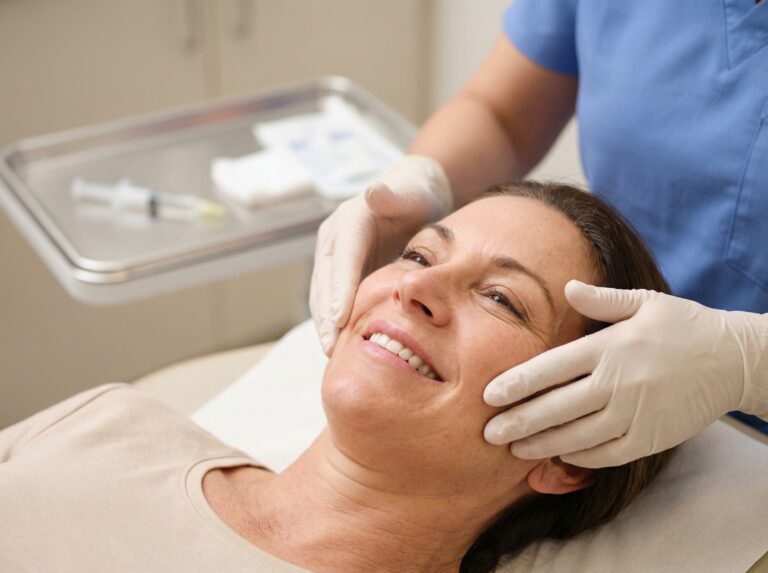
The first 24 hours after Botox injections are crucial to protect results and reduce complications. This article guides you through evidence-based do’s and don’ts, a clear hour-by-hour aftercare timeline, warning signs to watch for, and how Botox aftercare compares to other non-invasive treatments like fillers, chemical peels, and laser facials.
Why immediate aftercare matters
Understanding the biology behind your treatment changes how you approach recovery. It is not just about following rules; it is about ensuring the protein binds exactly where it should. When you understand the mechanism, the restrictions on heat, movement, and pressure make sense.
The Biology of the Injection
Neuromodulators like Botox, Dysport, Xeomin, and Jeuveau rely on a specific biological interaction. They target the neuromuscular junction, the precise point where your nerve endings meet your muscle fibers. Under normal conditions, your nerves release a chemical messenger called acetylcholine. This chemical tells the muscle to contract, creating the wrinkle.
Botulinum toxin works by blocking the release of acetylcholine, acting like a shield. The nerve tries to send the signal, but the message never arrives. The muscle remains relaxed, and the skin above it smooths out. This process is not immediate. The protein needs time to enter the nerve terminal and disrupt the signaling machinery. This binding process is delicate in the initial hours.
Most patients notice the first signs of reduced movement between 48 and 72 hours. The full effect takes longer, typically peaking around 14 days post-treatment. This delay is standard and explains why you cannot judge the success of the treatment on day one. Within 48 to 72 hours after a session, the initial softening begins. The two-week mark is when the final clinical result is visible.
Why Early Aftercare Controls Results
The first few hours are critical because the toxin is still settling and has not fully bound to the nerve receptors. During this window, the product is vulnerable to migration. Migration means the fluid moves from the intended muscle to an adjacent one, potentially causing temporary facial asymmetry or drooping.
Gravity and Position
Gravity influences where the fluid sits before it absorbs. Keeping your head elevated prevents the toxin from pooling in unintended areas. Studies suggest that remaining upright for four hours reduces the risk of migration significantly. Lying flat or bending forward shifts the fluid dynamics in the face. This is why yoga or shoe shopping is discouraged immediately after your appointment.
Blood Flow and Heat
Heat causes vasodilation—your blood vessels expand and circulation increases. This increased blood flow can wash the product away from the injection site before it has a chance to work, diluting the concentration and reducing effectiveness. It also increases the risk of bruising. Vigorous exercise raises your blood pressure and heart rate, creating the same risk. You want the product to stay concentrated in the target muscle.
Pressure and Manipulation
Physical pressure pushes the fluid into surrounding tissues. Rubbing the face, wearing tight hats, or getting a massage can force the toxin into the orbit of the eye. This is a primary cause of ptosis, or eyelid droop. The radius of diffusion for these products is typically less than 3 centimeters if undisturbed. External pressure expands that radius unpredictably.
Comparing Risks: Botox vs. Other Treatments
Recovery protocols differ because the biological targets differ. Understanding these distinctions helps you prioritize the right safety steps.
| Treatment Type | Primary Target | Main Risk Factor | Key Aftercare Focus |
|---|---|---|---|
| Neuromodulators (Botox) | Muscle Signals | Product Migration | No pressure, stay upright, no heat |
| Dermal Fillers | Volume/Structure | Vascular Occlusion / Molding | No pressure, watch for skin color changes |
| Chemical Peels | Skin Surface | Infection / Hyperpigmentation | Moisture, sun protection, no picking |
| Laser Treatments | Pigment / Collagen | Burns / Heat Trapping | Cooling, sun avoidance, hydration |
With fillers, the gel is physically malleable; you avoid pressure to prevent denting the shape. With lasers, the skin barrier is compromised, so you focus on preventing infection. With Botox, the skin is intact, and the goal is strictly keeping the liquid in place.
Combining Treatments
Many practitioners perform Botox and fillers in one visit because they target different tissue layers. However, adding filler increases the need to avoid pressure on the face. If you combine treatments, follow the strictest protocol (usually the filler protocol regarding pressure and the Botox protocol regarding gravity).
Safety for Special Populations
Certain groups require strict avoidance of these treatments. The FDA historically classified botulinum toxin as Category C regarding pregnancy. This means animal reproduction studies have shown an adverse effect on the fetus, and there are no adequate and well-controlled studies in humans. The potential benefits rarely warrant the potential risks during pregnancy.
Breastfeeding presents a similar gray area. While it is unlikely the toxin enters breast milk, clinical data is sparse. Most reputable providers advise waiting until you have finished breastfeeding to eliminate any unnecessary risk to the infant.
Neurological conditions require specific attention. Patients with ALS (Lou Gehrig’s disease), myasthenia gravis, or Lambert-Eaton syndrome should not receive these injections. These conditions already affect neuromuscular transmission. Adding a neuromodulator can worsen muscle weakness, leading to systemic issues like difficulty breathing or swallowing. Always confirm your full medical history with your provider.
What to Expect: The First 24 Hours
Knowing what is normal prevents panic and helps you identify when to call a doctor.
Normal Reactions
- Injection Bumps: Small, raised areas at the injection points looking like mosquito bites. These typically resolve within 20 minutes to an hour.
- Mild Redness: Erythema around the sites is common and usually fades quickly.
- Tiny Bruises: Hitting a small capillary can cause a pinprick bruise. This is cosmetic and will heal.
- Headache: A mild headache is reported by about 5 to 10 percent of patients. It usually resolves within 24 to 48 hours. Acetaminophen is the preferred treatment.
Serious Red Flags
While rare, complications can happen. You should have your clinic’s emergency contact number ready. Call them if you experience specific symptoms.
- Ptosis: A drooping eyelid or heavy brow that obstructs vision. This usually appears between day 3 and day 7 if migration occurs.
- Vision Changes: Blurred vision or double vision.
- Dysphagia: Difficulty swallowing or speaking.
- Breathing Difficulties: Any shortness of breath or tightness in the chest requires immediate emergency care.
- Systemic Weakness: Muscle weakness spreading beyond the injection site.
The evidence supports a cautious approach. The actions taken in the first 24 to 48 hours directly impact your safety and the longevity of your results. By respecting the biology of the treatment, you ensure the protein does its job exactly where you want it.
Essential do’s in the first 24 hours
You now understand the biology behind the injection. The neuromodulator is sitting at the neuromuscular junction, but it has not fully bound to the receptors yet. The next 24 hours are about letting that process happen without interference. We want the product to stay exactly where your provider placed it.
Here is a practical timeline to follow. It balances safety with real life so you do not feel stuck on the couch all day.
Immediate Actions: The Clinic to Home
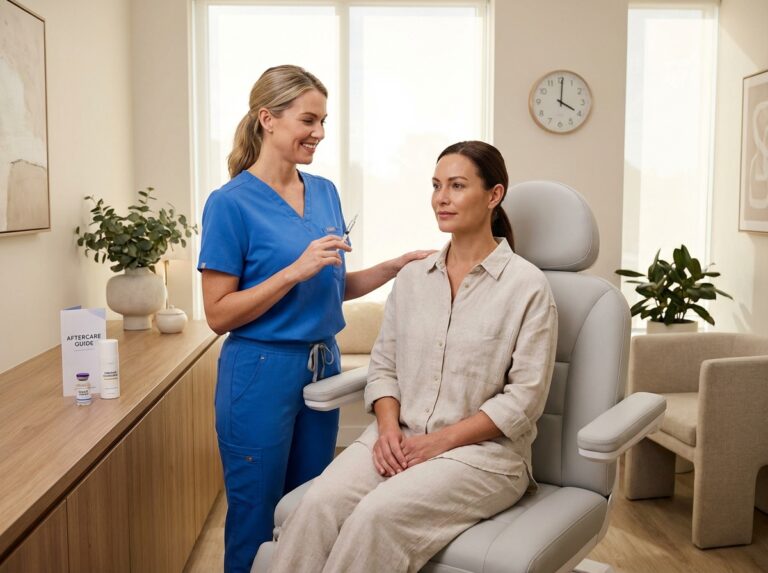
Your recovery starts before you leave the provider’s office. Most clinics will ask you to sit for 10 to 20 minutes before driving. This is just for observation to ensure you do not feel dizzy or have an immediate allergic reaction, though these are very rare.
Make sure you have the clinic’s emergency contact number saved in your phone before you walk out the door. Do not rely on a Google search later if you are stressed. Ask the front desk for the direct line for after-hours concerns.
The First 4 Hours: The “Upright” Phase
This is the most critical window. Clinical studies suggest that staying upright for 4 hours reduces the risk of the toxin migrating by up to 50%. Gravity helps keep the protein in the target muscle.
- Posture: Keep your head elevated. Do not lie down on a sofa or bed. If you need to rest, sit in a recliner at a 45-degree angle or higher.
- Movement: Avoid bending over to tie shoes or pick up pets. Keep your head above your heart.
- Facial Exercises: Some providers suggest gently frowning or raising your eyebrows repeatedly for the first hour. Data shows 68% of patients report faster results with this method as it helps the toxin uptake into the active muscle. Do this lightly; do not force it.
- Touching: Do not touch your face. Do not rub the injection sites. You might feel tiny bumps or see little red dots. Leave them alone.
Hours 4 to 12: Settling In
By now the risk of migration has dropped significantly. You can relax a bit more, but you still need to be careful with pressure and heat.
- Pain Management: If you have a headache, take Acetaminophen (Tylenol). Avoid Ibuprofen, Aspirin, or Naproxen. These are NSAIDs and they thin the blood, which can increase bruising at the injection sites.
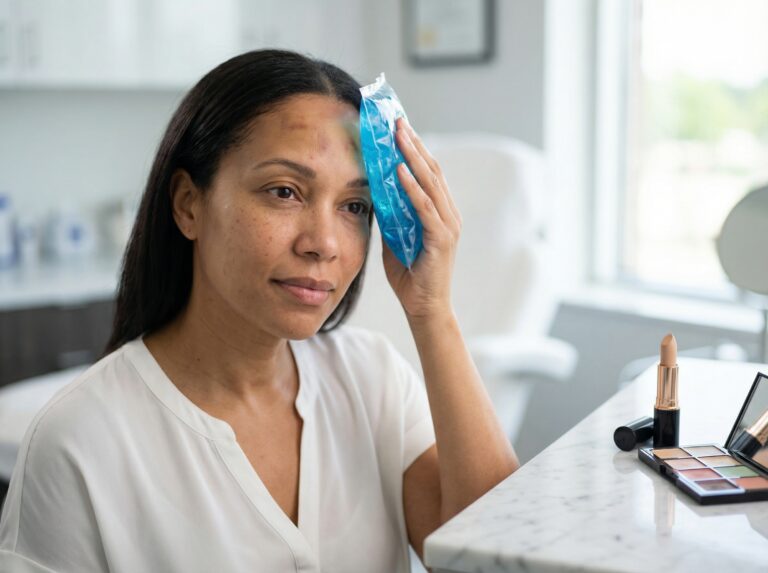
- Cold Compresses: If you see swelling, apply a cold compress. Do not put ice directly on the skin. Wrap an ice pack in a thin cloth. Hold it gently against the area for 10 minutes, then take it off for 10 minutes. This helps constrict blood vessels and reduce bruising.
- Skincare: You can wash your face now. Use cool water and a gentle cleanser. Do not use a scrubbing brush or exfoliating beads. Pat your face dry with a soft towel. Do not rub.
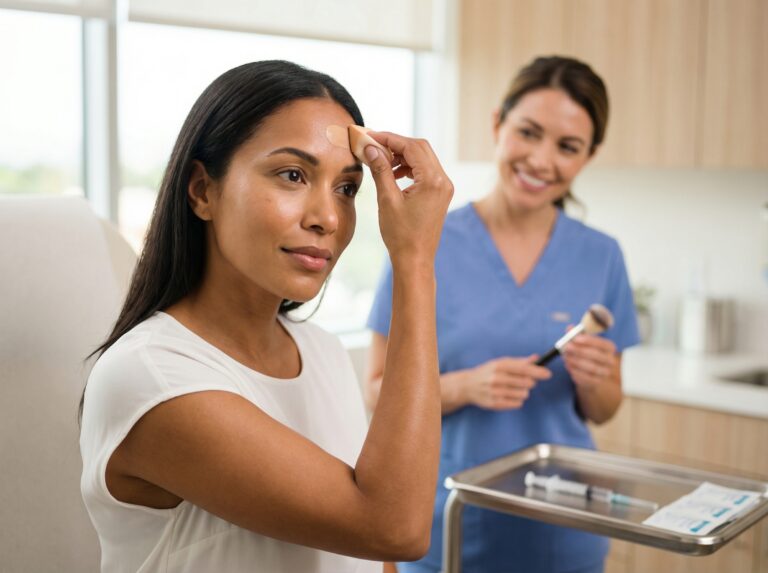
- Makeup: It is generally safe to apply light mineral makeup after 4 hours if you absolutely must. It is better to wait until the next morning to keep the injection points clean. If you apply makeup, use freshly washed brushes to prevent infection.
Hours 12 to 24: The First Night
How you sleep matters for this first night. You want to avoid putting pressure on the treated areas.
- Sleep Position: Sleep on your back. Prop yourself up with an extra pillow to keep your head slightly elevated. This helps drain fluid and prevents morning puffiness. Do not sleep face-down. Smashing your face into a pillow can theoretically shift the product or increase swelling.
- Hydration: Drink plenty of water. Aim for 8 to 10 glasses. Hydrated skin heals faster.
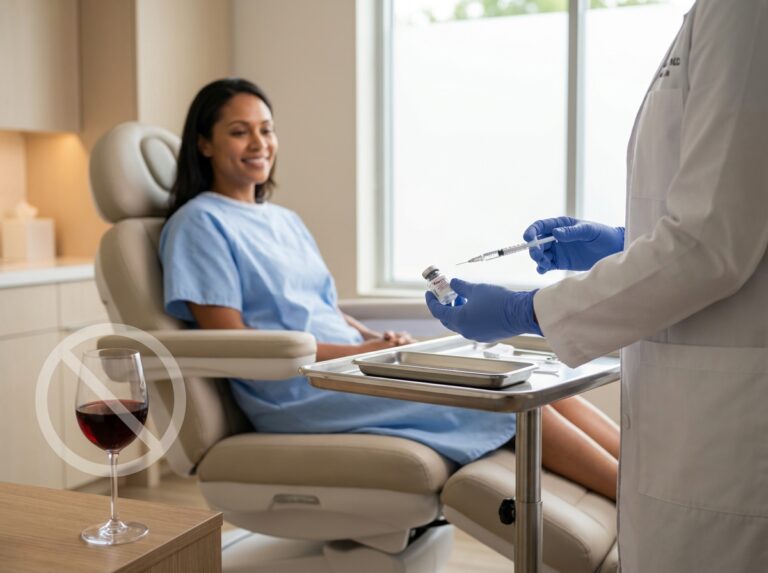
- Alcohol: Skip the wine tonight. Alcohol dilates blood vessels. This increases blood flow and can turn a tiny pinprick into a noticeable bruise. Wait a full 24 hours before drinking.
Resuming Your Routine
You can return to work immediately if your job does not require heavy lifting or intense physical exertion. Most people go right back to their desks.
Air Travel
Flying is generally safe, as cabin pressure changes are not significant enough to move the product. However, the dry air and sitting upright for long periods can be uncomfortable. Most experts prefer you wait 24 hours just to be safe. If you must fly, stay hydrated and avoid sleeping with your face against the window.
Cosmetic Treatments
You need to wait before adding other cosmetic treatments back into your schedule. Doing too much too soon can compromise your results or cause skin irritation.
| Activity / Treatment | Wait Time | Reason |
|---|---|---|
| Regular Skincare (Retinol/Acids) | 24 to 48 Hours | Acids can irritate the skin while injection sites are healing. |
| Facials & Massage | 2 Weeks | Pressure can displace the toxin before it fully binds. |
| Microcurrent / Gua Sha | 2 Weeks | Manipulation can cause migration. |
| Chemical Peels | 2 Weeks | Acids and application pressure can irritate healing sites. |
| Laser Treatments (IPL/BBL) | 2 to 4 Weeks | Heat and swelling from lasers can alter your results. |
| Microneedling | 1 to 2 Weeks | Prevents spreading the toxin or causing infection. |
| Microblading | 2 Weeks | Wait until the forehead position settles to ensure symmetry. |
Botox Aftercare: How to Ensure the Best Results suggests avoiding strenuous physical activity for the first 24 hours to prevent increased blood flow from moving the product.
When to Call Your Provider
Most side effects are mild. You might see redness or small bruises. These resolve in a few days. However, you need to know when to pick up the phone.
Use these scripts if you need to call the clinic. It helps to be specific so the staff can triage your situation quickly.
For unexpected swelling:
“Hi, I had injections yesterday. I have swelling at the injection site that seems to be getting worse instead of better. It feels hot and painful. Should I come in for a check?”
For eye issues (rare but serious):
“I had treatment 24 hours ago and I am noticing my eyelid feels heavy. It looks like it is drooping slightly. I wanted to report this immediately.”
For vision changes:
“I am experiencing double vision (or blurred vision) since my appointment. I need to speak to the provider right away.”
For general questions:
“I have a headache that Tylenol isn’t helping. Is there anything else I can take that won’t increase bruising?”
Schedule a follow-up appointment for two weeks from now. How Soon Will I See Results After a Botox Treatment? notes that peak effectiveness hits around 10 to 14 days. That is the best time to assess if you need a touch-up. Do not judge the results before then. Asymmetry in the first week is common as different muscles relax at different speeds. Give it the full two weeks to settle.
Critical don’ts and debunked myths
We just covered what you absolutely should do, like keeping your head up and icing gently. Now we need to talk about the other side of the coin. The success of your treatment often depends more on what you don’t do than what you do. The neurotoxin is a liquid when injected. It needs time to bind to the nerve receptors in the specific muscle we want to target. If you interfere with that process, you risk poor results or side effects.
Here is exactly what to avoid and why, along with the truth about some persistent rumors you might hear in the waiting room.
The “Hard No” List: High-Risk Actions
You might feel perfectly normal leaving the clinic, but your physiology is still reacting to the treatment. Ignoring these restrictions can physically move the product or increase inflammation.
Do not touch, rub, or massage the area
This is the single most critical rule. For the first 24 hours, keep your hands off. It is tempting to touch the little bumps or massage a spot that feels tight, but you must resist. When you rub the injection site, you risk spreading the toxin to adjacent muscles where it does not belong. This is called migration.
If Botox migrates from the forehead down to the eyelid muscles, it causes ptosis, or a drooping eyelid. This can last for weeks or months. Even washing your face requires a gentle touch. Do not use a spin brush, a gua sha stone, or a jade roller. For the first 24 hours or so, avoid rubbing the spots where you’ve been injected to keep the product exactly where your provider placed it.
Skip the gym for 24 hours
You might feel energetic enough for a workout, but your face needs a break. Strenuous exercise increases your heart rate and blood pressure. This forces blood to pump harder through your capillaries. Increased circulation can flush the toxin away from the injection site before it fully absorbs into the neuromuscular junction. This dilutes the effect and leads to shorter-lasting results.
Vigorous movement also raises your body temperature and causes sweating. Sweat can irritate the needle entry points, while the physical bouncing (like in running or HIIT) increases the risk of migration. For the first 24 hours after your Botox treatment, we recommend avoiding strenuous physical activity. Walking is fine. Heavy lifting, yoga inversions, and cardio should wait until tomorrow.
Avoid intense heat
Stay out of saunas, steam rooms, hot tubs, and tanning beds. You should also avoid very hot showers or baths. Heat causes vasodilation, which is the widening of blood vessels. Just like with exercise, this increased blood flow can disperse the product and increase the risk of bruising. Keep your environment cool and comfortable.
Do not sleep face-down
Gravity plays a role in the first few hours. Lying face-down puts direct pressure on the treated muscles. This pressure can physically push the toxin into surrounding areas. It also encourages fluid to pool in the face, which makes morning swelling worse. Try to sleep on your back with your head slightly elevated on an extra pillow for the first night.
Pause other facial treatments
Do not schedule a facial, chemical peel, microneedling, or laser treatment immediately after your injections. These procedures often involve pressure, heat, or massage. A good rule of thumb is to wait at least 14 days before doing anything else to your face. This gives the Botox time to fully settle and any potential bruising time to heal.
Debunking Common Myths
The internet is full of outdated advice. Let’s clear up what is true and what is just noise.
- Myth: Massaging will fix lumps.
Fact: Absolutely not. Small bumps at the injection site are usually just the saline fluid used to dilute the Botox. They absorb on their own within 15 to 20 minutes. Massaging them forces the fluid into unwanted areas. Leave them alone. - Myth: You must make silly faces to “work it in.”
Fact: This is an old rule. Some studies suggest that exercising the muscles (frowning, raising eyebrows) for an hour after treatment might help the toxin bind slightly faster, but it is not mandatory. If you forget to do it, your results will still be fine. Don’t stress about it. - Myth: Botox works instantly.
Fact: You will not see changes before you leave the parking lot. The results speak for themselves – 95.2% of patients notice their frown lines improving just 2 to 4 days after Botox treatment, but the full effect takes 14 days. Be patient. - Myth: Bruising means the doctor messed up.
Fact: The face is packed with tiny blood vessels. Even the best injector in the world can hit a capillary they cannot see beneath the skin. A small bruise is a common side effect, not a sign of failure.
Medications and Supplements
What you ingest matters just as much as what you do physically. Certain substances thin the blood, which prevents clotting and leads to larger, darker bruises.
Ideally, you should avoid alcohol for 24 hours after your appointment. Alcohol is a vasodilator and can increase bleeding and bruising. If you have a headache, reach for acetaminophen (Tylenol). Avoid NSAIDs like ibuprofen (Advil, Motrin) or aspirin, as these interfere with blood clotting.
Be careful with supplements too. Fish oil, Vitamin E, Ginkgo Biloba, and Ginseng are known to thin the blood. If you take these recreationally, pause them for a few days. However, never stop taking prescribed blood thinners or heart medication without consulting your doctor first. Your cardiovascular health is more important than a small bruise.
If you are prone to bruising, you can apply Arnica gel gently to the area or take Arnica pellets. Pineapple contains an enzyme called bromelain which may also help clear up bruises faster. Use a cold compress if the area feels tender, but remember to apply it lightly without pressure.
Takeaway and next steps
You have absorbed a lot of information about what happens during those critical first hours. It is time to condense everything into a practical plan you can actually use. The success of your treatment often relies on how well you manage the first day. We want to make sure you leave nothing to chance.
Timeline for Results
Patience is the hardest part of the process. You will not look different immediately.
- Days 1 to 3: You might see tiny bruises or red dots. The muscles are still active.
- Days 4 to 7: Movement starts to restrict. You will notice lines softening. 95.2% of patients notice improvement by this stage.
- Day 14: This is the peak effect. Your results are now fully visible.
The Two-Week Review
Always schedule a follow-up appointment for two weeks post-treatment. This is not just a sales tactic. It is the medical standard to assess how your unique muscle structure responded. If you need a touch-up for symmetry, this is the safe time to do it.
Smart Planning for Future Appointments
You can improve your experience by planning ahead for your next session.
Timing for Events
Never get treated right before a big event. Schedule your appointment at least two weeks before a wedding, vacation, or photo shoot. This gives bruises time to heal and the product time to settle.
Medication Management
If you are prone to bruising, ask your doctor about pausing blood thinners like aspirin, ibuprofen, or fish oil supplements for one week before your next visit. Do not stop prescribed medications without medical advice.
Documentation
Take a quick selfie in good lighting today. Take another one in two weeks. This helps you and your provider track changes objectively. Also, ask your provider for the lot number of the product used. Keep this in your notes. It ensures traceability if there is ever a product recall or issue.
Final Thoughts
Safety and predictability are high when you follow these steps. Millions of treatments are performed annually with excellent safety records. You have done the research and you know the rules. Now you just need to let the product do its work. Trust the process and give your body the two weeks it needs to show the final result. If anything feels wrong, your provider is your best resource. Never hesitate to ask questions.
Sources
- How Soon Will I See Results After a Botox Treatment? — The results speak for themselves – 95.2% of patients notice their frown lines improving just 2 to 4 days after Botox treatment.
- Botox Aftercare: How to Ensure the Best Results — For the first 24 hours after your Botox treatment, we recommend avoiding strenuous physical activity and exercise. Increased blood flow from vigorous activity …
- Botox Aftercare: The Do's and Don'ts – Health Cleveland Clinic — For the first 24 hours or so, avoid rubbing the spots where you've been injected, which could cause the Botox to move slightly from its intended …
- Botox Timeline from Immediate to 6-Month Results | Irvine, CA — Within 48 to 72 hours after a session, patients usually start to see the first signs that Botoxt is working. This period is crucial as the …
- Lying Down After Botox: Timing and Tips for Optimal Results — Don't get too warm during your first 48 hours after the Botox treatment. Avoid tanning beds, saunas, steam rooms, vigorous exercise, hot weather, and even …
- What not do to after Botox in Scottsdale AZ – Injections by Megan — Don't engage in vigorous workouts for the first 24 hours after injection to aid in recovery. How Long Does It Take for Botox To Take Full Effect? Botox is a …
- The Truth About Botox: What Every First-Time Client Should Know — Your provider will give you aftercare instructions, such as avoiding strenuous exercise and not rubbing the treated area for the first 24 hours.
- The whole truth about botulinum toxin – a review – PubMed Central — Headaches and hypoesthesia usually last for 24–48 h after botulinum toxin treatment. … This weakness recurred a year after the first injection [24, 25].
- The Science Behind Botox Aftercare | Power – withpower.com — The actions taken in the first 24 to 48 hours post-treatment can impact comfort levels and the effectiveness of the treatment. For the first few hours after …
- BOTOX® Aftercare FAQs | Post Botox Instructions — Light exercise after Botox can be performed after 4 hours but it is recommended that strenuous activities are avoided for 24 hours.