Making the right choices about makeup after Botox helps protect results and reduce risks like infection, bruising, or product migration. This article explains commonly recommended wait times, why they matter, safe product and application choices, what to do for bruising, and special-case guidance for different treatment areas so you can look and feel confident during recovery.
How Botox Works and Why Aftercare Matters
You might hear different advice depending on who holds the needle. Some injectors say you are fine after dinner, while others tell you to wait until the next morning. The safest route for most people is waiting a full 24 hours before applying anything to the treated areas. This gives the tiny puncture wounds time to close (re-epithelialize) and reduces the risk of bacteria entering the skin. It also prevents you from accidentally rubbing the toxin into muscles where it does not belong.
We need to break this down by area because not all injections heal the same way. The skin around your eyes is thinner than your forehead, and your mouth carries more bacteria than your temples.
Timelines by Injection Site
Forehead and Glabella (Frown Lines)
If you had a standard treatment on your forehead or glabella (the “11” lines), the risk is mostly about migration. You want that product to stay exactly where it was placed. The frontalis muscle is large, and rubbing your forehead to blend foundation can push the fluid into the muscles that control your eyelids. This displacement is how patients end up with a droopy lid (ptosis) or brow heaviness. Wait 24 hours here.
Periorbital Area (Crow’s Feet)
This area is tricky. The skin is incredibly thin, vascular, and prone to bruising. Applying concealer here usually involves tapping or dragging, both of which are bad ideas right after injections. Eye makeup like mascara or eyeliner is a major carrier of bacteria. Even if the tube is new, the wand touches your lashes and mucous membranes. Old mascara wands harbor bacteria that can easily enter fresh injection points. Keep this area clean for a full day. If you must look presentable for a video call, wear glasses instead of makeup.
Brow and Temple Areas
Injections here are often used for brow lifts or treating migraines. These areas are sensitive to pressure. Wait 24 hours. When you do apply makeup, use a light hand. Heavy pressure on the temples can be uncomfortable and may displace the product if done immediately after the procedure.
Perioral and Upper Lip (Lip Flip)
Injections near the mouth require strict hygiene. This area moves constantly when you speak or eat, and it is naturally teeming with bacteria. Applying lipstick or foundation here immediately increases infection risk. Avoid lip liner, lipstick, and heavy foundation around the mouth for 24 hours. If you are prone to cold sores, the trauma from the needle can trigger an outbreak, so keeping the area clean and product-free is even more critical. Waxy balms often require rubbing to apply, which causes mechanical irritation you want to avoid.
Combined Treatments (Botox plus Fillers)
If you tackled wrinkles and volume loss in the same appointment, the rules change. Fillers add volume and require more healing time. The injection needle for filler is often larger or uses a cannula, creating a bigger entry point. Most providers advise waiting 48 to 72 hours before applying makeup over filler sites. This extended window helps prevent infection and ensures the filler settles without pressure from makeup application.
| Treatment Area | Recommended Wait Time | Primary Risk Factor |
|---|---|---|
| Forehead & Glabella | 24 Hours | Product migration (droopy eyelid risk) |
| Crow’s Feet (Eyes) | 24 Hours | Thin skin bruising & bacterial infection |
| Perioral (Mouth) | 24 Hours | High bacteria levels & constant movement |
| Combined (with Filler) | 48–72 Hours | Larger wounds & increased swelling |
Why Some Providers Say 48 to 72 Hours
You might wonder why your friend’s dermatologist told her to wait three days. This conservative approach often applies to patients with sensitive skin, those who bruise easily, or anyone who is immunocompromised. If you are on blood thinners, your clotting time is slower. This means the injection points stay open longer. Applying makeup too soon in these cases can trap bacteria under the skin or cause a “tattooing” effect where pigment gets into the open wound.
Standard aftercare principles still apply regardless of the makeup timeline:
- Stay upright for 4 hours: Do not lie down, bend over to tie your shoes, or sleep face-down immediately. This prevents the toxin from migrating due to gravity or pressure.
- Avoid vigorous activity: Skip heavy exercise for 24 hours to keep your blood pressure stable and reduce bruising risk.
- Skip other treatments: Avoid facials, lasers, or chemical peels for at least 1 to 2 weeks.
Step-by-Step Safe Makeup Application
Once your waiting period is over, you still need to be gentle. Your skin is healing. Here is how to apply makeup without ruining your results.
1. Sanitize Everything
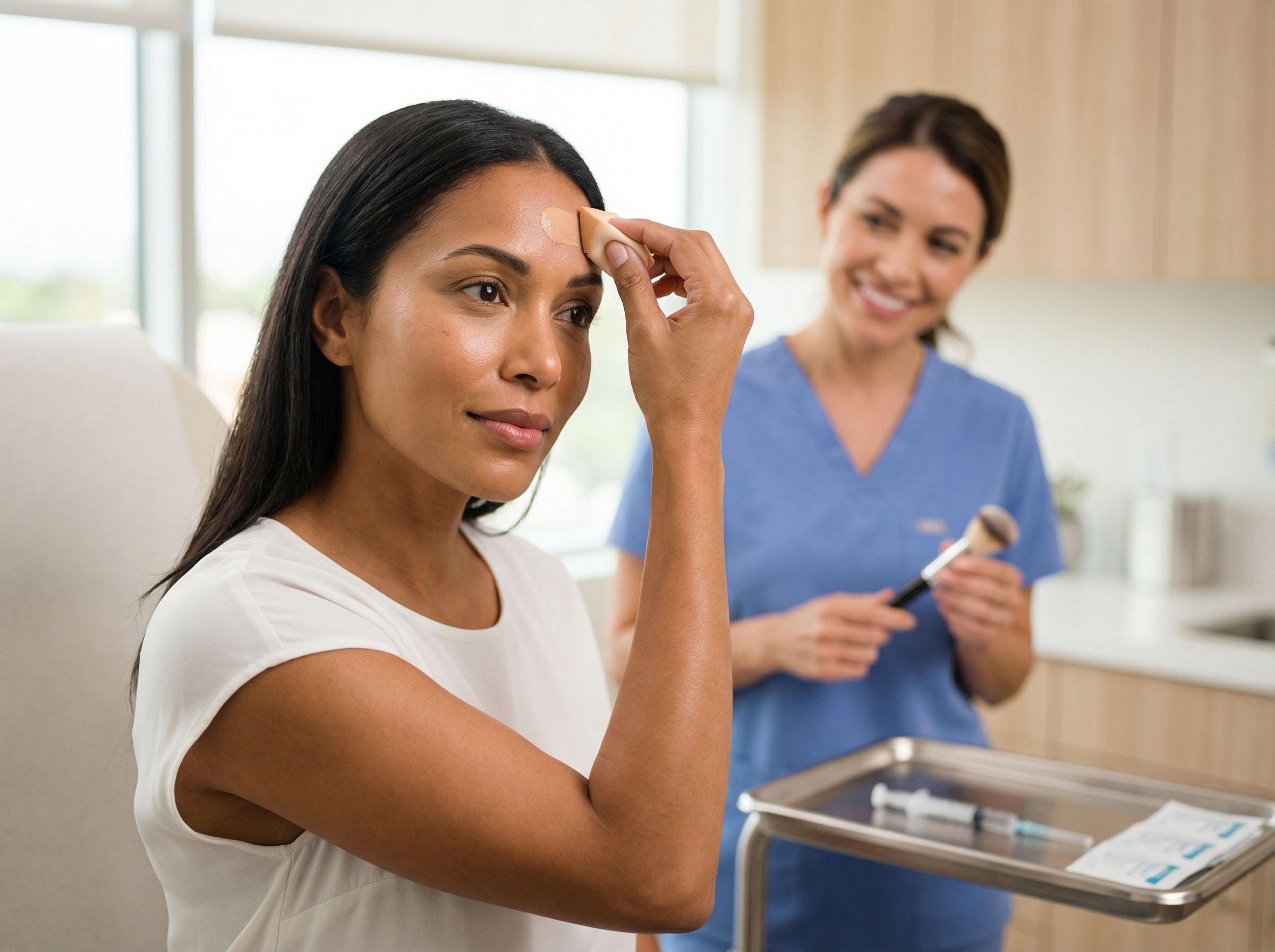
Wash your hands thoroughly. This sounds obvious, but it is the most skipped step. Do not use your dirty makeup bag brushes. Use a freshly washed brush, a new disposable sponge, or clean fingertips. If you use a beauty blender, boil it or use a new one. Old tools are full of bacteria.
2. Choose the Right Products
Stick to mineral or water-based foundations. These let the skin breathe. Expert-backed skincare tips often suggest avoiding oil-based or heavy occlusive balms that seal the skin too tightly. Look for “non-comedogenic” and “fragrance-free” on the label. Avoid powders with talc if possible, as they can be drying.
| Safe to Use (Post-Wait Period) | Avoid for 3-5 Days |
|---|---|
| Mineral Makeup: Zinc oxide and titanium dioxide are inert and generally non-irritating. | Active Chemical Exfoliants: AHAs (Glycolic, Lactic) and BHAs (Salicylic acid) can sting and irritate. |
| Water-Based Foundation: Allows skin to breathe and is easy to remove. | Physical Scrubs: Sugar scrubs or bead exfoliants cause micro-tears and require rubbing. |
| Fragrance-Free Formulas: Reduces the risk of contact dermatitis. | Heavy Occlusive Balms: Thick petrolatum-based products can trap bacteria if applied over fresh punctures. |
| Micellar Water: Gentle cleansing without scrubbing. | Retinoids/Retinol: These increase cell turnover and sensitivity. |
3. The Application Technique
Do not rub. Do not drag. Use a stippling or patting motion. Press the product gently into the skin. If you are covering the forehead, tap the foundation on lightly. Rubbing creates friction and heat, which can increase circulation and potentially encourage bruising or migration. If you can still see the small red dots from the needle, try to avoid putting product directly on top of them.
4. What to Avoid
Skip the abrasive scrubs or exfoliating toners for a few days. Do not use active ingredients like Retin-A, glycolic acid, or salicylic acid directly on the injection sites for 48 to 72 hours. These can irritate the healing skin. Avoid heavy contouring that requires aggressive blending.
Removing Makeup Without Damage
Taking the makeup off is just as important as putting it on. You want to avoid pulling at the skin. Use a micellar water or a gentle oil cleanser. Soak a cotton pad and press it against the skin for 10–15 seconds to dissolve the makeup. Wipe away gently in a downward or outward motion. Do not scrub with a washcloth. Rinse with cool or lukewarm water. Hot water increases blood flow and can make lingering swelling worse.
Covering Bruises and Managing Complications
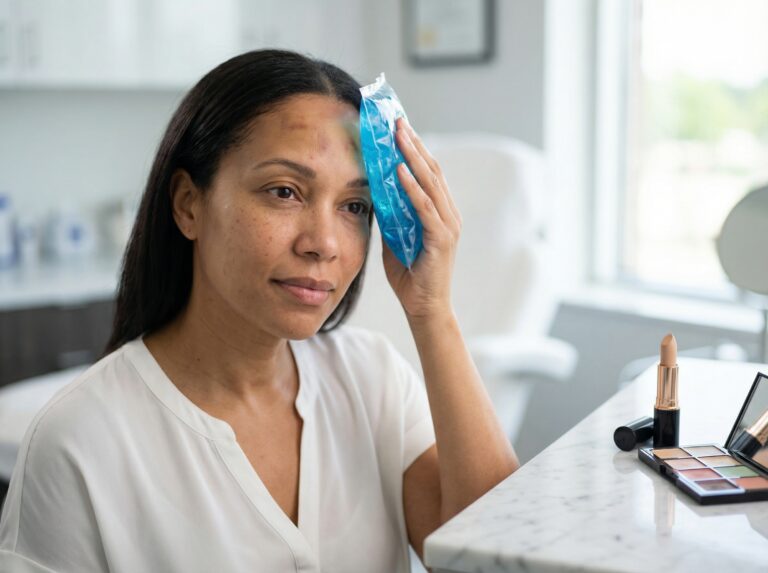
Bruises happen, even with the best injectors. If you have a purple or blue spot, a color-correcting concealer is your best tool. Use a peach or yellow-toned corrector to neutralize the blue. Pat it on the bruise, then layer your skin-tone concealer on top. For redness, use a green corrector. Do not press hard on a bruise, as this can push blood further into the tissue and make it larger.
You can use topical arnica or vitamin K cream to help speed up healing, but check with your provider first. Start these only after the initial 24-hour period. If you notice the area getting hot, red, swollen, or oozing pus, stop using makeup immediately. These are signs of infection. Cleveland Clinic notes that while rare, you should contact your doctor if you experience these symptoms or if you have a fever. Do not try to cover an infection with concealer.
Frequently Asked Questions
Patients often leave the clinic with a mix of excitement and anxiety, holding a mental list of restrictions that can get fuzzy by the time they reach the parking lot. Below are the specific answers to the most common questions regarding makeup and safety after botulinum toxin injections, based on current clinical consensus and safety protocols.
How long should I wait before wearing foundation or concealer at the injection site?
The safest route is to wait a full 24 hours. Your skin has just been punctured by a needle multiple times. Even though these needles are tiny, they leave behind open channels—micro-wounds—that take time to close. Applying foundation or concealer too early can trap bacteria into these openings, leading to irritation or infection. Most dermatologists agree that the risk drops significantly once the skin has re-epithelialized (healed over), which usually happens within that first day.
However, opinions do vary slightly. Some medical sources suggest that there is no set timeframe and that waiting until the redness subsides—often about 15 to 30 minutes—might be acceptable in low-risk scenarios. If you absolutely must apply coverage sooner than 24 hours, wait at least 4 hours. This allows the initial swelling to go down and the toxin to settle. Always use a freshly washed brush or a disposable sponge.
Can I apply mascara or eye makeup after injections around the eyes?
You should exercise extreme caution with eye makeup if you had injections for crow’s feet (periorbital lines). The concern here isn’t just the application, but the removal. Putting on mascara or eyeliner usually requires stretching the skin, and taking it off often involves rubbing or pulling at the delicate eye area. Vigorous rubbing in the first 24 hours can theoretically displace the toxin, causing it to migrate to unwanted muscles. Furthermore, mascara wands are notorious for carrying bacteria. Ideally, skip the eye makeup for the rest of the day.
Will putting on makeup move my Botox?
The act of putting on makeup itself usually won’t move the Botox, provided you are gentle. The real danger lies in the pressure you apply. Buffing a thick cream foundation into the skin with a dense kabuki brush creates friction and pressure. If you do this over the forehead or glabella (frown lines) within the first 4 hours, you risk spreading the fluid away from the target muscle. This diffusion can lead to complications like a droopy eyelid (ptosis) or brow heaviness.
Is mineral makeup safer than liquid or cream formulations?
Yes, mineral makeup is generally considered the safer option for post-procedure skin. True mineral powders sit on the surface of the skin rather than absorbing into the pores. They are also dry environments where bacteria are less likely to thrive compared to liquid foundations or cream concealers, which contain water and oils. Additionally, mineral formulas often contain zinc oxide and titanium dioxide, which provide natural sun protection and have mild anti-inflammatory properties.
When can I get a facial, chemical peel, or laser after Botox?
You need to pause on other facial treatments for a bit. Most practitioners recommend waiting at least 1 to 2 weeks before undergoing facials, microdermabrasion, chemical peels, or laser treatments. There are two reasons for this. First, the manipulation and massage involved in facials can move the toxin before it has fully bound to the nerve receptors. Second, treatments that cause swelling or inflammation (like lasers and peels) can alter the blood flow to the area, potentially affecting how the Botox settles or increasing the risk of bruising.
Can I use sunscreen immediately after Botox?
Sun protection is vital, but you should treat sunscreen like any other skincare product: apply with care. If your appointment ends while the sun is still out, you might want to protect your face. However, chemical sunscreens can sometimes sting open injection points. A physical (mineral) sunscreen powder or a lightweight lotion containing zinc is preferable. Apply it very gently. Do not massage it in. If you can, wear a wide-brimmed hat for the trip home instead of applying product directly to the fresh wounds.
What if I am on blood thinners or have a bruising tendency?
If you take blood thinners (like aspirin, ibuprofen, or prescription anticoagulants) or supplements like fish oil and Vitamin E, your risk of bruising and bleeding is higher. For you, the “no makeup” window is even more important. Your injection sites may ooze slightly longer than average, keeping the channels open to bacteria for a longer period. It is often wise to wait a full 24 to 48 hours before applying makeup if you are prone to significant bruising.
When should I call my injector?
While minor redness and tiny bumps are normal for a few hours, certain symptoms warrant a call to your provider. If you notice extreme pain at the injection site that gets worse rather than better, this is not normal. Significant swelling that distorts your features, heat radiating from the area, or pus-like discharge are signs of a potential infection and need immediate medical attention. Additionally, if you experience a drooping eyelid, double vision, or difficulty swallowing or breathing, contact your doctor immediately.
Key Takeaways and Aftercare Checklist
We have covered the science and the common questions regarding makeup application after Botox. Now we need to condense that information into a practical plan you can actually use. The goal here is simple: protect the investment you just made in your face and prevent any unnecessary complications like infection or product migration.
Immediate Actions: The First 4 Hours
The first few hours are critical for the settling of the product. Your behavior during this window directly influences your results.
- Stay upright: Do not lie down flat or bend over for at least four hours. Gravity can affect how the toxin settles. You want it to stay exactly where the injector placed it.
- Do not touch the area: Keep your hands off your face. This includes rubbing, scratching, or resting your face in your hands.
- Skip the nap: Even if you are tired, stay awake and vertical. Lying face down on a pillow is one of the worst things you can do right now.
- Facial expressions: Some injectors suggest gently exercising the treated muscles by frowning or smiling. This helps the toxin bind to the nerve receptors. Ask your specific provider if they recommend this step.
The First Day: 0 to 24 Hours
This is your primary healing window. The focus is on keeping inflammation down and keeping the injection sites clean.
- Avoid makeup completely: Keep your face bare. If you absolutely must apply something, use a sterile cotton swab to dab mineral powder only on areas that were not injected.
- No strenuous exercise: Skip the gym. Elevated heart rate and blood pressure can increase blood flow to the face, flushing out the area and increasing the risk of bruising.
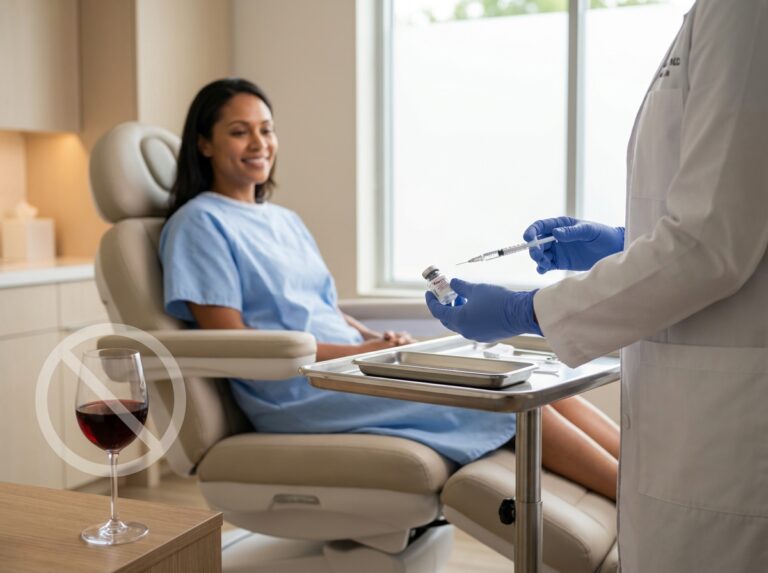
- Skip the alcohol: Alcohol acts as a blood thinner. Drinking wine or cocktails tonight will increase your chances of waking up with bruises. It also dehydrates the skin which is not ideal for healing.
- Avoid heat exposure: Stay out of saunas, steam rooms, and hot tubs. Heat causes vasodilation which leads to swelling.
- Sleep position: Try to sleep on your back with your head slightly elevated on an extra pillow. This reduces fluid accumulation and morning swelling.
The Recovery Phase: 24 to 72 Hours
You can generally resume your normal routine now but proceed with caution. The toxin is settled but your skin might still be sensitive.
- Resume makeup gently: You can apply foundation and concealer now. Use a light hand. Do not drag or pull on the skin. Use a tapping motion to blend your products.
- Clean your tools: Wash your makeup brushes and sponges before this first application. Learn when and how to safely wear makeup after Botox to ensure you are using the right techniques.
- Skincare adjustments: You can go back to your regular cleanser and moisturizer. Avoid harsh scrubs or electronic cleansing brushes for another day or two. Chemical exfoliants like retinol or glycolic acid should wait until any sensitivity subsides.
- Watch for bruising: Bruises may appear a day or two later. If you see them, you can use Arnica gel or a Vitamin K cream to help speed up the healing.
Resuming Other Procedures
Botox is often part of a larger skincare plan. You need to time your other treatments correctly to avoid interfering with the toxin.
| Procedure | Recommended Wait Time |
|---|---|
| Facials and Massage | Wait 1 to 2 weeks. Pressure from massages can displace the Botox. |
| Microdermabrasion | Wait at least 24 to 48 hours. Ideally wait 1 week. |
| Chemical Peels | Wait 1 to 2 weeks. Acids can cause inflammation that interferes with settling. |
| Laser Treatments | Wait 2 weeks. Heat and light energy can affect the tissue response. |
| Eyebrow Waxing | Wait 24 hours. The pulling motion can disturb the forehead muscles. |
Every patient is different. Your medical history and the specific areas treated might change these timelines slightly. Always defer to the specific instructions given to you by your injector. They know exactly where they placed the product and how your skin reacted during the session. Follow their guidance to ensure you get the smooth and refreshed results you paid for.
References
- Archive: Study Finds Patients Have Shorter Wait Times for Botox … — Patients seeking botox injections waited an average of eight days for an appointment, while those seeking an appointment for examination of changes to a mole,
- What not do to after Botox in Scottsdale AZ – Injections by Megan — The effects may last for about 3-6 months, and the average results will wear off on your skin after around 4 months. Make sure you wait for several months …
- Makeup & Skincare After Botox: Safe Timing & Tips — Learn when and how to safely wear makeup after Botox. Expert-backed skincare tips to protect healing, reduce risks, and keep results …
- Patient Wait Times: Bumped by Botox? — “Botox patients, as the Journal of the American Academy of Dermatology article highlighted, don't wait long at all — maybe a day or two.
- Botox Aftercare: The Do's and Don'ts – Health Cleveland Clinic — How soon after Botox can you wear makeup? There's no set timeframe to how long you should wait after injections to apply makeup, lip balm or …
- Botox Usage Statistics 2023 | SpaMedica — In 2022, over 9 million Botox treatments were administered globally. That represents a significant 26.1% increase in one year.
- Can You Wear Makeup After Botox? – Dr. Amy Bandy — It's generally recommended to wait at least 24 hours before applying makeup to the treated area to allow the toxin to settle properly.
- Can You Wear Makeup After Botox? – Avanti Medical Center — By waiting about 10 – 15 minutes, using clean makeup brushes, and applying products gently, most patients can safely wear makeup to conceal BOTOX bruising or …
- Is It Okay to Wear Makeup After Getting Botox®? — Botox results typically last 3 to 6 months; You can wear makeup as usual during this period; Remember to follow the same precautions after each subsequent Botox …
Legal Disclaimers & Brand Notices
The content provided in this article is for informational purposes only and does not constitute professional medical advice, diagnosis, or treatment. Always seek the advice of your physician or another qualified healthcare provider with any questions you may have regarding a medical condition or the recovery process following a procedure. Never disregard professional medical advice or delay in seeking it because of something you have read on this website.
All product names, logos, and brands are the property of their respective owners. All company, product, and service names used in this article are for identification purposes only. Use of these names, logos, and brands does not imply endorsement or affiliation. Specifically:
- Botox® is a registered trademark of Allergan, Inc.