Collagen banking — the idea of preserving or priming your skin’s collagen in your 20s — is gaining attention alongside common noninvasive treatments. This article examines the science, realistic options, evidence, and practical aftercare for Botox, fillers, lasers, chemical peels and body sculpting so you can make safe, long term decisions and maximize treatment outcomes.
How collagen works and why it matters early
To understand why anyone would try to “bank” collagen, you first have to understand the asset itself. Collagen is the primary structural protein in the human body. Think of it as the steel reinforcement bars inside a concrete column. It provides the tensile strength that keeps skin from tearing and the structure that keeps it from collapsing. In the skin, this protein forms a complex mesh within the dermis, the thick layer living right beneath the surface. This mesh is what gives young skin that dense, firm feeling.
The biology here is specific. While there are at least 28 types of collagen, two matter most for facial aging. Type I is the strongest and most abundant. It is the heavy lifter responsible for resistance and durability. Type III is often called “baby collagen.” It is more flexible and prevalent in young children. As we age, our bodies naturally shift from producing a mix of Type I and III to primarily producing Type I, and the overall total volume begins to drop.
The Cellular Factory: Fibroblasts
The real work happens in the fibroblasts. These are specialized cells acting as the construction crew for your skin. In a healthy environment, fibroblasts churn out new collagen fibers to replace old, damaged ones. They also produce elastin (for snap-back) and hyaluronic acid (for hydration).
In your early 20s, this machinery works at a surplus. You produce more structural proteins than you lose. However, biological aging is not a sudden event; it is a slow shift in efficiency.
The Turning Point
According to dermatological consensus, collagen production decreases by approximately 1% to 1.5% every year starting in your mid-20s. By the time a person reaches 30, the breakdown process begins to outpace synthesis. This is the critical window where “banking” concepts gain traction. You aren’t seeing deep wrinkles yet, but the dermal density is thinning. The factory is firing fewer workers, and the ones remaining are working slower.
Intrinsic vs. Extrinsic Aging
The decline happens for two reasons. Intrinsic aging is the genetic, programmed clock. It is inevitable. Extrinsic aging is damage caused by external factors, and this is where prevention strategies focus. In 2024 and 2025, research has heavily emphasized the “exposome”—the cumulative effect of your environment.
UV Radiation
Sun exposure remains the single biggest destroyer of collagen. UV rays penetrate the dermis and activate enzymes called matrix metalloproteinases (MMPs). These enzymes literally chop up collagen fibers. It is not just about burning; even low-level daily exposure accumulates damage over time.
Glycation
Diet plays a measurable role here. Excess sugar in the bloodstream attaches to proteins to form Advanced Glycation End-products (AGEs). This process makes collagen fibers stiff and brittle. Instead of stretching when you smile, glycated collagen snaps. This leads to permanent creasing and a loss of that soft, pliable texture associated with youth.
Inflammation and Stress
Chronic inflammation, whether from pollution, poor diet, or high cortisol (stress), keeps the skin in a defensive state. This diverts energy away from repair and synthesis. Smoking is particularly aggressive; it constricts blood vessels, starving fibroblasts of the oxygen they need to function.
Fragmentation: When the Mesh Fails
The problem isn’t just that you have *less* collagen; it is that the quality of what remains is compromised. In young skin, the collagen network is organized and tight. In aging skin, the fibers become fragmented.
Imagine a brand new tennis racket with tight strings. The ball bounces off it effortlessly. Now imagine a racket where half the strings are broken or loose. The ball hits the net and just dies. That is fragmentation.
When the collagen matrix is fragmented, it loses the mechanical tension required for fibroblasts to function. Fibroblasts actually need to attach to a stiff structure to stretch out and produce new collagen. When the structure collapses, the fibroblasts collapse too. They become senescent—zombie cells that stop working and release inflammatory signals that damage neighboring cells. This creates a feedback loop: broken collagen leads to lazy fibroblasts, which leads to less repair, which leads to more broken collagen.
This structural failure affects more than just vanity. It impacts wound healing. Procedures like microneedling or lasers rely on the skin’s ability to heal itself. If the collagen network is already heavily fragmented, the recovery from these treatments takes longer, and the results are less impressive. This is why starting in your 20s is often discussed as a strategy to maintain the structural integrity needed for future treatments to work effectively.
Early Markers of Decline
You do not need a microscope to see these changes, though they are subtle at first. The signs appear long before deep folds set in.
- Loss of Radiance: As the surface becomes less smooth due to underlying structural changes, light reflects more poorly. Skin looks duller.
- Pore Visibility: Pores do not have muscles to open and close. They are held tight by the collagen around them. As that collagen slackens, the pore walls sag, making them appear larger.
- Sleep Lines: If you wake up with pillow marks that take an hour to fade instead of five minutes, that is a direct indicator of reduced elasticity and collagen density.
- Slower Healing: A pimple mark or small scratch taking weeks to fade instead of days indicates that the fibroblast activity has slowed down.
Measurable Goals for Collagen Health
If you are investing time and money into preserving collagen, you need to know if it is working. Subjective feelings are not enough. Clinicians and informed patients use specific markers to track stability.
Snap Test
This is a simple physical check. Pinch the skin on the back of the hand or the cheek. It should snap back immediately. A delay indicates a loss of elastin and collagen support.
Dermal Thickness
High-frequency ultrasound is becoming more common in aesthetic clinics. It allows practitioners to see the thickness of the dermis. The goal of banking is to maintain this thickness, preventing the thinning that characterizes aged skin.
Texture Analysis
Digital imaging systems (like VISIA) can map pore size and surface texture. Maintaining a consistent score year over year, rather than seeing a decline, is a success metric for preventive care.
Understanding these biological mechanisms shifts the conversation from “fixing wrinkles” to “preserving function.” The goal is to keep the fibroblasts active and the collagen mesh intact for as long as possible, preventing the fragmentation that makes reversal so difficult later on.
What collagen banking actually means today
The term collagen banking has surged in popularity across social media and dermatology clinics by late 2025. It sounds financially prudent. The idea is that you accumulate collagen reserves while your body is still efficient at producing them so you have a buffer when production plummets in your 30s and 40s. However, the medical reality is distinct from the marketing slogan.
Clinics currently use this label to describe two fundamentally different approaches. One is biological preservation, and the other is preemptive stimulation. Understanding the difference is critical for safety, budget, and managing expectations.
True Biobanking vs. Functional Banking
True biobanking is the only method that literally “banks” your biological material. This involves harvesting autologous cells—usually fibroblasts from behind the ear or adipose-derived stem cells from fat—and cryopreserving them in liquid nitrogen.
The Process
A clinician takes a tissue biopsy. The sample is sent to a specialized facility where cells are expanded and frozen at temperatures below -150°C. The theory is that you can re-inject these younger, more active cells decades later to rejuvenate aging tissue.
The Evidence
While cell cryopreservation is a proven science in fertility and oncology, its application in cosmetic dermatology remains largely theoretical regarding long-term efficacy. We know fibroblasts can survive the freeze-thaw process. We do not yet have multi-decade longitudinal studies confirming that re-injecting your 25-year-old fibroblasts into your 50-year-old face results in clinically significant structural restoration compared to standard care. It is an insurance policy with an unknown payout.
Most of what you see advertised as collagen banking is actually “functional banking.” This refers to procedures that stimulate the body to produce collagen now, aiming to keep the baseline density higher than it would be without intervention.
Collagen Stimulating Injectables
This is the cornerstone of functional banking. Unlike hyaluronic acid fillers that simply occupy space to fill a void, biostimulators create a scaffold that triggers a fibroblast response.
Poly-L-Lactic Acid (PLLA)
Marketed as Sculptra, this synthetic polymer causes a controlled inflammatory response. The body encapsulates the microparticles with new collagen. FDA data indicates results can last up to two years. It is widely considered the gold standard for increasing dermal thickness over time.
Calcium Hydroxylapatite (CaHA)
Marketed as Radiesse, this compound provides immediate volume and long-term collagen stimulation. In hyper-diluted forms, it is used off-label to improve skin quality and firmness rather than just adding volume.
Regulatory Status
Both PLLA and CaHA are FDA-approved for correcting nasolabial folds and other facial wrinkles. Using them in a 20-something patient with no visible volume loss for “prevention” is an off-label use. While generally safe in experienced hands, the risk of nodules or granulomas exists, especially if the immune system overreacts to the biostimulator.
Energy-Based Induction Therapies
These devices use heat or mechanical injury to force the skin into repair mode. The rationale is that controlled damage upregulates collagen type I and III production.
Microneedling and RF Microneedling
Traditional microneedling creates physical channels. Radiofrequency (RF) microneedling adds heat to the dermis, causing collagen denaturation and subsequent tightening. Clinical studies through 2024 have consistently shown these modalities increase collagen density. However, aggressive use in young skin carries risks of scarring or post-inflammatory hyperpigmentation.
Ultrasound (MFU-V)
Micro-focused ultrasound generates thermal coagulation points deep in the tissue. It is effective for lifting and tightening. For a patient in their 20s, this is often overkill unless there is specific anatomical laxity. Over-treatment can potentially lead to volume loss, which is counterproductive to the goal of banking.
The Role of Neuromodulators
Botox, Dysport, and Daxxify are often categorized under banking because they prevent the mechanical stress that breaks down collagen.
Mechanism of Action
By inhibiting muscle contraction, you stop the skin from folding. Constant folding acts like bending a paperclip back and forth until it breaks. By stopping the fold, you preserve the integrity of the dermal matrix in that specific area.
Clinical Consensus
This is the most proven form of “prevention.” Twin studies and long-term observational data confirm that early, consistent use of neuromodulators prevents the formation of etched-in lines. The risk here is psychological and aesthetic—starting too early or using too much can lead to atrophy of the facial muscles and a frozen, unnatural appearance.
Stem Cells and Exosomes: The Experimental Frontier
You will see clinics offering “stem cell facials” or exosome therapy as the ultimate banking strategy. Proceed with extreme caution.
Regulatory Reality
As of late 2025, the FDA has not approved any exosome products for cosmetic use. The agency has issued multiple consumer warnings regarding unapproved stem cell therapies. While the science of exosomes (messenger vesicles that tell cells to repair) is promising, the current market is flooded with products of variable purity and source. Claims that topical or injected exosomes will “bank” youth are currently ahead of the clinical evidence.
Comparative Analysis of Banking Strategies
| Strategy | Scientific Rationale | Evidence Level | Primary Risk |
|---|---|---|---|
| True Biobanking | Cryopreservation of autologous fibroblasts | Theoretical for cosmetics | High cost with unproven long-term utility |
| Biostimulators (PLLA/CaHA) | Scaffold-induced neocollagenesis | Robust (FDA Approved) | Nodules, granulomas, over-filling |
| Neuromodulators | Reduced mechanical stress | High (preventive efficacy proven) | Muscle atrophy, heavy brow |
| RF Microneedling | Wound healing cascade | Moderate to High | Scarring, texture changes |
| Exosomes/Stem Cells | Cellular signaling | Investigational/Low | Infection, immune reaction, lack of standardization |
Costs and Logistics
Collagen banking is not a one-time deposit. It is a subscription.
Financial Commitment
Biobanking involves an initial harvest fee plus annual storage fees, similar to cord blood banking. Functional banking requires maintenance. Neuromodulators are needed every 3 to 4 months. Biostimulators are often done in a series of 2 to 3 sessions initially, with annual maintenance. Collagen Banking: Beauty’s Long Game highlights how this long-term approach is driving revenue growth in the industry, but for the consumer, it means thousands of dollars annually.
Safety Considerations
The “more is better” fallacy is dangerous here. Over-stimulating the skin in your 20s can lead to fibrosis (scar tissue) rather than healthy, pliable collagen. A face full of scar tissue does not age well. It becomes stiff and difficult to treat with facelifts later in life. Finding a provider who knows when to say “no” is the most important part of the banking process.
The goal of collagen banking should be to maintain the structural integrity of the skin, not to freeze the face in time. It requires a balance between preserving what you have and not damaging the tissue in an attempt to save it.
Preventative routines and integrating non invasive treatments
Building a collagen bank requires more than just booking appointments. You need a strategy that combines daily protection with targeted clinical interventions. The goal is not to freeze your face. The goal is to keep the collagen factory running efficiently while minimizing the rate at which your existing reserves break down.
The Daily Foundation: Medical-Grade Skincare
You cannot bank collagen if you are actively destroying it every day. Your home routine protects the investment you make in the clinic.
Broad-Spectrum Sunscreen
This is non-negotiable. UV radiation is the primary cause of collagen degradation. You need a separate SPF 30 or higher every single morning. Do not rely on the SPF in your makeup. It is not enough. Reapplication is necessary if you are spending time outdoors.
Topical Retinoids
Vitamin A derivatives are the most proven topical method to stimulate collagen production. In your 20s, you might start with over-the-counter retinol or retinaldehyde. If you have acne or want stronger prevention, a prescription for tretinoin is the gold standard. Start slow to avoid irritation. Apply it two nights a week and increase frequency as your skin tolerates it.
Antioxidants and Vitamin C
Pollution and UV light create free radicals that attack collagen. A high-quality Vitamin C serum in the morning acts as a shield. Look for L-ascorbic acid at a concentration between 10% and 20%. It neutralizes oxidative stress before it causes damage.
Peptides and Growth Factors
Peptides act as messengers. They signal your skin cells to build more protein. Look for products containing copper peptides or matrixyl. These are excellent additions if your skin is too sensitive for strong retinoids.
Lifestyle Factors That Preserve Collagen
Your skin reflects your internal health. No amount of laser treatment can fix the damage caused by poor systemic health.
Dietary Inputs
Collagen is a protein. You need adequate protein intake to provide the amino acids required to build it. Focus on glycine, proline, and lysine. Vitamin C, zinc, and copper are essential co-factors. Without them, your body cannot assemble new collagen fibers. Why are under 25s the key market for collagen beauty products? Because the decline starts early, and nutritional support is the first line of defense.
Glycation Management
Sugar molecules attach to collagen and elastin proteins in a process called glycation. This makes the fibers stiff and brittle. They break instead of bouncing back. Minimizing processed sugar helps keep your collagen flexible and resilient.
Sleep and Stress
Cortisol is a catabolic hormone. It breaks down tissue. Chronic stress and lack of sleep keep cortisol levels high. Prioritize seven to eight hours of sleep to allow cellular repair.
Alcohol and Tobacco
Smoking reduces blood flow to the skin and destroys collagen directly. Alcohol dehydrates the skin and increases inflammation. If you are serious about banking collagen, these habits work against you.
Clinical Procedures as Prevention
In your 20s, clinical treatments should be viewed as maintenance rather than correction. The approach is subtle.
Neuromodulators (Botox/Dysport)
The philosophy here is “Baby Botox.” You use lower doses to soften muscle contraction rather than freezing it completely. This prevents the skin from folding repeatedly in the same spot. It stops a dynamic line from becoming a static wrinkle etched into the skin.
Preventative Fillers
This is controversial but effective when done correctly. Small amounts of biostimulatory filler can provide structural support. The goal is not to change your face shape. The goal is to maintain the fat pads and bone structure that support the skin.
Collagen Induction Therapy
Microneedling creates controlled micro-injuries. This triggers the body’s wound-healing response and generates new collagen. Adding Platelet-Rich Plasma (PRP) boosts this effect by delivering growth factors deep into the dermis. Collagen Banking for Youthful Skin: Why Start in Your 20s explains that starting these induction therapies early yields better long-term density.
Lasers and Chemical Peels
Superficial lasers and chemical peels increase cell turnover. They remove damaged surface cells and signal the deeper layers to regenerate. Clear and Brilliant or Moxi are popular “pre-juvenation” lasers for this age group because downtime is minimal.
Pre-Procedure Safety Checklist
Minimizing risk starts before you walk into the clinic. Preparation ensures better healing and results.
- Two Weeks Before: Stop taking blood thinners if medically safe. This includes aspirin, ibuprofen, fish oil, and Vitamin E. This reduces the risk of bruising.
- One Week Before: Avoid aggressive exfoliation or retinol if you are getting a laser or peel. Your skin barrier needs to be intact.
- Hydration: Drink plenty of water. Hydrated tissue responds better to treatments, especially fillers and microneedling.
- Sun Avoidance: Do not get a laser treatment or peel on tanned skin. It increases the risk of burns and hyperpigmentation.
- Provider Selection: Choose a board-certified dermatologist or plastic surgeon. Or choose a nurse injector operating under strict supervision. Ask to see before and after photos of patients in your age group.
Sample 1-Year Collagen Banking Plans
These plans illustrate how to integrate treatments. Adjust them based on your budget and specific skin concerns.
Option 1: Conservative Maintenance
This plan focuses on skin quality and barrier health with minimal downtime.
- Daily: Vitamin C, SPF 30+, Retinol (2-3x week), Peptide moisturizer.
- Month 1: Professional chemical peel to reset skin texture.
- Month 4: Microneedling session to stimulate collagen.
- Month 7: Professional chemical peel.
- Month 10: Microneedling session.
- Year-Round: High-protein diet and strict sun protection.
Option 2: Proactive Prevention
This plan includes neuromodulators and energy-based devices for maximum banking.
- Daily: Medical-grade antioxidant, SPF 50, Prescription Tretinoin, Growth Factor serum.
- Month 1: Low-dose Botox for forehead and glabella. Clear and Brilliant laser treatment.
- Month 4: Microneedling with PRP.
- Month 5: Low-dose Botox maintenance.
- Month 7: Microneedling with PRP.
- Month 9: Low-dose Botox maintenance. Clear and Brilliant laser treatment.
- Month 12: Annual skin check and consultation to adjust the plan.
Consistency matters more than intensity. A small amount of prevention done regularly works better than aggressive correction attempted too late. Choose a plan you can sustain financially and logistically.
Frequently Asked Questions
Can I really bank collagen now for later use?
The term banking implies you can store collagen in a vault and withdraw it when you are forty. Biology does not work that way. Your body constantly breaks down and rebuilds collagen. The goal of banking in your 20s is actually maximizing your peak collagen production before the natural decline accelerates. We know that collagen production drops by about 1% every year after age 25. By using biostimulatory treatments like Sculptra or microneedling now, you keep the fibroblast cells active and the collagen mesh dense. You are creating a stronger foundation so that when aging processes eventually take over, they are starting from a higher baseline. It is less about hoarding and more about maintaining a high-performance engine.
The Takeaway
Think of this as maintenance rather than storage. You cannot stop the clock, but you can slow the degradation rate. Focus on treatments that stimulate your own tissue rather than just filling gaps.
Are collagen supplements actually effective?
Oral collagen is controversial. The digestive system breaks down proteins into amino acids before they reach the skin. You are not drinking collagen that goes straight to your face. However, specific hydrolyzed collagen peptides have shown promise in clinical data. These smaller chains may survive digestion well enough to signal your body to repair tissue. The results of numerous clinical studies have suggested that collagen supplementation may help improve signs of aging by supporting hydration and elasticity. They work best as a support pillar alongside topical care and diet, not as a standalone solution.
The Takeaway
Look for hydrolyzed collagen peptides with clinical backing. Do not rely on gummies or powders to fix deep wrinkles. They are a nutritional support tool, not a replacement for sunscreen or retinoids.
When is it appropriate to start Botox?
Age is just a number here. Muscle strength and skin thickness matter more. Some people in their early 20s have very strong glabellar muscles that etch lines into the skin even when the face is resting. If you see a faint line remaining on your forehead or between your brows after you stop frowning, that is the clinical indicator to start. Starting before you have any lines at all is often unnecessary and can lead to muscle atrophy over decades. Preventative Botox uses lower units to weaken the muscle just enough to stop the skin from folding, without freezing your expression completely.
The Takeaway
Wait for the “resting line.” If the skin bounces back completely smooth after you frown, you can wait. If a shadow remains, consult a provider for a micro-dose.
How soon will I see results from fillers and how long does recovery take?
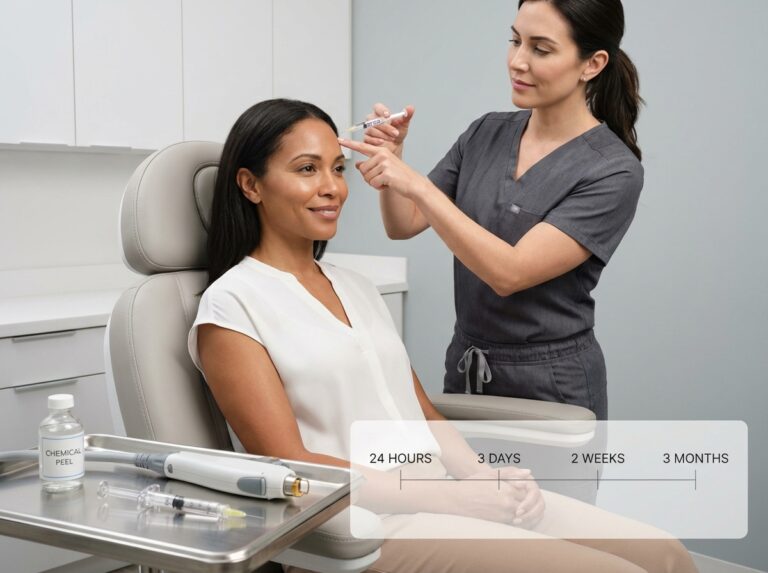
Hyaluronic acid fillers offer immediate gratification, but the look you see in the chair is not the final result. You will experience swelling and potential bruising that distorts the shape for the first few days. Hyaluronic acid is hydrophilic, meaning it pulls in water. This causes the treated area to look puffy or slightly uneven initially. True integration into the tissue takes about two weeks. Recovery is socially manageable within 24 to 48 hours for most people, but you should not schedule this right before a major event.
The Takeaway
Do not judge the result for 14 days. Plan your appointment at least two weeks before any weddings or photo shoots to allow for settling and bruise resolution.
What are typical downtimes for laser facials and chemical peels?
Downtime depends on the depth of the injury. Superficial chemical peels usually result in dryness and tight skin for two days, followed by light flaking. You can often wear makeup the next day. Non-ablative lasers like Clear + Brilliant or Moxi create a sandpapery texture that lasts three to five days. You will look like you have a sunburn, but the skin remains intact. Stronger treatments that break the skin barrier require actual social downtime where you might not want to leave the house for a week due to redness and crusting. In your 20s, you rarely need these aggressive ablative lasers.
The Takeaway
Schedule light lasers on a Thursday to recover over the weekend. Expect rough texture rather than peeling sheets of skin for most preventative lasers.
How can I minimize bruising and swelling?
Preparation is the most effective way to control bruising. Alcohol acts as a blood thinner and dilates vessels, increasing the risk of a bleed. Avoid wine and cocktails for at least 48 hours before your appointment. Supplements like fish oil, Vitamin E, and Ginkgo Biloba also thin the blood and should be paused one week prior, provided your doctor agrees. After the procedure, keep your head elevated on two pillows to use gravity against the swelling. Arnica Montana is widely used to speed up bruise clearance, though evidence is anecdotal.
The Takeaway
Stop all blood-thinning supplements and alcohol one week pre-treatment. Ice the area intermittently for the first day to constrict vessels.
Are stem cell or cell banking treatments safe and regulated?
This is the “Wild West” of aesthetics right now. While some clinics offer to bank your fibroblasts for future injection, this process is highly complex, expensive, and strictly regulated by the FDA. Many treatments marketed as “stem cell facials” actually use plant-based stem cells (like apple or grape). These act as antioxidants but do not regenerate human tissue. True autologous cell therapy (using your own cells) is considered a drug by the FDA and requires rigorous processing standards that most med spas cannot meet. There is a significant gap between marketing claims and biological reality here.
The Takeaway
Be extremely skeptical of “stem cell” claims. Unless it is part of an FDA-approved trial or a highly specialized medical facility, stick to proven biostimulators like PRP (Platelet-Rich Plasma) which uses your own blood growth factors.
Can preventative treatments prevent aging entirely?
No. Aging is not just about skin collagen. It involves bone resorption, fat pad displacement, and muscle changes. Your skull actually shrinks and changes shape as you age, and gravity pulls soft tissue downward. Collagen banking addresses skin quality and thickness, but it cannot stop bone loss or gravity. This strategy is intended to yield long-term benefits, resulting in smoother, firmer, and more youthful-looking skin, but it will not freeze your face in time. Over-treating in an attempt to stop aging completely often leads to an uncanny, distorted appearance.
The Takeaway
Adjust your expectations. The goal is to look healthy and refreshed, not to look 25 when you are 50. Structural aging happens regardless of surface treatments.
How do I choose a reputable clinic?
Social media followings do not equal medical expertise. Look for a board-certified dermatologist or plastic surgeon. These credentials ensure the provider has undergone years of standardized residency training. If you choose a nurse injector or physician assistant, ensure they operate under the direct supervision of a board-certified core specialist who is on-site. Ask to see before-and-after photos of healed results, not just photos taken immediately after the procedure. Check if the clinic has emergency protocols for complications like vascular occlusion.
The Takeaway
Verify credentials on the state medical board website. Ask specifically: “Who handles complications if they arise?” If they do not have a clear answer, leave.
What warning signs require prompt medical attention?
The most dangerous complication with fillers is vascular occlusion, where the product blocks a blood vessel. The warning sign is not usually redness, but blanching. The skin turns white or dusky and mottled, often accompanied by severe, disproportionate pain. This is a medical emergency that requires immediate dissolving of the filler to save the skin tissue. Other red flags include heat, throbbing pain, or pus appearing days after the treatment, which signals an infection. Normal bruising is purple or blue; blanching is white or grey.
The Takeaway
If you notice white patches, severe pain, or a net-like pattern on the skin within 24 hours, call your provider immediately. Do not wait until morning.
Final takeaways and practical action plan
Collagen banking is not a magic shield against time. It is a biological maintenance strategy. We have reviewed the science, the treatments, and the risks throughout this article. The conclusion is clear. You cannot stop aging. You can only manage how gracefully your skin structure changes. The goal in your 20s is preservation rather than repair. This requires a shift in mindset from fixing problems to maintaining health.
We need to move from theory to practice. A scattered approach leads to wasted money and potential skin damage. You need a structured plan that prioritizes evidence over trends.
Documentation and Aftercare
Memory is unreliable. You need objective data to track your progress. Take photos of your face in natural light every month. Use the same angle and the same time of day. This helps you see subtle changes or lack thereof. It also prevents gaslighting yourself into thinking a treatment worked when it did nothing.
Post-Procedure Protocols
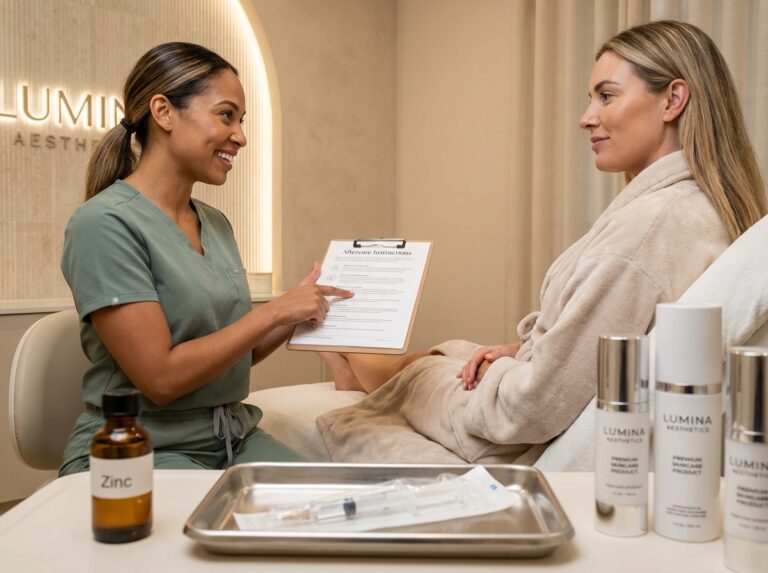
Follow aftercare instructions exactly. If a doctor says no exercise for 24 hours, do not go to the gym. If they say avoid sun, stay inside. Inflammation is a necessary part of the healing process for some collagen treatments, but chronic inflammation causes damage. Know the difference. Contact your provider immediately if you see blanching, intense pain, or unusual discoloration. These are signs of vascular occlusion. Speed saves skin.
Cost Versus Benefit Analysis
Collagen banking is expensive. You must weigh the financial cost against the potential biological return. A $500 microneedling session might offer more long-term value than a $2000 filler injection if your goal is skin quality rather than shape change. Banking On Collagen (& Losing Billions) highlights that economic pressure often drives these beauty standards. Do not compromise your financial health for aesthetic treatments. Stress increases cortisol, which degrades collagen. Going into debt for skincare is counterproductive.
Discussing Budget with Providers
Be honest about your budget. A reputable doctor will design a plan that fits your finances. They might suggest prescription retinoids and sunscreen as a complete plan if lasers are out of reach. That is a valid and effective strategy. If a provider shames you for your budget, leave.
Final Thoughts
Your face is not a trend. It is the interface through which you experience the world. The goal of collagen banking in your 20s is not to look 20 forever. It is to ensure your skin functions optimally as you mature. Protect your barrier. Stimulate your cells gently. Avoid the temptation to over-treat. A frozen, over-filled face often looks older than a natural face with fine lines. Trust the science. Respect your anatomy. Make choices that your future self will appreciate, not choices that just look good on a feed today.
Sources
- Why are under 25s the key market for collagen beauty products? — The results of numerous clinical studies have suggested that collagen supplementation may help improve 'signs of aging' by boosting skin …
- Collagen Banking: Beauty's Long Game | Global Cosmetic Industry — In 2025, YSE Beauty experienced 120% revenue growth and expects to deliver more than 80% growth in 2026. Dec 16th, 2025. Unica's Triple-Mix …
- Collagen Banking for Youthful Skin: Why Start in Your 20s — This strategy is intended to yield long-term benefits, resulting in smoother, firmer, and more youthful-looking skin as individuals age.
- Collagen Banking: The Secret to Ageless Skin in 2025 — Boost skin elasticity & fight aging with collagen banking. Learn how to preserve youthful skin in 2025 with expert tips & cutting-edge treatments!
- Banking On Collagen (& Losing Billions) — Study after study shows that people who meet the standard of beauty benefit from it economically, professionally, socially, and people who don't …
- Is Collagen Banking Anti-Aging's Next Frontier? – NewBeauty — Have you heard whispers about collagen banking as the new anti-aging savior? Here, we break down exactly what it is.
- Is Collagen Banking the Secret to Youthful, Plump Skin? Experts … — Described as a pension plan for youthful skin, collagen banking is here to stay—here's everything to know and exactly how to adopt it.
Legal Disclaimers & Brand Notices
The content provided in this article is for informational and educational purposes only and does not constitute medical advice, diagnosis, or treatment. Always seek the advice of a qualified physician or other licensed healthcare provider with any questions you may have regarding a medical condition or specific aesthetic procedure. Never disregard professional medical advice or delay in seeking it because of something you have read in this article. Reliance on any information provided herein is solely at your own risk.
All product names, logos, and brands are the property of their respective owners. All company, product, and service names used in this article are for identification purposes only. Use of these names, trademarks, and brands does not imply endorsement or affiliation. The following trademarks mentioned in this text are the property of their respective owners:
- Botox® is a registered trademark of Allergan Aesthetics (an AbbVie company).
- Dysport® is a registered trademark of Galderma.
- Sculptra® is a registered trademark of Galderma.
- Radiesse® is a registered trademark of Merz North America, Inc.