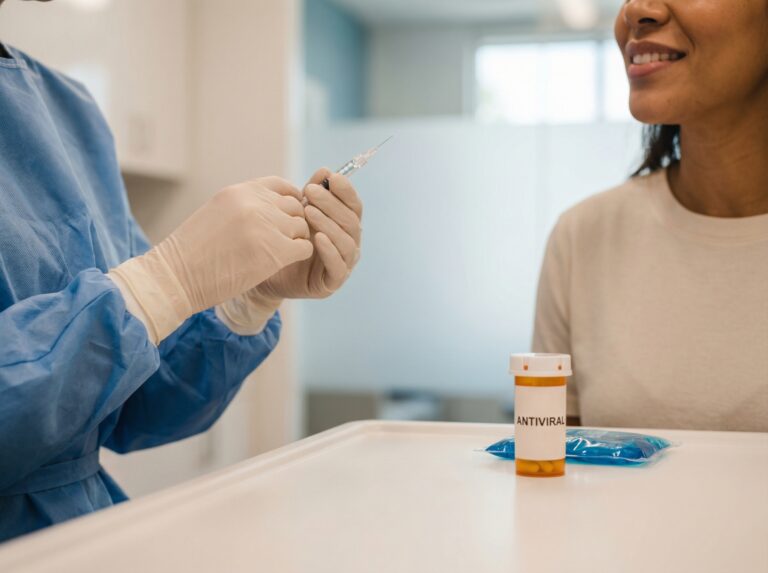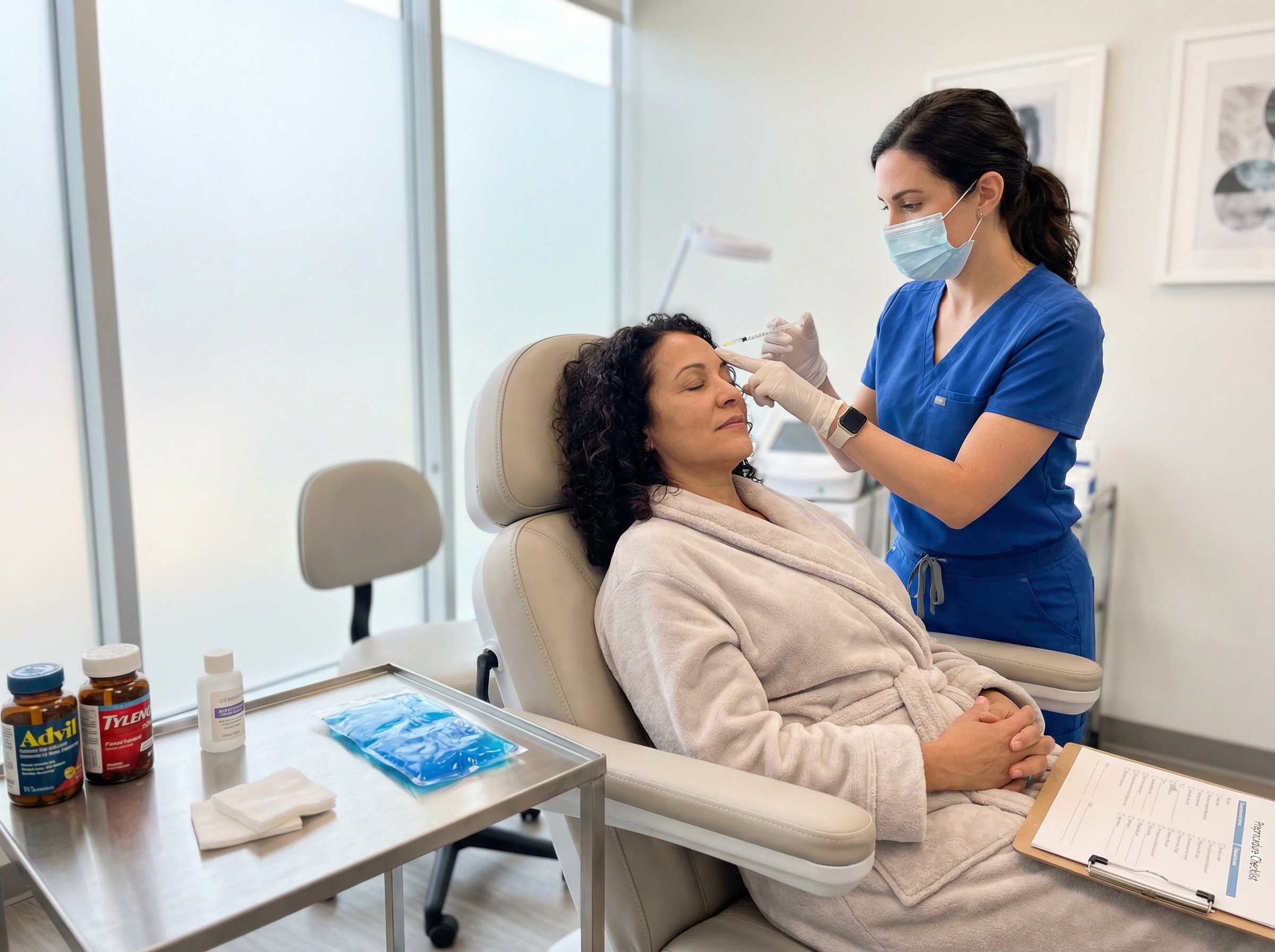
Thinking about taking ibuprofen or Advil before a Botox appointment? Many patients worry that common pain relievers or supplements could increase bruising or bleeding. This article explains how Botox injections interact with blood-thinning medications and supplements, offers evidence-based timing recommendations, and gives safe alternatives and aftercare tips to minimize risks and maximize results.
How Botox injections can cause bruising and the role of blood thinners
Even with the most skilled injector, a needle entering the skin creates a pathway for potential bruising. Understanding why this happens requires looking at what occurs beneath the surface of your skin and how your blood chemistry reacts to common medications.
The Physiology of a Bruise
Botox injections use extremely fine needles, often 30-gauge or 32-gauge, which are roughly the width of a few strands of hair. The goal is to target specific facial muscles like the frontalis in the forehead or the orbicularis oculi around the eyes. However, the skin and muscle tissue in these areas are densely packed with a microscopic network of capillaries and small veins.
When the needle penetrates the skin to reach the muscle, it may nick one of these tiny blood vessels. This is often unavoidable because many capillaries are not visible to the naked eye, even with good lighting. When a vessel wall is breached, a small amount of blood leaks out into the surrounding soft tissue. This leaked blood is what forms a bruise, medically known as an ecchymosis.
The body immediately responds to this leak. Platelets, which are small blood cells, rush to the site of the puncture. They adhere to the damaged vessel wall and to each other to form a plug that stops the bleeding. This process is called coagulation. If your platelets function normally and quickly, the leak is plugged almost instantly, resulting in no visible mark or perhaps a tiny pinpoint red dot.
If coagulation is delayed or the platelets cannot clump together effectively, more blood escapes into the tissue before the vessel is sealed. This larger volume of trapped blood creates a visible dark patch. Over the following days, your body breaks down the hemoglobin in that trapped blood. This biochemical breakdown causes the bruise to shift colors from dark purple or blue to green and eventually yellow as the body reabsorbs the fluids.
How NSAIDs Affect Clotting
Many patients unknowingly increase their risk of bruising by taking common over-the-counter pain relievers. Non-steroidal anti-inflammatory drugs, known as NSAIDs, are the most frequent culprits. This category includes ibuprofen (Advil, Motrin) and naproxen (Aleve).
NSAIDs work by blocking an enzyme called cyclooxygenase (COX). This enzyme is necessary for producing thromboxane, a lipid that signals platelets to get sticky and clump together. When you take ibuprofen, you are essentially making your platelets “slippery.” They cannot adhere to each other as well as they should.
The inhibition caused by NSAIDs is reversible. This means the medication binds to the platelet only temporarily. Once the drug is metabolized and clears your system, your platelets return to their normal sticky state. The duration of this effect depends on the half-life of the specific drug, but the anti-clotting effect typically fades as the drug leaves the bloodstream.
The Distinct Mechanism of Aspirin
Aspirin is often grouped with NSAIDs, but its effect on bruising is significantly more profound due to its mechanism of action. Unlike ibuprofen, aspirin creates an irreversible change in the platelets. It permanently disables the platelet’s ability to clump for its entire lifespan.
A single dose of aspirin can impair the clotting function of the platelets currently in your bloodstream. Since platelets live for about 7 to 10 days, the blood-thinning effect of aspirin persists until your body produces enough new, unaffected platelets to restore normal clotting function. This is why aspirin poses a higher risk for larger or longer-lasting bruises compared to standard ibuprofen.
Supplements and Herbal Thinners
It is not just pharmaceutical drugs that influence bleeding. Several natural supplements possess mild anticoagulant properties that can surprise patients.
Fish Oil and Omega-3s: High doses of omega-3 fatty acids can reduce platelet aggregation, similar to mild blood thinners.
Vitamin E: This vitamin interferes with vitamin K-dependent clotting factors, which are essential for coagulation.
Ginkgo Biloba, Garlic, and Ginger: These are known as the “3 Gs” in aesthetics. They all contain compounds that can inhibit platelet function or increase blood flow, potentially leading to more bleeding at the injection site.
Variability in Bruising Risk
The likelihood of bruising is not solely dependent on medications. Individual anatomy plays a massive role. The skin on the forehead is thinner than the skin on the cheeks, making vessels there more susceptible to injury. Older patients often have more fragile vessel walls and thinner skin, which offers less cushioning for the capillaries.
In one study, nearly 24% of all injectable patients experienced some degree of bruising post-treatment. However, specific data for Botox often shows lower rates compared to dermal fillers, as the injections are more superficial. Some clinics report bruising rates as low as 5% for neurotoxin treatments.
Technique also matters. Experienced injectors use strategies to minimize trauma. This includes applying immediate topical pressure after withdrawing the needle. Pressure mechanically compresses the vessel, stopping the leak manually until the body’s clotting mechanism takes over.
| Substance | Mechanism | Duration of Effect | Risk Level |
|---|---|---|---|
| Ibuprofen / Naproxen | Reversible platelet inhibition | Short (hours to days) | Moderate |
| Aspirin | Irreversible platelet inhibition | Long (7-10 days) | High |
| Fish Oil / Vitamin E | Reduced platelet aggregation | Variable (dose dependent) | Low to Moderate |
| Alcohol | Vasodilation (widens vessels) | Very Short (hours) | Moderate |
While bruising is a common side effect, it is usually minor and self-limiting. Most bruises from Botox are small—often the size of a pencil eraser—and resolve within a few days. Understanding the interplay between your blood’s clotting ability and the needle’s path helps manage expectations. If your blood is thinned by medication or supplements, even a perfect injection technique cannot change the fact that your blood will take longer to clot if a vessel is nicked.
Practical pre-procedure and post-procedure medication guidance
Planning your medication intake is the single most effective step you can take to minimize recovery time. While technique matters, your body’s ability to clot determines whether a tiny needle prick heals instantly or leaves a mark. We focus here on specific timing for common household medications and when to involve your doctor.
Managing Over-the-Counter Pain Relievers
Most patients unknowingly increase their bruising risk by taking common painkillers in the days leading up to their appointment. Non-steroidal anti-inflammatory drugs (NSAIDs) are the primary concern because they impair platelet aggregation.
You should avoid medications containing ibuprofen (Advil, Motrin) or naproxen (Aleve) for **48 to 72 hours** before your scheduled injection. This window allows the reversible effect on your platelets to wear off. If you can manage it, extending this avoidance to 72 hours provides a better safety margin.
The post-procedure window is equally important. Avoid these medications for **24 to 72 hours** after your treatment. Your injection sites need time to heal completely. Reintroducing blood thinners too early can trigger late-onset bruising or restart minor bleeding under the skin.
Aspirin and Prescription Antiplatelets
Aspirin requires a different approach because its effect on platelets is irreversible. A single dose affects the platelet for its entire lifespan. This means the blood-thinning effect lasts much longer than with ibuprofen.
If you take aspirin for occasional pain relief, stop taking it **7 to 10 days** before your appointment. This gives your body enough time to generate a fresh supply of functional platelets.
Crucial Medical Warning: If you take aspirin, warfarin, clopidogrel, or direct oral anticoagulants (DOACs) for a diagnosed medical condition like heart disease or atrial fibrillation, **do not stop taking them** on your own. The risk of a cardiovascular event outweighs the cosmetic inconvenience of a bruise. You must consult your prescribing physician. They might adjust your dosage or tell you to stay on the medication. In that case, you simply accept a higher risk of bruising as a trade-off for your health.
Supplements and Herbal Products
Many patients assume natural supplements are safe to take right up until the procedure. Several common herbal products act as potent blood thinners. You should discontinue the following supplements **7 to 10 days** prior to your appointment if your healthcare provider agrees.
- Fish Oil and Omega-3s: High doses can significantly prolong bleeding time.
- Vitamin E: Specifically high-dose supplements, not the small amounts found in multivitamins.
- Ginkgo Biloba: Often used for memory but increases bleeding risk.
- Garlic and Ginger: Concentrated supplements are the concern rather than normal dietary amounts.
- Ginseng and St. John’s Wort: Both can affect coagulation pathways.
Safe Pain Relief Alternatives
You might need pain relief for a headache or muscle soreness during the avoidance period. Acetaminophen (Tylenol) is the standard safe alternative. It relieves pain without interfering with blood clotting or platelet function.
Dosing Guidance:
Standard adult dosing is typically 500 mg to 1000 mg every 6 hours as needed. Do not exceed 3000 mg to 4000 mg in a 24-hour period (guidelines vary, so check the label). Always verify the concentration on your specific bottle.
Post-Procedure Hemostasis and Care
Once the injections are complete, your focus shifts to encouraging vasoconstriction and healing.
Cold Compresses
Applying a cold compress or ice pack wrapped in a thin cloth helps constrict blood vessels. This reduces blood flow to the area and limits the size of any potential bruise. Apply it gently for 10 to 15 minutes at a time during the first 24 hours. Prevent Bruising After Botox and Dermal Fillers With These Tips suggests that cooling the area is one of the most practical ways to manage immediate side effects.
Topical Agents
Arnica montana is a popular homeopathic remedy used to reduce bruising and swelling. You can apply topical arnica gel to the treated area if the skin is intact. Some practitioners also suggest bromelain (an enzyme from pineapples) to speed up healing, though evidence varies.
Pre-Appointment Checklist
Use this timeline to organize your preparation.
| Timing | Action Item |
|---|---|
| 10 Days Before | Stop aspirin (if not prescribed), fish oil, vitamin E, ginkgo, garlic supplements. |
| 3 Days Before | Stop ibuprofen (Advil), naproxen (Aleve), and alcohol. |
| 24 Hours Before | Hydrate well. Switch to acetaminophen for any pain needs. |
| Day of Appointment | Arrive with a clean face. Inform injector of any blood thinners taken. |
| Post-Procedure | Use cold compresses. Avoid NSAIDs for another 24-72 hours. |
Individualized Risk Assessment
Every patient reacts differently. A 25-year-old with thick skin might take ibuprofen the day before and see no bruising. A 55-year-old with thinner skin might bruise despite following all protocols.
Your history matters. If you bruise easily from minor bumps, you are more likely to bruise from injections. Be honest with your injector about your medical history. They can adjust their technique, use smaller needles, or apply more pressure post-injection if they know your risks.
If you are on prescription blood thinners, contact your injector or primary care provider before making any changes. Safety always comes first. Rescheduling an appointment is better than risking your health by stopping a necessary medication or risking a hematoma by ignoring the effects of blood thinners.
Common patient questions and answers about meds, supplements, and Botox
1. Can I take ibuprofen the morning of my Botox appointment?
No, you really should not take ibuprofen (Advil, Motrin) the morning of your procedure. Ibuprofen is a non-steroidal anti-inflammatory drug (NSAID) that causes reversible platelet inhibition. In plain English, it makes your blood less able to clot effectively for a short period. Taking it just a few hours before needles puncture your skin significantly increases the likelihood that you will bleed more during the injection and develop bruising afterward.
If you have a headache the morning of your appointment, reach for acetaminophen (Tylenol) instead. It does not have the same blood-thinning properties and is generally considered safe to use right before treatment.
2. If I already took ibuprofen earlier this week, should I reschedule?
This depends on exactly when you took it. The blood-thinning effect of ibuprofen is reversible and typically clears your system within 24 to 48 hours. If you took it three or four days ago, you are likely in the clear and do not need to reschedule.
However, if you took it yesterday or within the last 24 hours, you don’t necessarily have to cancel, but you must inform your injector. They might use extra precautions, such as applying ice immediately before and after injections to constrict blood vessels, or they may use a vein visualization tool to avoid surface veins. If you are prone to severe bruising, rescheduling for a couple of days later might be the safer cosmetic choice.
3. Is acetaminophen (Tylenol) actually safe before and after Botox?
Yes. Acetaminophen is the preferred pain reliever for cosmetic injectable patients. Unlike NSAIDs (aspirin, naproxen, ibuprofen), it does not inhibit platelet aggregation. You can take it for a headache before your appointment or for any mild tenderness afterward without increasing your risk of looking like you went a few rounds in a boxing ring.
4. What about my daily low-dose aspirin for heart disease?
Do not stop taking prescribed medication without your doctor’s explicit permission. This is a critical safety rule. While aspirin irreversibly affects platelets for their lifespan (about 7 to 10 days) and will absolutely increase your risk of bruising, preventing a cardiac event is infinitely more important than preventing a small bruise on your forehead.
Inform your injector that you are on daily aspirin therapy. Experienced providers handle this all the time. They will apply firm pressure immediately after the needle is withdrawn to minimize bleeding. You should expect some bruising, but it is a manageable trade-off for maintaining your heart health.
5. Do I need to stop prescription anticoagulants like warfarin or DOACs?
No. Never stop anticoagulants like warfarin (Coumadin), apixaban (Eliquis), or rivaroxaban (Xarelto) for an elective cosmetic procedure unless your prescribing physician specifically instructs you to do so. These medications are prescribed to prevent life-threatening clots.
You can still get Botox while on these medications, but your risk of bruising is higher. Your injector needs to know this upfront. They may opt for smaller gauge needles or avoid high-risk vascular areas. If your medical condition allows, some doctors might adjust your dosage temporarily, but this decision must come strictly from your cardiologist or primary care provider, not your aesthetic injector.
6. Is it safe to combine Botox with other injectables or treatments on the same day?
It is generally safe, but it does increase the trauma to the tissue. For example, combining Botox with dermal fillers is very common. However, while Botox injections are superficial and use very fine needles, fillers are often injected deeper and involve more manipulation of the tissue.
Studies suggest that while bruising from Botox alone occurs in roughly 5% of patients, bruising from fillers can range from 19% to nearly 68% depending on the technique and filler type. If you stack treatments—like getting Botox immediately after a laser facial or microneedling—the increased blood flow to the face from the heat or mechanical trauma can exacerbate bruising at the injection sites.
7. Will skipping NSAIDs completely eliminate bruising?
No. Skipping NSAIDs reduces the risk and severity of bruising, but it does not guarantee a bruise-free result. Bruising occurs when a needle nicks a blood vessel. Even the most skilled injector cannot see every tiny capillary beneath the skin, especially in vascular areas like the crow’s feet.
According to clinical data, nearly 24% of injectable patients experience some degree of bruising regardless of preparation. Anatomy, skin thickness, and individual physiology play significant roles. For instance, the forehead is highly vascular with thinner skin, making it a common spot for small pinpoint bruises.
8. Are there people who should not get Botox because of bleeding risks?
Yes. Individuals with uncontrolled bleeding disorders (such as hemophilia) generally should not receive elective cosmetic injections due to the risk of hematoma or uncontrolled bleeding. If you have a history of severe bleeding or are on high-dose anticoagulation therapy that is not well-managed, the risks likely outweigh the aesthetic benefits. Always disclose your full medical history during the consultation.
9. When should I contact medical care for post-procedure bleeding?
While minor bruising is normal, certain signs warrant immediate medical attention. Contact your provider if you experience:
- Expanding Hematoma: A lump that continues to grow in size and is firm to the touch.
- Intense Pain: Pain that is severe or increasing hours after the procedure (Botox should not be painful post-injection).
- Heat and Redness: If the area becomes hot, angry red, and tender to the touch, it could indicate an infection.
- Prolonged Discoloration: If a bruise or discoloration persists beyond 10 to 14 days without fading.
Final guidance: Key takeaways and action plan
We have covered the specific questions about medications and supplements, but having a lot of information can sometimes feel overwhelming when you are just trying to schedule an appointment. The goal here is to consolidate everything into a clear, step-by-step strategy. You want to walk into that clinic knowing you have done everything within your control to minimize recovery time.
It is important to remember that bruising is sometimes inevitable. Studies show that roughly 24% of patients will experience some degree of bruising regardless of their preparation. The needle hits a small vessel, and a mark appears. That is normal. However, the severity and duration of that bruise are often things we can influence by managing our blood’s ability to clot efficiently.
The Safety Priority: Prescription vs. Elective
Before we look at the timeline, there is one golden rule that supersedes everything else: **never prioritize a cosmetic result over your cardiovascular health.**
If your doctor has prescribed an anticoagulant (blood thinner) or antiplatelet medication like warfarin, clopidogrel, or daily low-dose aspirin for a heart condition, you must continue taking it. The risk of a cardiovascular event is far more serious than a temporary bruise on your forehead. In these cases, simply inform your injector. They can often adjust their technique, perhaps using a vein visualization tool or applying pressure differently, to manage the risk.
Summary of Do’s and Don’ts
To keep things simple, here is a checklist you can save on your phone. These small behaviors can make a significant difference in how you look 24 hours later.
The “Do” List:
- Do tell your injector about every medication and supplement you take, even the “natural” ones.
- Do sit up straight. Keep your head elevated for at least 4 hours after the treatment. If you go to bed that night, try to prop yourself up with an extra pillow to reduce facial swelling.
- Do use Acetaminophen if you are sore. It is rare to have significant pain after Botox, but if you do, Tylenol is the safest bet.
- Do apply arnica cream if your provider recommends it. Some evidence suggests it helps clear bruises faster.
The “Don’t” List:
- Don’t consume alcohol for 24 hours after the treatment. Just as it thins blood before, it can dilate vessels after, potentially restarting minor bleeding under the skin.
- Don’t exercise vigorously for 24 hours. Raising your blood pressure and heart rate pushes more blood to the face, which can turn a tiny pinprick into a visible bruise.
- Don’t touch, rub, or massage the treated area for at least 6 hours. You want the product to settle exactly where it was placed.
- Don’t wear tight hats or headbands immediately after forehead injections.
When to Contact a Professional
While we focus heavily on bruising, it is usually a cosmetic annoyance rather than a medical emergency. A typical Botox bruise is small—often the size of a pencil eraser—and resolves in 3 to 7 days.
However, you should have a low threshold for contacting your medical provider if things look wrong. Botox aftercare is generally straightforward, but complications can happen. Call your injector if you notice:
- Increasing pain: Botox injections should not be painful hours or days later.
- Expanding redness or heat: These can be signs of an infection.
- Visual disturbances: Any drooping of the eyelid or double vision requires immediate feedback from your provider.
- Large hematomas: If a bruise is rapidly swelling, becoming hard, or is significantly larger than a quarter, it needs assessment.
Every patient has unique anatomy and medical history. While these guidelines cover the standard best practices, they never replace the personalized advice of the medical professional holding the syringe. Always ask them directly: “Based on my history, is there anything specific I should do differently?” Their answer is the final word.
Sources
- Prevent Bruising After Botox and Dermal Fillers With These Tips — In one study, nearly 24% of all injectable patients experienced some degree of bruising post-treatment. Fortunately, most post-treatment …
- Understanding Botox Bruising – Beverly Hills Rejuvenation Center — As mentioned earlier, mild bruising is normal after a Botox treatment, and it typically clears up within a few days. However, if you're still …
- Bruising After Botox: A Doctor Describes What to Expect — Only about 5% of our patients experience bruising after Botox. It's rare, and when it does happen, it's very mild and superficial.
- Masseter Botox Bruising: The Skin Company's Guide — Cooling the area gently can help constrict blood vessels and lower your risk of bruising. We keep soft ice packs on hand, and you're always welcome to request …
- Botox Aftercare: The Do's and Don'ts – Health Cleveland Clinic — Bruising: The most common side effects of Botox injections are small, light bruises — especially in the laugh line area, where there are a lot …
- Minimizing Bruising Following Fillers and Other Cosmetic Injectables — One study on injectable fillers reports bruising to occur in 19 to 24 percent of patients2 while others report it as high as 68 percent.3 Here, the authors …
- Post-treatment advice following botulinum toxin injections: a review — There is no published evidence to support the recommendations of avoiding massaging the treated area, strenuous exercise, lying or bending down, of flying …
- Injectables: Diagnose, Manage & Avoid Bruises | Dr Tim Pearce — Dr Tim recommends that one of the main things you can do to reduce the risk of bruising is to home in on the precision of your injecting.
Legal Disclaimers & Brand Notices
This article is provided for informational purposes only and does not constitute professional medical advice, diagnosis, or treatment. Always seek the advice of a qualified physician or other licensed healthcare provider with any questions you may have regarding a medical condition or specific aesthetic procedure. Never disregard professional medical advice or delay in seeking it because of something you have read in this content.
All product names, logos, and brands are the property of their respective owners. The use of these names, including but not limited to:
- Botox®
is for identification purposes only and does not imply endorsement, affiliation, or certification by the trademark holders.