Bruising after minimally invasive cosmetic treatments is common and prompts patients to seek quick fixes. Two widely used supplements—arnica and bromelain—are often recommended to reduce bruising and swelling. This article examines how bruises form, reviews current clinical evidence and safety, and gives practical, evidence‑based aftercare guidance for patients and clinicians to minimize downtime and risk.
The Science of Arnica and Bromelain: Mechanisms and Evidence
When you walk out of a clinic after a cosmetic procedure, the last thing you want is a prominent bruise advertising your downtime. Consequently, arnica and bromelain have become mainstays in post-procedure care, widely recommended online and by word-of-mouth. However, when we move past anecdotes and examine the clinical evidence, the efficacy of these supplements is complex.
Let’s start with arnica. It is critical to distinguish between the two main forms available. First, there is topical arnica, usually formulated as a gel or cream. Some small, randomized controlled trials—including those where bruises were intentionally created with a laser—have shown that topical preparations, particularly those with a 20% concentration, may offer a modest benefit. In these studies, arnica appeared to speed up the initial clearance of bruises within the first 24 to 48 hours compared to a placebo. The effect seems to be about accelerating the early stages of healing rather than preventing the bruise entirely. The key takeaway is that any potential benefit is likely small and front-loaded in the healing process.
Then there is oral homeopathic arnica. These products are made through a process of extreme dilution, often to the point where they contain few, if any, molecules of the original arnica plant. The scientific support for homeopathic arnica is inconsistent. While a few studies have reported positive effects, many more rigorous, placebo-controlled trials have found it to be no more effective than a sugar pill for preventing or treating bruising and swelling. It is also critical to note that concentrated, non-homeopathic oral arnica (herbal preparations) is not considered safe for unsupervised use due to risks of toxicity, including gastrointestinal distress and cardiac issues.
Now, let’s turn to bromelain. This is a group of proteolytic (protein-digesting) enzymes extracted from pineapple, particularly the stem. The scientific rationale is compelling: these enzymes have anti-inflammatory and anti-edema properties that could theoretically help break down the proteins trapping fluid in the tissues, thereby reducing swelling and bruising. The evidence for bromelain is slightly more compelling than for oral arnica, but it remains mixed. Several studies, mostly in the context of dental surgery, rhinoplasty, and nasal surgery, have found that bromelain can significantly reduce postoperative swelling, pain, and facial puffiness.
However, the evidence for its effect on bruising itself, especially after cosmetic injections or laser treatments, is less consistent. A systematic review published in Dermatologic Surgery in 2016 looked at over 20 trials and concluded that the results for both arnica and bromelain were too mixed to firmly support their routine use. Furthermore, a 2017 study on blepharoplasty (eyelid surgery) found that a combination of arnica and bromelain offered no statistically significant reduction in bruising. You can find more details in this review on PubMed: Is There a Role for Arnica and Bromelain in Prevention of … – PubMed.
This brings us to the biggest challenge in evaluating these supplements: the quality of the research itself. Many existing studies suffer from significant limitations:
- Small Sample Sizes: Many trials include fewer than 100 participants, limiting statistical power.
- Heterogeneity: Studies utilize a wide variety of procedures, supplement formulations, and dosages, making it nearly impossible to compare results. For bromelain, dosing is often listed in milligrams, but the true potency lies in its enzymatic activity (measured in GDU or MCU), which isn’t always standardized across products.
- Variable Endpoints: Methods for measuring bruising vary wildly, from subjective patient ratings to clinician scores or digital analysis.
There is a significant gap in high-quality research focused specifically on today’s common cosmetic treatments. What works for the significant swelling after a tooth extraction may not apply to the localized ecchymosis from a filler injection.
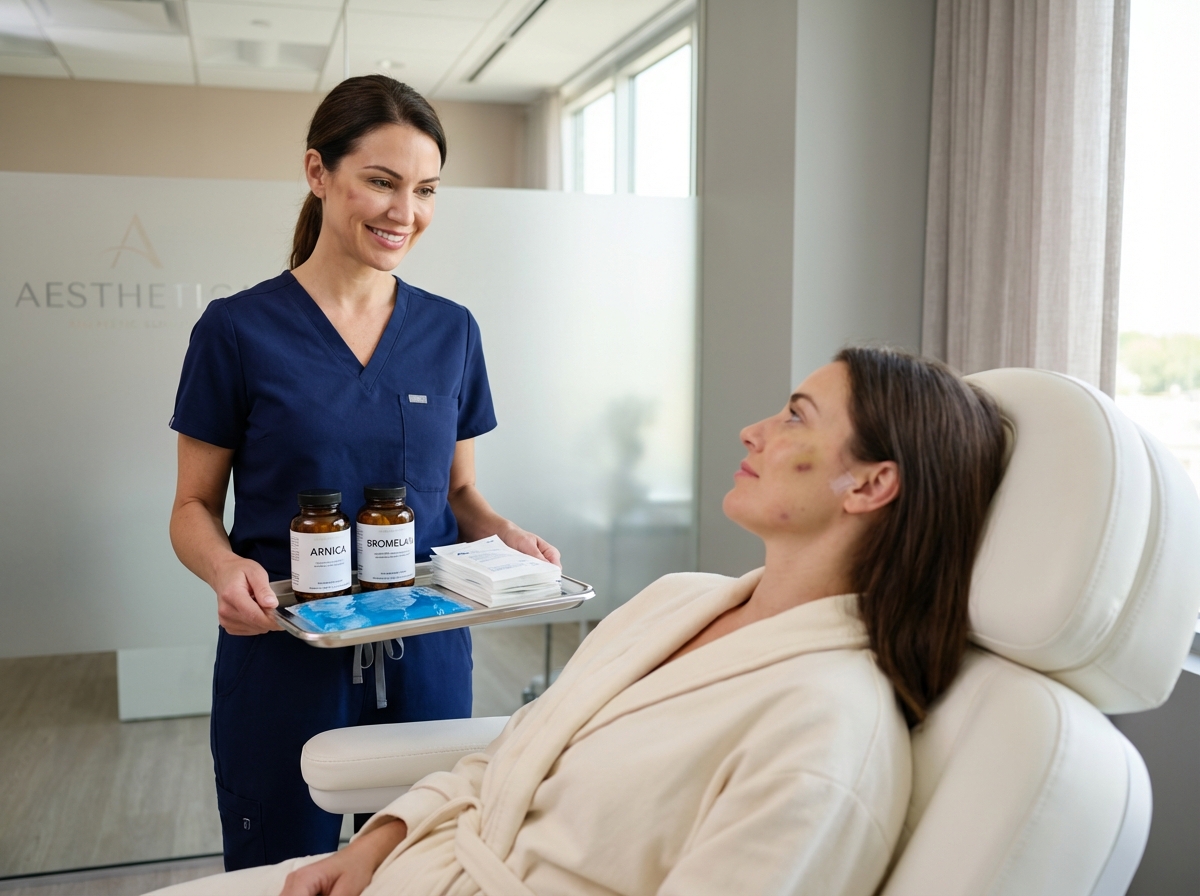
So, what’s the practical takeaway? The evidence suggests that topical arnica gel might offer a slight, early advantage in helping a bruise fade. Bromelain may be more effective for swelling than for bruising, though the data is not definitive. Neither is a magic eraser. It is also crucial to remember that these products are regulated as dietary supplements, not drugs, meaning they are not FDA-approved to treat or prevent any medical condition. If you decide to try them, think of them as a potential minor adjunct to proven aftercare strategies, not a replacement for them.
Safety Profiles, Interactions, and Practical Aftercare
While the evidence for efficacy is mixed, understanding the safety profiles of these supplements is non-negotiable. These products are not without risks and potential interactions, making a conversation with a clinician essential.
Safety and Contraindications
- Topical Arnica: Generally considered low-risk when applied to intact skin. The most common issue is contact dermatitis, an allergic skin reaction, especially in people sensitive to plants in the Asteraceae family (e.g., ragweed, marigolds).
- Oral Arnica: As noted, homeopathic versions are highly diluted and generally safe but lack efficacy data. Concentrated herbal oral arnica can be toxic and should be avoided unless supervised by a professional.
- Bromelain: The most common side effects are mild gastrointestinal issues like nausea or diarrhea. Allergic reactions are possible, particularly for those with a known pineapple allergy. Crucially, bromelain can have a blood-thinning effect. It may increase the risk of bleeding when taken with anticoagulants (e.g., warfarin, Eliquis) or antiplatelet drugs (e.g., aspirin, clopidogrel). It may also increase the absorption of certain antibiotics, like amoxicillin. Due to a lack of safety data, bromelain is generally not recommended during pregnancy.
A Practical Aftercare Plan
A well-structured plan starts long before the appointment. Clinicians typically recommend a “medication hold” on non-essential substances that can increase bruising.
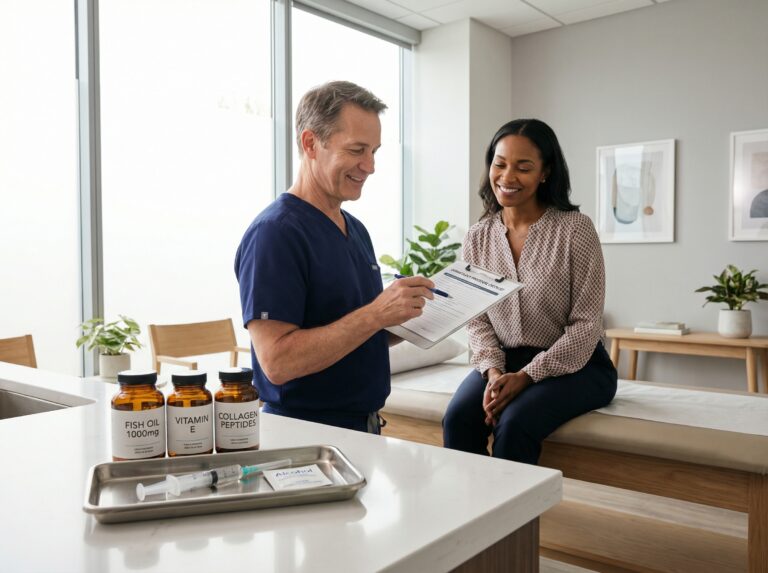
- 7–14 Days Before: Discontinue non-prescription supplements known to thin the blood, such as fish oil, high-dose vitamin E, ginkgo biloba, and garlic supplements.
- 48–72 Hours Before: Stop taking non-steroidal anti-inflammatory drugs (NSAIDs) like ibuprofen and aspirin, if medically safe to do so.
Important: Never stop taking a prescribed anticoagulant or blood thinner without explicit approval from the prescribing doctor. The risk of a clot often far outweighs the risk of a cosmetic bruise.
If you and your clinician decide to incorporate supplements as an adjunct, the following regimens are often cited in studies (for educational purposes only):
- Topical Arnica: Apply arnica gel to the intact skin over the treatment area two to three times daily, starting 24–48 hours before the procedure and continuing for 3–7 days after.
- Oral Bromelain: Doses often cited are around 500 mg taken two or three times a day, typically for 3–7 days following the procedure.
Proven Non-Pharmacologic Measures
Beyond supplements, several proven measures are fundamental to good aftercare:
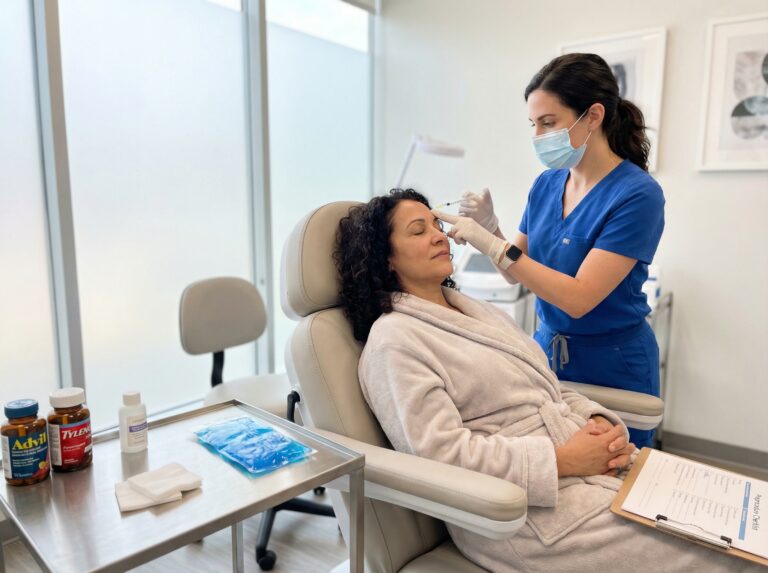
- Cold Compressing: Apply a cold pack or ice wrapped in a cloth to the area for short intervals (10–15 minutes) during the first 24–48 hours. This constricts blood vessels, reducing initial swelling and bruising.
- Gentle Elevation: Keeping the treated area elevated, especially the head after facial procedures, helps minimize swelling.
- Activity Modification: Avoid strenuous exercise for 24–72 hours to prevent increased blood flow and pressure in the treated area.
- Camouflage: Medical-grade concealers with green or yellow undertones can effectively hide bruising, minimizing social downtime.
When to Seek Help
Knowing when to seek help is critical. Contact your provider immediately if you experience an expanding, tense bruise (hematoma), severe or escalating pain, or signs of infection like fever and pus.
After dermal fillers, be vigilant for signs of vascular occlusion, a rare but serious emergency where filler blocks a blood vessel. Symptoms include sudden, severe pain, skin blanching (turning white), or a lace-like, purplish skin pattern (livedo reticularis). Supplements have no effect on preventing or treating this condition; it requires immediate medical attention to dissolve the filler.
Final Takeaways and Clinical Recommendations
The journey from a needle poke to a resolved bruise is complex, influenced by everything from the procedure itself to a patient’s unique physiology. Bruising from a superficial Botox injection is not the same as ecchymosis from a deep filler placement or a laser treatment. This variability is mirrored in the scientific literature. The evidence for arnica and bromelain is decidedly mixed. While some small studies suggest a modest, early benefit—particularly with topical arnica—many others show no significant effect. What we can say with certainty is that these supplements are, at best, adjuncts to care. They are not a substitute for meticulous injection technique or established medical management.
For clinicians navigating patient questions, a structured approach to counseling can provide clarity and manage expectations:
- Assess Bleeding Risk: Begin with a thorough history. Ask about easy bruising, prolonged bleeding, or diagnosed clotting disorders.
- Review Medications and Supplements: Create a comprehensive list of all prescription medications, over-the-counter drugs, and supplements. Pay close attention to anticoagulants, antiplatelet agents, and herbal supplements known to increase bleeding risk.
- Advise on Pre-Procedure Holds: Provide clear instructions on what to stop and when, but only when medically safe and cleared with the patient’s primary physician if necessary.
- Consider Adjunctive Supplements: If the patient has no contraindications and is motivated, suggest topical arnica gel applied to intact skin and a short, post-procedure course of oral bromelain as a reasonable, low-risk approach.
- Emphasize Proven Aftercare: Reinforce the importance of evidence-based strategies like cold packs, elevation, and avoiding intense exercise.
- Establish Follow-Up: Instruct the patient on warning signs. An expanding hematoma, severe pain, or skin blanching warrant an immediate call.
Effective patient communication is crucial. When discussing supplements, use clear and honest language: “Some patients find that topical arnica helps bruises clear up a little faster, but the scientific evidence is mixed. It’s a low-risk option we can add to standard aftercare, but it’s not a magic eraser.”
Ultimately, preventing and managing bruising is about fundamentals. It starts with a clinician’s anatomical knowledge and technical skill and continues with thorough patient assessment. While topical arnica or a short course of bromelain may offer a small, supplemental benefit for some low-risk individuals, the most effective strategies remain the simplest: excellent procedural technique, diligent pre-procedure screening, and proven aftercare like ice and elevation.
Sources
- Is There a Role for Arnica and Bromelain in Prevention of … – PubMed — Clinical trials on arnica and bromelain have demonstrated mixed results. Some randomized controlled trials reported improvement postprocedure with arnica (4/13) …
- Arnica and Bromelain for Blepharoplasty-Associated Ecchymosis — This study was designed to explore the impact of combination therapy with Arnica and Bromelain on postoperative ecchymosis in patients undergoing …
- A Simple Solution to the Common Problem of Ecchymosis — In all 10 subjects, accelerated resolution of the treated bruise was evident within 24 hours. Benefit was apparent 6 hours after treatment in 1 patient. Twenty- …
- How to get rid of bruises: 5 effective home remedies — A 2021 review of previous research found that 18 out of 25 studies on arnica showed it significantly helped with bruising. However, not all of …
- Arnica and Bromelain Natural Remedies for Wound Healing — Arnica has anti-inflammatory and pain-relieving properties, and has been shown to help reduce swelling and improve wound healing. Arnica can be …
- Can arnica aid in combating bruises on the skin? – Typology — Two randomized, double-blind, placebo-controlled clinical trials have shown no effect of arnica on the prevention or resolution of post- …
- Treatment of bruising after injection to reduce cellulite — Numerous studies confirm that bromelain reduces trismus, pain, and swelling following molar extractions. On the other hand, Ho and colleagues ( …
Legal Disclaimers & Brand Notices
The information provided in this article is for educational and informational purposes only and does not constitute medical advice. It is not intended to be a substitute for professional medical advice, diagnosis, or treatment. Always seek the advice of your physician or other qualified health provider with any questions you may have regarding a medical condition or before starting any new treatment.
All product names, logos, and brands mentioned in this article are the property of their respective owners. Their use does not imply any affiliation with or endorsement by the trademark holders.