Minor bleeding and bruising are the most common side effects of injectables and non‑invasive cosmetic treatments. This article explains which foods, over‑the‑counter medications, and supplements to avoid in the week before your procedure, why they increase bleeding risk, how timing differs by treatment, and practical, evidence‑based steps to reduce bruising while staying safe.
Why medications and foods increase bleeding risk before cosmetic procedures
You book an appointment for fillers or Botox to look refreshed. You walk out hoping nobody notices the work you had done. But a dark purple bruise on your lip or a yellow shadow under your eye gives it away. Bruising is the most common side effect of cosmetic injections. It happens to almost everyone at some point. Understanding why it happens helps you control it.
The body has a complex system to stop bleeding. Needles disrupt this system. Certain foods and medications disrupt it further. When you know the physiology behind a bruise, the pre-appointment instructions make much more sense. This is not just about following rules. It is about biology.
How bruising happens after injections
A bruise is simply blood trapped under the skin. It is medically known as ecchymosis. When a needle enters the skin, it inevitably hits tiny blood vessels called capillaries. These vessels break. Blood leaks into the surrounding tissue.
Your body reacts immediately. Platelets are the first responders. These are small blood cells that rush to the site of the injury. They stick together to form a plug. This process is called hemostasis.
The clotting cascade comes next. This is a chain reaction of proteins in your blood. They create a mesh made of fibrin. This mesh acts like glue. It solidifies the platelet plug and seals the broken vessel.
If your platelets are sluggish or your blood is too thin, this plug takes longer to form. More blood leaks out during that delay. A larger volume of leaked blood creates a larger, darker bruise. The body then has to break down this pooled blood. That breakdown process causes the color changes you see over the next two weeks. You see purple, then green, then yellow as hemoglobin degrades.
Why medications and foods increase bleeding risk
Anything that affects platelets or clotting factors will increase your chance of bruising. You might take a pill for a headache or eat a healthy salad. You do not realize these things change your blood chemistry.
Aspirin and permanent platelet inhibition
Aspirin is unique. It chemically alters your platelets. It blocks an enzyme called cyclooxygenase-1 (COX-1). This stops platelets from clumping together. The effect is irreversible. Once aspirin affects a platelet, that platelet cannot clot normally for its entire lifespan. Platelets live for about 7 to 10 days. This is why providers ask you to stop aspirin a full week or more before treatment. It takes that long for your body to make enough new, functional platelets.
NSAIDs and temporary inhibition
Non-steroidal anti-inflammatory drugs include ibuprofen and naproxen. These are common painkillers like Advil or Aleve. They also stop platelets from clumping. The difference is the timing. The effect of NSAIDs is reversible. Once the drug clears your system, your platelets work again. This usually happens within 24 to 48 hours. The bleeding risk is shorter compared to aspirin.
Alcohol and vasodilation
Alcohol does two things. It acts as a vasodilator. This means it relaxes and widens your blood vessels. Wider vessels allow more blood to flow near the surface of the skin. If a needle nicks a dilated vessel, more blood escapes before the clot forms. Alcohol also has a mild anti-platelet effect. It makes platelets less sticky. Drinking wine or spirits within 24 to 72 hours of your appointment sets the stage for a bruise.
Supplements and herbal agents
Many people assume natural means safe. In the context of surgery and injections, natural often means “unregulated blood thinner.” Fish oil is a prime example. High doses of Omega-3 fatty acids reduce platelet stickiness. Vitamin E does the same. Herbs like ginkgo biloba, garlic, and ginseng contain compounds that mimic prescription blood thinners. They slow down the clotting time. You bleed longer. You bruise more.
Which procedures carry higher bleeding risk
Not all cosmetic treatments are equal. The risk of bruising depends on the depth of the injection, the size of the needle, and the vascularity of the area.
Botox and neuromodulators
Botox injections are generally low risk. The needle is extremely fine. The volume of fluid is small. The injector targets muscles rather than the deep skin layers where larger vessels live. Clinical reports often show bruising rates under 10% for standard upper face injections. When bruises occur, they are usually pin-point sized.
Dermal fillers
Fillers carry a much higher risk. The product is a gel. It requires a larger needle or cannula to flow through. The injector places it deep in the dermis or right on top of the bone. These areas are rich in blood vessels.
The lips are the most vascular area of the face. They are prone to swelling and bleeding. Studies and clinic audits suggest that bruising occurs in 30% to 50% of lip filler patients. The tear troughs under the eyes are also high risk. The skin there is thin. Even a tiny drop of leaked blood shows through as a dark circle.
Laser facials and chemical peels
These treatments work differently. They do not puncture the skin with a needle. They create controlled injury to the surface.
- Superficial peels and non-ablative lasers: These rarely cause bleeding. The injury is contained in the epidermis.
- Deep peels and ablative lasers: These remove the outer layers of skin. They penetrate the dermis. This causes pinpoint bleeding or oozing. If your blood is thin, this oozing lasts longer. It complicates the healing process.
Non-surgical body sculpting
Treatments like CoolSculpting use strong suction. The device pulls a pocket of fat into a cooling cup. This vacuum pressure can break capillaries just like a hickey. It causes a distinct, rectangular bruise. The risk here is mechanical rather than invasive.
Prescription anticoagulants and systemic risk
Some patients take prescription blood thinners for serious medical conditions. These include warfarin, clopidogrel (Plavix), and direct oral anticoagulants like apixaban (Eliquis) or rivaroxaban (Xarelto).
These drugs are powerful. They are designed to prevent strokes or treat blood clots. They significantly increase the risk of bleeding and hematomas after cosmetic procedures. A hematoma is a solid swelling of clotted blood. It is more severe than a simple flat bruise.
You must never stop these medications on your own. The risk of a blood clot is far more dangerous than a bruise on your face.
Adjusting these medications requires coordination. Your cosmetic injector needs to communicate with your prescribing doctor. Sometimes it is safe to hold a dose for 24 hours. Sometimes it is not. For low-risk procedures like Botox, many doctors advise staying on the medication. You accept the bruise to stay safe from a stroke.
Topical agents and skin sensitivity
Your skincare routine plays a minor role in bleeding but a major role in skin integrity. Retinoids like tretinoin or retinol thin the outermost layer of the skin, the stratum corneum. They increase blood flow to the dermis.
Fragile skin tears more easily. This is a concern for chemical peels and lasers. If you use retinoids right up to the day of a peel, the acid penetrates too deeply. This causes raw spots and potential bleeding. Most protocols recommend stopping active skincare acids and retinoids 3 to 7 days before resurfacing treatments.
The physiology of recovery
Once a bruise forms, the body must clean it up. White blood cells called macrophages consume the leaked red blood cells. They break down the hemoglobin. This process takes time.
Supplements like Arnica Montana are popular for speeding this up. The evidence is mixed. Some theories suggest Arnica reduces inflammation and clears blood products faster. 7 Ways to Avoid Bruises from Botox or Dermal Fillers – Aesthetic Lane offers practical tips on managing this recovery phase.
Bromelain is an enzyme found in pineapple. It may help digest the proteins involved in swelling. Keeping the blood pressure low helps too. Intense exercise increases your heart rate. It forces more blood into the damaged vessels. This can cause a fresh clot to pop open. That is why you skip the gym for 24 hours.
Understanding these mechanisms allows you to make better choices. You know that aspirin disables your platelets for a week. You know that alcohol opens your vessels wide. You know that fillers in the lips are high-risk zones.
This physiological reality dictates the timeline for preparation. You cannot undo the effect of aspirin in a day. You need a strategy. The next section provides a concrete schedule of exactly what to avoid and when to stop it to ensure your results are visible, not hidden behind a bruise.
Specific foods, supplements, and medications to avoid one week before injections
You now understand the physiology of bruising. The next logical step involves managing your intake of specific substances. What you consume in the week leading up to your appointment plays a massive role in your recovery. We focus here on a seven-day window. This timeline allows most antiplatelet agents to clear your system and lets your body generate fresh, functional platelets.
Over-the-Counter Pain Relievers and Anti-Inflammatories
The most common cause of avoidable bruising comes from the medicine cabinet. We take these pills for headaches or muscle soreness without thinking about their effect on blood clotting. Most of these drugs work by blocking enzymes that help platelets stick together.
Aspirin and Aspirin-Containing Products
Aspirin is unique because its effect on platelets is irreversible. Once aspirin interacts with a platelet, that platelet cannot clot effectively for the rest of its life. A platelet lives for about seven to ten days. This is why a one or two-day break is not enough.
- Common Names: Bayer, Bufferin, Excedrin, Ecotrin.
- Mechanism: It permanently disables the cyclooxygenase-1 (COX-1) enzyme within the platelet. This stops the production of thromboxane A2 which is necessary for clotting.
- Recommended Stop Time: 7 to 10 days.
- Practical Note: Check your cold and flu medicines. Many multi-symptom formulas contain aspirin. If you take baby aspirin for heart protection, you must speak with your prescribing doctor before stopping it for a cosmetic procedure.
NSAIDs (Non-Steroidal Anti-Inflammatory Drugs)
Ibuprofen and naproxen are standard NSAIDs. Unlike aspirin, their effect is reversible. Once the drug leaves your system, your platelets start working normally again. However, different bodies clear these drugs at different speeds.
- Common Names: Advil, Motrin, Aleve, Midol.
- Mechanism: They reversibly inhibit COX enzymes. This reduces platelet aggregation only while the drug is active in your bloodstream.
- Recommended Stop Time: 48 to 72 hours is the minimum requirement. A conservative approach for maximum safety is 7 days. If you take NSAIDs for a chronic condition like arthritis, consult your primary care provider before stopping. If you take them occasionally for headaches or cramps, simply avoid them for the three days leading up to your visit.
- Practical Note: Naproxen stays in the body longer than ibuprofen. If you want to be completely safe, switch to acetaminophen one week out.
Dietary Supplements and Vitamins
Patients often overlook supplements because they view them as natural and therefore safe. In the context of injections, natural does not mean side-effect free. Many herbal supplements are potent blood thinners. They can increase bleeding time just as much as pharmaceutical drugs.
We see high bruising rates in patients who are health-conscious and take high doses of Omega-3s or multivitamins. You should generally pause the following items for one full week. Note that this applies to concentrated supplements. Eating a normal amount of garlic in your dinner or using turmeric as a spice in cooking is generally fine. The concentrated doses found in capsules create the bleeding risk.
| Supplement | Why Avoid It | Stop Time | Notes |
|---|---|---|---|
| Fish Oil & Omega-3s (Nordic Naturals, Lovaza) |
High doses reduce platelet adhesion and increase bleeding time. | 7 Days | This includes krill oil, cod liver oil, and flaxseed oil. |
| Vitamin E (Tocopherol) |
Interferes with Vitamin K dependent clotting factors. | 7 Days | Check your multivitamin. Small amounts are okay, but avoid standalone 400 IU capsules. |
| Ginkgo Biloba | Inhibits platelet activating factor (PAF). | 7 Days | Often found in memory or focus blends. |
| Garlic Supplements (Aged Garlic Extract) |
Has significant antiplatelet properties. | 7 Days | Cooking with garlic is fine. Concentrated pills are the problem. |
| Ginseng (Panax, Siberian) |
Interferes with coagulation pathways. | 7 Days | Common in energy drinks and immune boosters. |
| Ginger (High Dose) |
Inhibits thromboxane synthetase. | 7 Days | Ginger tea is usually safe. Avoid concentrated capsules. |
| Turmeric / Curcumin | Slows blood clotting processes. | 7 Days | Highly popular for inflammation but risky pre-procedure. |
| Bromelain (Pineapple Enzyme) |
Acts as a mild blood thinner despite anti-swelling claims. | 3 to 7 Days | Some providers suggest it after, but avoid it before. |
| St. John’s Wort | Affects drug metabolism and clotting. | 7 Days | Also interacts with many prescription medications. |
Alcohol Consumption
Alcohol acts as a vasodilator. It relaxes and widens blood vessels. This increases blood flow near the surface of the skin. If a needle nicks a dilated vessel, it will bleed more profusely than a constricted one. Alcohol also has a mild antiplatelet effect.
You should avoid alcohol for at least 24 to 48 hours before your treatment. For the best possible results, stop 72 hours to 7 days prior. Red wine is often cited as a major culprit due to its additional flavonoid content, but all alcohol carries this risk. Alcohol is known to enlarge blood vessels, which directly counteracts your goal of a bruise-free recovery.
Prescription Anticoagulants and Antiplatelets
This category requires extreme caution. These medications are prescribed to prevent life-threatening events like strokes, heart attacks, or blood clots. You must never stop these medications on your own for a cosmetic procedure.
If you are on these drugs, you need to coordinate with your prescribing physician. Your injector needs to know about them well in advance.
- Warfarin (Coumadin): Works by blocking Vitamin K. It requires strict monitoring. Stopping it usually requires a 3 to 5 day window and an INR check. This is only done with cardiologist approval.
- DOACs (Eliquis, Xarelto, Pradaxa): These are direct oral anticoagulants. They leave the system faster than Warfarin, often within 24 to 48 hours. However, the risk of stopping them often outweighs the benefit of avoiding a bruise.
- Clopidogrel (Plavix): An antiplatelet agent often used after stent placement. It has an irreversible effect similar to aspirin. Stopping it typically requires 7 to 10 days and is often not permitted by cardiologists.
If your doctor says it is unsafe to stop, you can still have treatments. You just need to accept a higher risk of bruising. Your injector can adjust their technique. They might use cannulas instead of needles or apply ice more aggressively.
How to talk to your doctor: Use this phrasing when contacting your physician:
“I have an elective cosmetic injection planned for [Date]. My injector advises that this procedure carries a risk of bleeding. Is it safe for me to pause my [Name of Medication] for a few days, or should I remain on it?”
When is it unsafe to pause? There are specific medical situations where pausing a blood thinner is dangerous. If you have a mechanical heart valve, a recent stent placement (within the last 12 months), a history of deep vein thrombosis (DVT), or pulmonary embolism, you generally cannot stop anticoagulation therapy. In these cases, the cosmetic procedure is secondary to your survival.
SSRIs and SNRIs
Many patients are surprised to learn that antidepressants can affect bleeding. Selective Serotonin Reuptake Inhibitors (SSRIs) like Zoloft (sertraline), Prozac (fluoxetine), and Lexapro (escitalopram) deplete serotonin in platelets. Platelets need serotonin to aggregate properly. This means SSRIs can modestly increase bleeding time.
The increase in bleeding risk is modest compared to aspirin. We do not recommend stopping these medications for cosmetic treatments. The withdrawal effects would be far worse than a small bruise. You should simply disclose them on your medical history form so your provider is prepared. Knowing you are on an SSRI allows the injector to be prepared; they might apply pressure for a longer period immediately after the needle is withdrawn to ensure bleeding stops quickly.
Topical Agents and Skin Prep
What you put on your skin matters too. This is especially true for chemical peels and laser treatments, but it applies to injections as well. Active skincare ingredients can thin the outer layer of the skin (stratum corneum) or increase blood flow.
- Retinoids (Retin-A, Tretinoin, Retinol): These increase cell turnover. While healthy, they make skin more sensitive and prone to irritation. Stop these 3 to 5 days before chemical peels or lasers. For simple Botox, 24 hours is usually sufficient.
- Exfoliating Acids (Glycolic, Salicylic, Lactic): Stop these 3 days before treatment to prevent over-stripping the skin barrier.
Topical blood thinners are rarely used in dermatology, but some prescription creams for other conditions might have systemic absorption. Always list your topicals on your intake form.
Safe Alternatives for Pain and Recovery
You do not have to suffer through a headache during this week. You just need to choose the right medication.
Pain Relief
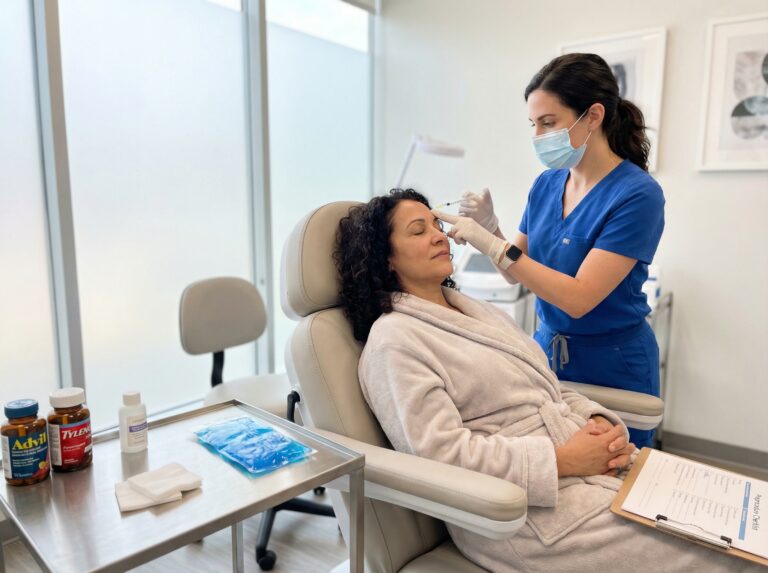
Acetaminophen (Tylenol) is your safest option. It relieves pain effectively but has no impact on platelets or blood clotting. You can safely take acetaminophen for headaches or minor aches right up to the day of your appointment. It will not increase your risk of bruising.
Recovery Supplements
We mentioned avoiding Bromelain before the procedure, but what about Arnica? Arnica Montana is a homeopathic remedy widely used to treat bruising.
- Oral Arnica: Some evidence suggests starting oral Arnica pellets 1 to 2 days before injections may help. It does not thin the blood like garlic or ginger.
- Topical Vitamin K: This is best used after the treatment if a bruise appears. It helps the body break down the blood pigment faster. Do not apply creams immediately before the injection, as the skin needs to be clean and free of products.
Managing Accidental Intake and Special Circumstances
What if I forgot to stop something and have an appointment tomorrow?
Honesty is the best policy here. Do not hide this from your injector. Tell them exactly what you took and when. The type of medication and the type of procedure matter.
If you took a single ibuprofen yesterday and are getting Botox in the forehead, the risk is relatively low. Botox injections use very fine needles and are superficial. Your injector might proceed with the treatment. Pre-treatment instructions often distinguish between high-risk and low-risk scenarios.
If you have been taking high-dose aspirin or fish oil all week and are planning lip fillers, the risk is higher. Lips are extremely vascular. The chance of significant bruising or a hematoma increases. Your injector may recommend rescheduling the appointment to ensure you get the best aesthetic result. Proceeding with fillers while your blood is thin can lead to large, dark bruises that take weeks to heal.
Safety Cautions for Special Groups
Pregnant or Breastfeeding Patients: Most cosmetic injections are not performed on pregnant or breastfeeding women. Safety data for Botox and fillers in this population is limited. While bleeding risk might not be the primary concern, the general rule is to postpone elective treatments until after you have finished breastfeeding.
Clotting Disorders: If you have a known bleeding disorder such as hemophilia or von Willebrand disease, you must disclose this immediately. A standard “stop list” is not enough for you. You require a coordinated plan involving your hematologist. Some clinics may not be equipped to treat patients with severe bleeding disorders due to the risk of uncontrollable hematoma.
Pre-Procedure Disclosure Checklist
Communication errors cause complications. Use this checklist to ensure you and your provider are on the same page. You can print this or keep it on your phone.
Patient Safety Checklist
- Current Medications: List all prescriptions, even if they seem unrelated (like antidepressants or thyroid meds).
- OTC Habits: Did you take Advil for a headache yesterday? Be honest.
- Supplement Audit: Check labels for “proprietary blends” that might hide ginseng or ginkgo. Mentioning “I take a multivitamin” is good, but saying “I take a multivitamin with 400 IU of Vitamin E and separate fish oil capsules” is better.
- Alcohol Intake: Disclose if you had wine with dinner last night.
- Medical History: Mention any history of cold sores (valacyclovir might be needed) or easy bleeding.
- Prescriber Contact: Have your cardiologist’s phone number ready if you are on blood thinners.
Individualized advice is essential. A healthy 25-year-old stopping fish oil is different from a 65-year-old stopping a heart medication. When in doubt, prioritize your systemic health over the aesthetic result. A bruise will fade in two weeks. A blood clot is a much more serious problem.
Final recommendations and practical preprocedure checklist
You have read about the biology of bruising and reviewed the specific medications that increase bleeding risk. Now we need to organize all that information into a single plan of action. Information overload is common before cosmetic procedures. Patients often feel anxious about getting the timing right or forgetting a specific supplement. This chapter consolidates everything into a clear strategy you can use starting one week before your appointment.
The goal here is not just to avoid a purple mark on your face. It is to ensure your body is in the best possible state to heal quickly. When you minimize bleeding during the injection, you reduce the amount of inflammation in the tissue. Less inflammation often means the product settles better and you see your final results sooner. We will break this down into a decision framework and then a step-by-step checklist.
Balancing Risks and Making Decisions
We must address the most critical decision first. Not everyone can or should stop their medications. If you take blood thinners for a heart valve, a recent stent, or a history of blood clots, your medical safety takes priority over a cosmetic bruise. This is where shared decision making becomes vital. You need to have a conversation with your injector and your prescribing doctor.
In these cases, you might choose to proceed with the treatment while staying on your medication. You simply accept that bruising will happen. It might be darker and last longer than average. Experienced injectors can adjust their technique for patients on anticoagulants. They might use a cannula instead of a needle or apply ice more aggressively before and after the poke. The risk of a bruise is temporary. The risk of stopping a medically necessary heart medication could be permanent. Always choose your health. If you are unsure, wait until you have clearance from your cardiologist.
Your Preprocedure Checklist
Use this numbered list as your guide for the week leading up to your treatment. You can print this or keep it on your phone to ensure you have covered every base.
-
Full Medication and Supplement Disclosure
Your injector needs to know everything that goes into your body. Patients often forget to mention “natural” things. They assume vitamins or herbal teas are harmless. As we discussed in earlier chapters, high doses of fish oil or garlic extract can thin your blood just as much as some prescription drugs. Write down a complete list. Include your daily multivitamin, that protein powder with added enzymes, and the ibuprofen you took for a headache yesterday. Transparency allows your provider to choose the right tools and techniques for your specific physiology.
-
The Stop-List and Timelines
Timing matters. You want to clear these substances from your system before the needle touches your skin. Follow these general guidelines unless your doctor says otherwise.
- 7 Days Prior: Stop taking aspirin (if for pain only), Vitamin E, fish oil, Omega-3s, gingko biloba, ginseng, St. John’s Wort, and garlic supplements. These agents affect how your platelets stick together. Platelets need about a week to regenerate and function normally.
- 3 to 5 Days Prior: Stop taking NSAIDs like ibuprofen, naproxen, or high-dose aspirin powders. If you need pain relief during this window, switch to acetaminophen (Tylenol). It does not increase bleeding risk.
- 24 to 48 Hours Prior: Stop drinking alcohol. Alcohol dilates your blood vessels and can make you bleed more freely. It also dehydrates your skin, which is not ideal for healing.
-
Contacting Your Prescribing Clinician
If you see a medication on the “avoid” list that a doctor prescribed to you, do not stop it on your own. This includes Warfarin, Clopidogrel, Eliquis, Xarelto, or therapeutic doses of aspirin. Call your doctor’s office at least two weeks before your cosmetic appointment. Write down their exact instructions and bring them to your injector.
-
Lifestyle Measures
Your behavior affects your blood pressure and circulation. High blood pressure pushes blood out of capillaries faster if they are nicked. For 24 hours before your appointment, avoid heavy exercise. A intense HIIT workout or heavy lifting session increases your heart rate and dilates vessels. Try to stay calm and cool. If you smoke, pause as long as possible before and after. Nicotine constricts vessels in a way that hurts healing, but the act of smoking can also introduce bacteria near the mouth if you are getting lip fillers.
-
What to Bring to Your Appointment
Arrive prepared. Bring your list of medications and supplements. Have the name and phone number of your primary care doctor or cardiologist if you are on heart meds. It is also smart to have a plan for after the appointment. If you do bruise, do you have concealer at home? Do you have a big event the next day? If you have a wedding or a major presentation within 48 hours, you might want to reschedule. The stress of trying to hide a bruise can be worse than the bruise itself.
-
Immediate Aftercare Strategy
The first hour after injection is critical. Plan to apply a cold compress or ice pack to the area. Cold constricts blood vessels and helps seal off any tiny leaks. Do not apply ice directly to the skin; wrap it in a thin cloth. Avoid touching or massaging the area unless your injector specifically told you to. You want the product to settle. For the first night, try to sleep with your head elevated on an extra pillow. This uses gravity to drain fluid away from your face and reduces morning swelling. Avoid saunas, hot tubs, or hot yoga for at least 48 hours. Heat causes vasodilation, which can restart bleeding in a vessel that had just clotted.
For more details on lifestyle adjustments, you can read about ways to avoid bruises from Botox or dermal fillers which covers additional practical tips.
Resuming Your Routine
Patients often ask when they can go back to their normal life. For most supplements and over-the-counter pain relievers, you can resume them 24 to 48 hours after the procedure if you see no active bleeding or significant swelling. If you had a lot of injections or extensive work, waiting 72 hours is safer. This gives the tiny clots in your capillaries time to stabilize.
If you stopped a prescription blood thinner under doctor supervision, restart it exactly when they told you to. Usually, this is the evening of the procedure or the next day. The risk of a blood clot is generally more dangerous than a small facial bruise re-opening. Always prioritize your cardiovascular health.
Red Flags: When to Call for Help
Most bruising is normal and harmless. It will turn purple, then green, then yellow, and fade away. However, you need to know the difference between a bruise and a complication. A bruise is usually flat or slightly raised and feels tender like a bump.
Pay attention to these warning signs. If you see a bruise that is spreading rapidly while you watch it, that is a hematoma. It means active bleeding is happening under the skin. Apply firm pressure and call your injector immediately. If you feel severe pain that is getting worse and is not relieved by Tylenol, that is not normal. If the skin turns pale, white, or dusky gray and looks like a net or lace pattern, this is a medical emergency called vascular occlusion. It means the filler has blocked a blood vessel. This requires immediate treatment to dissolve the filler and restore blood flow. Do not wait until the next morning. Call your provider’s emergency line right away.
By following this checklist and staying alert to your body’s signals, you can walk into your appointment with confidence. You have done the prep work. You have minimized the risks. Now you can focus on the results.
References
- 7 Ways to Avoid Bruises from Botox or Dermal Fillers – Aesthetic Lane — Wine, beer, and liquor, even in small amounts, can have a lasting effect on the size of your blood vessels. Alcohol is known to enlarge blood vessels, which …
- Preparation & Recovery for Fillers and Botox – The Naderi Center — BEFORE FILLERS AND BOTOX INJECTIONS. To reduce and minimize bruising please follow our dietary restrictions. For 2 weeks before your appointment avoid nuts, …
- Tips to avoid bruising when having cosmetic injections — Avoid ibuprofen and aspirin. Blood Thinners. If you're on blood thinners like Warfarin, please let us know before you book in. Continue …
- 5 Tips to Prevent Bruising After Botox or Filler Treatments — 1. Before treatment, avoid medications or supplements with blood-thinning effects · 2. Eliminate alcohol before and after treatment · 3. Try taking Arnica before …
- How Can I Avoid Bruises from Injectables? – Dr Karen Horton — Avoid taking anything that can thin your blood for 2 weeks before your appointment. There is a LONG list of medications and supplements that fall into this …
- [PDF] 10 Tips to Prevent Bruising — Avoiding alcohol the night before and the night you have your injectable treatment really helps to prevent bruising. #3 Avoid Green Tea, Vitamin E, and Herbal …
- [PDF] Pre-Treatment Instructions for Botox and Fillers: – Stanford Medicine — Avoid alcoholic beverages at least twenty-four (24) hours prior to treatment. Alcohol may thin the blood and increase the risk of bruising. • Discontinue …
- Do's and Don'ts Before & After Your Filler Treatment (Updated 2024) — To help alleviate bruising, we recommend taking Arnica or bromelain, eating fresh pineapple, and applying ice to the area.
- 5 Tips to Prevent Bruising From Dermal Fillers and Botox Injections — Your daily supplement regimen may also increase your risk of post-cosmetic injection bruising, including vitamin E, garlic, and ginkgo biloba.
Legal Disclaimers & Brand Notices
The content provided in this article is for informational and educational purposes only and does not constitute medical advice, diagnosis, or treatment. Always seek the advice of a physician or other qualified health provider regarding a medical condition or before making any changes to your healthcare regimen, including the use of supplements or the discontinuation of prescribed medications.
All product names, logos, and brands mentioned in this text, including but not limited to Botox and CoolSculpting, are the property of their respective owners. All company, product, and service names used in this article are for identification purposes only. Use of these names, trademarks, and brands does not imply endorsement or affiliation.