Microneedling temporarily opens microchannels in the skin to stimulate collagen and improve texture, but that also raises infection and irritation risks. This guide explains evidence‑based timelines for returning to makeup, how timelines change with treatment intensity and combinations like PRP or laser, and safe product and hygiene choices to protect results and speed recovery.
How microneedling affects the skin and why makeup timing matters
To understand why you need to step away from your makeup bag for a few days, you first need to understand what is actually happening beneath your skin’s surface. Microneedling is technically a controlled injury. We are intentionally damaging the skin to trick the body into repairing itself.
When those needles penetrate the epidermis and dermis, they create thousands of microscopic puncture wounds called microchannels. This physical trauma immediately triggers a wound-healing cascade. Your body doesn’t know you paid for this treatment; it just knows it has been injured and needs to fix it.
The Inflammation and Healing Cascade
The moment the needle enters the skin, the clock starts on a complex biological process.
First, you have the hemostasis phase. This happens within seconds. Your body rushes platelets to the area to stop any pinpoint bleeding. This is why you might see tiny spots of blood during or immediately after the procedure.
Next comes the inflammation phase. This is what you feel and see for the first 24 to 48 hours. Your immune system sends neutrophils and macrophages to clean the wounds and fight off potential bacteria. This causes the redness (erythema), swelling (edema), and that “sunburn” sensation. This inflammation is actually necessary—it stimulates the fibroblasts to start producing new collagen.
Finally, the proliferation and remodeling phases kick in. This is where the magic happens. Your body starts producing Type III collagen (early scar collagen) which eventually converts to stronger Type I collagen over several months.
The Critical Window: Re-epithelialization
The most important concept for makeup application is “re-epithelialization.” This is the time it takes for the surface layer of your skin to close back up.
Until these microchannels close, your skin is essentially a sponge. It provides a direct route for anything you put on your face to enter your bloodstream and deep dermal layers.
Typical healing times based on depth:
- Superficial (0.25mm – 0.5mm): The channels usually close within 18 to 24 hours.
- Medium Depth (0.5mm – 1.5mm): Re-epithelialization typically takes 24 to 48 hours.
- Deep (1.5mm – 2.5mm+): The channels can remain open or vulnerable for 72 hours or longer.
Applying makeup before this window closes interferes with the re-epithelialization process. It can trap bacteria inside the channels, leading to granulomas (tiny lumps under the skin) or infection.
How Different Modalities Change the Risks
Not all microneedling treatments create the same environment for recovery. The device and method used dictate how long you must wait.
Standard In-Office Microneedling
Professional pens (like SkinPen or Dermapen) use sterile, single-use needle cartridges that enter the skin vertically. This creates clean, precise channels. The risk of infection is low provided you follow aftercare, but the mechanical trauma still requires a wait of at least 24 to 48 hours before applying makeup to avoid contact dermatitis.
Radiofrequency (RF) Microneedling
Treatments like Morpheus8 or Potenza add thermal energy (heat) to the needles. This cauterizes the tissue as it penetrates. While this reduces bleeding, the heat creates a zone of thermal injury surrounding each channel. This increases inflammation and prolongs the healing time compared to standard microneedling. The skin barrier is compromised for a longer period, making the risk of reaction to makeup ingredients significantly higher.
Microneedling with PRP (Platelet-Rich Plasma)
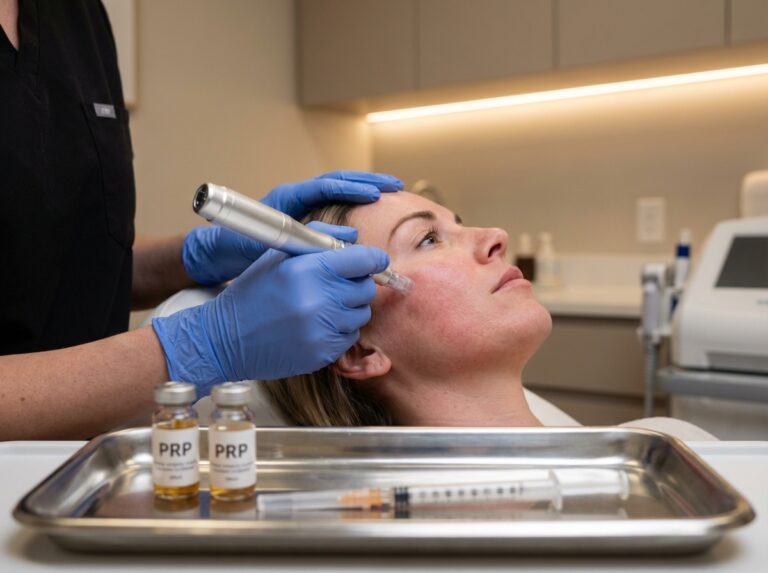
Here, your own plasma is driven into the skin. While PRP accelerates healing, the immediate aftermath leaves your skin coated in a protein-rich layer that needs to absorb. Washing this off too soon to apply foundation defeats the purpose. Furthermore, the high level of moisture on the skin can create a breeding ground for bacteria if non-sterile cosmetics are introduced too early.
At-Home Dermarolling
This is the riskiest category. Dermarollers enter the skin at an angle, creating a “tearing” motion rather than a clean puncture. The needles on home devices are often duller and rarely sterile. This results in a jagged wound that takes longer to close. Applying makeup over skin treated with a home roller significantly spikes the risk of infection because the barrier function is more severely disrupted by the tearing action.
The Pigmentation Risk (Fitzpatrick IV–VI)
For those with melanin-rich skin (Fitzpatrick skin types IV through VI), the stakes are higher. Darker skin is more prone to Post-Inflammatory Hyperpigmentation (PIH).
When you apply makeup too soon, you aren’t just risking a pimple. You are introducing potential irritants—fragrances, preservatives like parabens, and dyes—deep into the dermis. This causes contact dermatitis, which increases inflammation.
In darker skin tones, excess inflammation triggers melanocytes to overproduce pigment as a defense mechanism. This means applying concealer to hide the redness could ironically lead to permanent dark spots or patches that take months to fade.
Why Makeup Ingredients Matter
Makeup is not skincare. Even “clean” or “mineral” makeup contains binding agents, flow agents, and preservatives designed to sit on the skin, not in it.
When the skin barrier is breached, ingredients that are usually harmless become toxic to the deeper tissues.
- Silicones (Dimethicone): Can trap debris and bacteria inside the microchannels.
- Iron Oxides: Used for pigment, these can cause tattooing if they enter deep channels before closure.
- Talc and Mica: Fine particles that can cause foreign body reactions and granulomas.
Current clinical guidelines suggest that the skin is most vulnerable to infection and chemical irritation within the first 24 hours. However, for 24 hours after the procedure and preferably for 2–3 days, it is not recommended to apply makeup to ensure the microchannels have fully re-epithelialized and the acute inflammation has subsided.
Practical safe timeline and step by step care for wearing makeup after treatment
Your skin is currently in a vulnerable state of controlled injury. The microchannels created during your session are essentially tiny open wounds, and while they close relatively quickly, the barrier function remains compromised. Putting the wrong product on too soon doesn’t just risk irritation; it can trap bacteria, cause granulomas (tiny bumps), or lead to long-term pigmentation issues.
Here is the practical, day-by-day breakdown of when and how you can safely return to your makeup routine.
0 to 12 Hours: The “Do Not Touch” Zone
During this initial window, your skin is in the acute inflammatory phase. You will likely feel a sensation similar to a mild sunburn, and you may see redness or pinpoint bleeding depending on the needle depth used.
Strict Rule: Do not apply any makeup, sunscreen, or active skincare products.
The microchannels are wide open. Applying foundation, concealer, or powder now allows pigment particles and preservatives to penetrate deep into the dermis where they do not belong. This is the primary cause of “tattooing” foreign particles into the skin or triggering a severe allergic reaction.
- What to use: Only the specific post-procedure gel or hyaluronic acid provided by your specialist.
- Hygiene: Do not touch your face with your hands. Change your pillowcase to a fresh silk or satin one before sleeping to minimize friction and bacterial transfer.
12 to 24 Hours: The Gray Zone
By the next morning, the superficial microchannels have largely closed, but your skin is still highly sensitive. For most professional treatments (0.5 mm to 1.5 mm), the risk of infection has dropped, but the risk of irritation remains high.
For 24 hours after the procedure and preferably for 2–3 days, it is not recommended to apply makeup. If you absolutely must leave the house and require coverage, this is the earliest point you should consider it, but only if you use specific products.
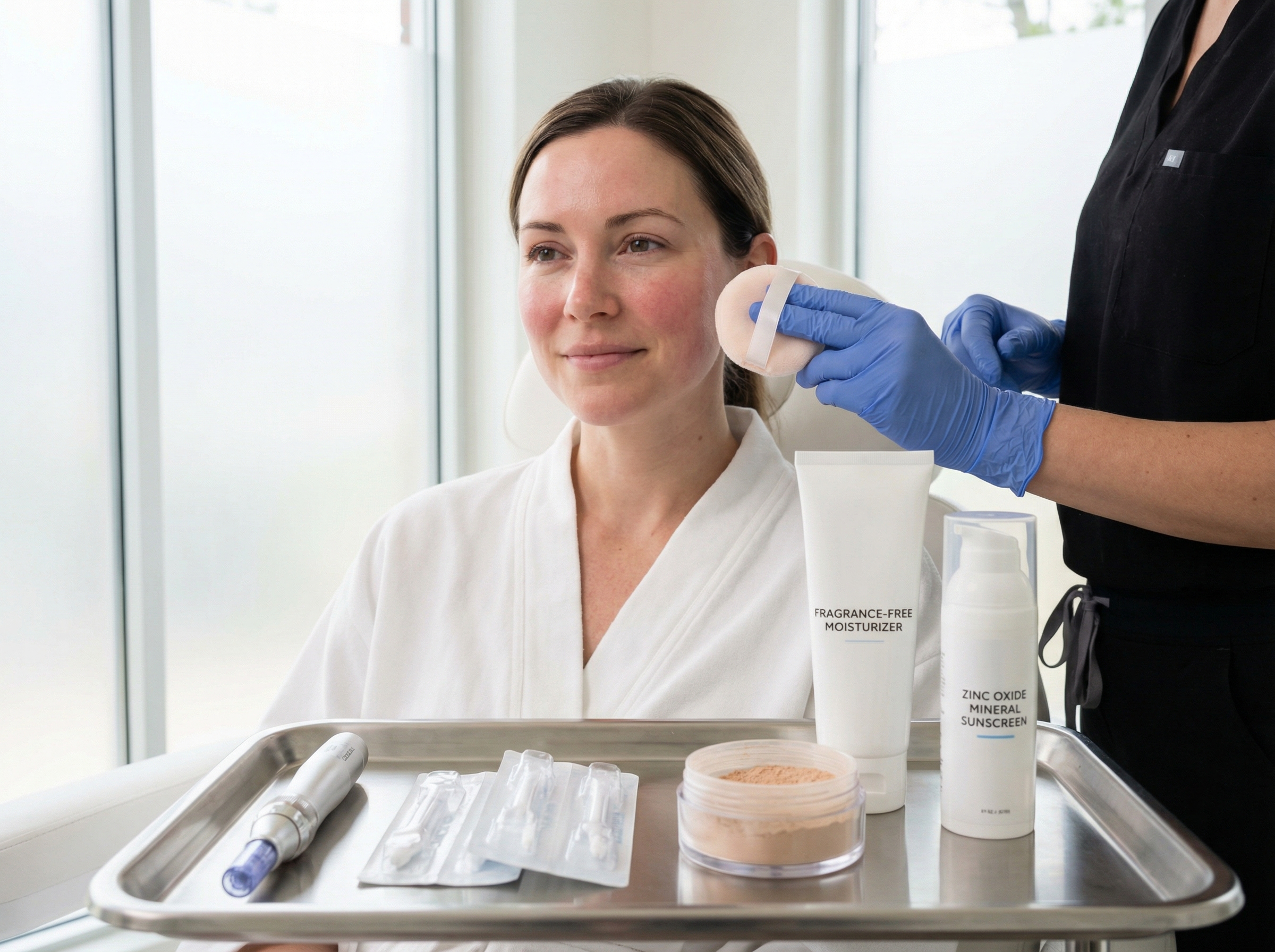
- Allowed: A high-quality, mineral-based sunscreen (zinc oxide or titanium dioxide). These minerals sit on top of the skin rather than absorbing into it.
- Avoid: Chemical sunscreens, liquid foundations with alcohol or fragrance, and BB creams that contain “glow” enhancers or shimmer.
24 to 48 Hours: Reintroduction with Caution
This is the turning point for most standard microneedling sessions. The redness usually subsides to a pink hue. You can begin to wear makeup, but you must be selective.
The Mineral Rule: Stick to 100% mineral powder foundations. Mineral makeup is non-comedogenic and allows the skin to breathe. It also naturally blocks some UV rays. Liquid foundations, even high-end ones, often contain emulsifiers and preservatives that can sting or cause contact dermatitis on healing skin.
Many patients are surprised to learn that they will need to wait at least 48 to 72 hours before any makeup products can be applied if they had a deeper treatment. If your skin feels tight or hot, skip the makeup for another day.
48 to 72 Hours: The Peeling Phase
Around day three, you might experience dryness or flaking. This is a sign of rapid cellular turnover. While it is safe to wear liquid foundation now, it often looks terrible cosmetically because the pigment clings to the dry patches, emphasizing the peeling.
- Skincare adjustment: Focus on hydration. Use a gentle, non-foaming cleanser and a plain moisturizer. Wash with lukewarm water and use your clean hands instead of a washcloth to avoid friction.
- Makeup tip: If you use liquid foundation, apply it with a damp sponge in a patting motion rather than rubbing, which can prematurely pull off peeling skin and cause hyperpigmentation.
3 to 7+ Days: Returning to Normal
By the end of the first week, the skin barrier is largely restored. You can resume your full makeup routine, including setting sprays and primers. However, wait until day 7 to reintroduce active skincare ingredients like retinoids, Vitamin C, or exfoliating acids (AHAs/BHAs) under your makeup. Using these too soon can restart the inflammation cycle.
Adjustments for Procedure Depth and Type
The standard timeline above applies to typical cosmetic microneedling. However, different modalities require different waiting periods.
Superficial Microneedling (0.25–0.5 mm):
Often done for product absorption or mild texture issues. The recovery is fast. You can typically wear mineral makeup after 12–18 hours.
Deep Medical Microneedling (1.5–2.5 mm):
Used for acne scars and deep wrinkles. This causes more significant trauma and pinpoint bleeding. Extend the “no makeup” window to a full 48 to 72 hours. Applying makeup over deep channels that haven’t fully healed increases the risk of granuloma formation.
Radiofrequency (RF) Microneedling:
This adds heat energy to the physical trauma. The heat can cause swelling and prolong the sensitivity period. Wait a minimum of 48 hours before applying makeup, as the heat makes the skin more reactive to chemicals in cosmetics.
Microneedling with PRP (Platelet-Rich Plasma):
While PRP accelerates healing, you want the plasma to work undisturbed. Do not wash your face or apply makeup for at least 24 hours to allow the growth factors to fully penetrate and settle.
Special Considerations and Populations
Darker Skin Tones (Fitzpatrick IV–VI):
If you have melanin-rich skin, you are at a higher risk for Post-Inflammatory Hyperpigmentation (PIH). Friction and irritation from applying makeup too early can trigger melanocytes to overproduce pigment. It is safer to wait an extra 24 hours beyond the standard recommendation (total 48–72 hours) before applying foundation to ensure the inflammation has settled.
Active Acne and Open Wounds:
If you have active breakouts, avoid applying makeup directly over the treated acne lesions for 72 hours. The bacteria in makeup brushes can be driven into the pores, turning a healing blemish into a deep cyst.
Hygiene Protocol for Makeup Application
Even if you wait the appropriate amount of time, dirty tools can ruin your results. Follow these steps for your first application post-treatment:
- Sanitize Tools: Deep clean your brushes with alcohol or a brush shampoo before the procedure so they are sterile when you are ready to use them.
- No Sponges: Porous makeup sponges harbor bacteria even after washing. Use a brand new sponge or clean fingers.
- Pump, Don’t Dip: Use products with a pump dispenser rather than jars you dip your fingers into. If you must use a jar, use a sterile spatula.
- Technique: Do not pump your mascara wand, as this pushes air and bacteria into the tube. Avoid store testers during your recovery week.
Frequently Asked Questions
Frequently Asked Questions: Makeup and Aftercare
You likely have specific questions about your daily routine now that you understand the general timeline. Patients often ask these questions to ensure they do not undo the benefits of their treatment. Here are practical answers based on safety protocols and skin barrier recovery.
Can I wear concealer the next day to hide redness?
You should wait at least 24 to 48 hours before applying concealer. Your skin has thousands of tiny open channels immediately after the procedure. Applying liquid or cream concealer too early can trap bacteria inside these channels. This leads to breakouts or potential infection. If you have significant bruising or redness that you absolutely must cover after 24 hours, use a mineral-based powder concealer with a brand new brush. Avoid oil-based or heavy liquid concealers for at least 3 days as they can clog the healing pores.
How long should I wait before applying eye makeup or mascara?
It is best to wait 72 hours before using mascara, eyeliner, or eyeshadow. The skin around the eyes is thinner and more sensitive than the rest of the face. The main risk here is not just the application but the removal. Removing eye makeup usually requires rubbing or using chemical removers. This friction irritates the delicate skin that is trying to heal. Old mascara tubes also harbor bacteria that can migrate to the treated upper cheek area. When you do resume wearing eye makeup, use a fresh tube of mascara to minimize infection risks.
Is mineral powder safe to use immediately after treatment?
Mineral powder is safer than liquid foundation but you should still wait until the microchannels close. This typically takes about 24 hours. Mineral makeup sits on top of the skin rather than sinking into pores. Formulas containing zinc oxide or titanium dioxide provide some sun protection and have soothing properties. Always ensure your application brush is sterilized. Using a dirty brush on day 2 is a common cause of post-procedure acne.
When can I start using BB or CC creams?
You can introduce BB or CC creams after 48 to 72 hours. These products are often thicker than standard moisturizers and contain pigments that might irritate raw skin. Look for water-based and non-comedogenic formulas. If your BB cream contains high levels of alcohol or fragrance, wait the full 72 hours or longer. The skin may feel tight and dry during this window so hydration is your priority over coverage.
Can I exercise and sweat after microneedling?
Avoid vigorous exercise and sweating for the first 48 to 72 hours. Sweat contains salts that will sting sensitive skin. It also creates a moist environment where bacteria thrive. Your skin is already inflamed from the treatment. Adding internal heat from a workout increases this inflammation and can prolong redness or swelling. Keep your environment cool and avoid saunas or steam rooms for at least one week.
When can I get facials or chemical peels after microneedling?
You must wait at least 14 days before scheduling any other professional facial treatments. Your skin undergoes a natural exfoliation process known as peeling between days 3 and 7. Adding a chemical peel or abrasive facial scrub during this time damages the new skin barrier. The usual time of recovery after microneedling is between 7 and 14 days. Allow the skin to fully re-epithelialize before challenging it with acids or extractions.
How do I treat persistent redness that lasts longer than expected?
Mild pinkness is normal for 3 to 5 days. If you experience bright redness that feels hot to the touch after 48 hours, this requires attention. You can manage normal lingering redness with cooling hydrogel masks or aloe vera kept in the fridge. Avoid using active ingredients like Vitamin C or Retinol if redness persists as these increase irritation. If the redness is patchy, painful, or accompanied by pustules, contact your provider immediately.
Is sunscreen safe to apply the same day?
Most providers apply a specific medical-grade sunscreen immediately after the procedure. For your own application, wait until the next morning (24 hours). Use a physical sunscreen containing zinc oxide or titanium dioxide. Chemical sunscreens absorb into the skin and convert UV rays into heat. This heat aggravates the already inflamed tissue. Physical blockers sit on the surface and reflect light without causing irritation.
How do combined treatments like Botox or PRP change the timeline?
Adding Platelet-Rich Plasma (PRP) often speeds up the healing process. The growth factors in PRP help the tissue repair faster. You might find you can tolerate mineral makeup slightly sooner with PRP, but the 24-hour minimum rule still applies. If you received Botox or fillers in the same session, follow the instructions for the injectable. This usually means avoiding pressure on the face for 4 hours and avoiding heavy exercise for 24 hours. The makeup timeline generally defaults to the microneedling restriction of 24 to 48 hours.
When should I call my provider?
You should contact your clinic if you notice signs that go beyond normal healing. While mild swelling and peeling are expected, certain symptoms indicate a complication. Watch for these red flags:
- Fever or chills developing within 24 hours.
- Yellow or green discharge oozing from the skin.
- Blisters or cold sores appearing on the treated area.
- Increasing pain rather than decreasing discomfort over time.
- Darkening of the skin that looks like bruising but spreads.
Prompt communication with your specialist prevents minor issues from becoming permanent problems. Trust your instincts if something feels wrong with your recovery.
References
- Micro-needling: current state of knowledge and clinical applications — For 24 h after the procedure and preferably for 2–3 days, it is not recommended to apply makeup.
- When Will You See Microneedling Results? A Timeline — The most significant changes occur at 4 to 6 weeks when new collagen forms, enhancing firmness and elasticity. AAD research confirms reductions in acne scars, …
- Understanding the Microneedling Recovery Timeline — The usual time of recovery after microneedling is between 7 and 14 days. The redness and sensitivity that came right after your treatment will …
- Microneedling – Cosmetic Procedures – Cleveland Clinic — It's generally recommended that you have treatments three to eight weeks apart. It can take three to six months for best results. Afterward, you may need this …
- How Soon Can I Wear Makeup After Microneedling? — Many patients are surprised to learn that they will need to wait at least 48 to 72 hours before any makeup products can be applied to the skin.
- Microneedling Sessions: How Many and When to See Results — The initial series of microneedling sessions is usually five to six treatments with six weeks or longer between visits to ensure maximum healing …
- How Long After Microneedling Can I Wear Makeup? — According to research, it is important to wait at least 24-48 hours after surgery before applying makeup on the healing skin.
- How Long After Microneedling Can I Wear Makeup? — After undergoing microneedling, it is generally advised to wait at least 24 to 48 hours before applying makeup. This allows your skin to start …
- How Long After Microneedling Can I Wear Makeup — If you're wondering How Long After Microneedling Can I Wear Makeup: the general recommendation is to wait at least 24-48 hours before applying any cosmetic.
Legal Disclaimers & Brand Notices
The content provided in this article is for informational purposes only and does not constitute professional medical advice, diagnosis, or treatment. Always seek the advice of your physician or other qualified health provider with any questions you may have regarding a medical condition or treatment. Never disregard professional medical advice or delay in seeking it because of something you have read in this article.
All product names, logos, and brands mentioned in this text, including but not limited to Botox and SkinPen, are the property of their respective owners. All company, product, and service names used in this article are for identification purposes only. Use of these names, trademarks, and brands does not imply endorsement, affiliation, or certification by the trademark owners.